
Frequently asked questions
Why does my ice cream taste of ice?
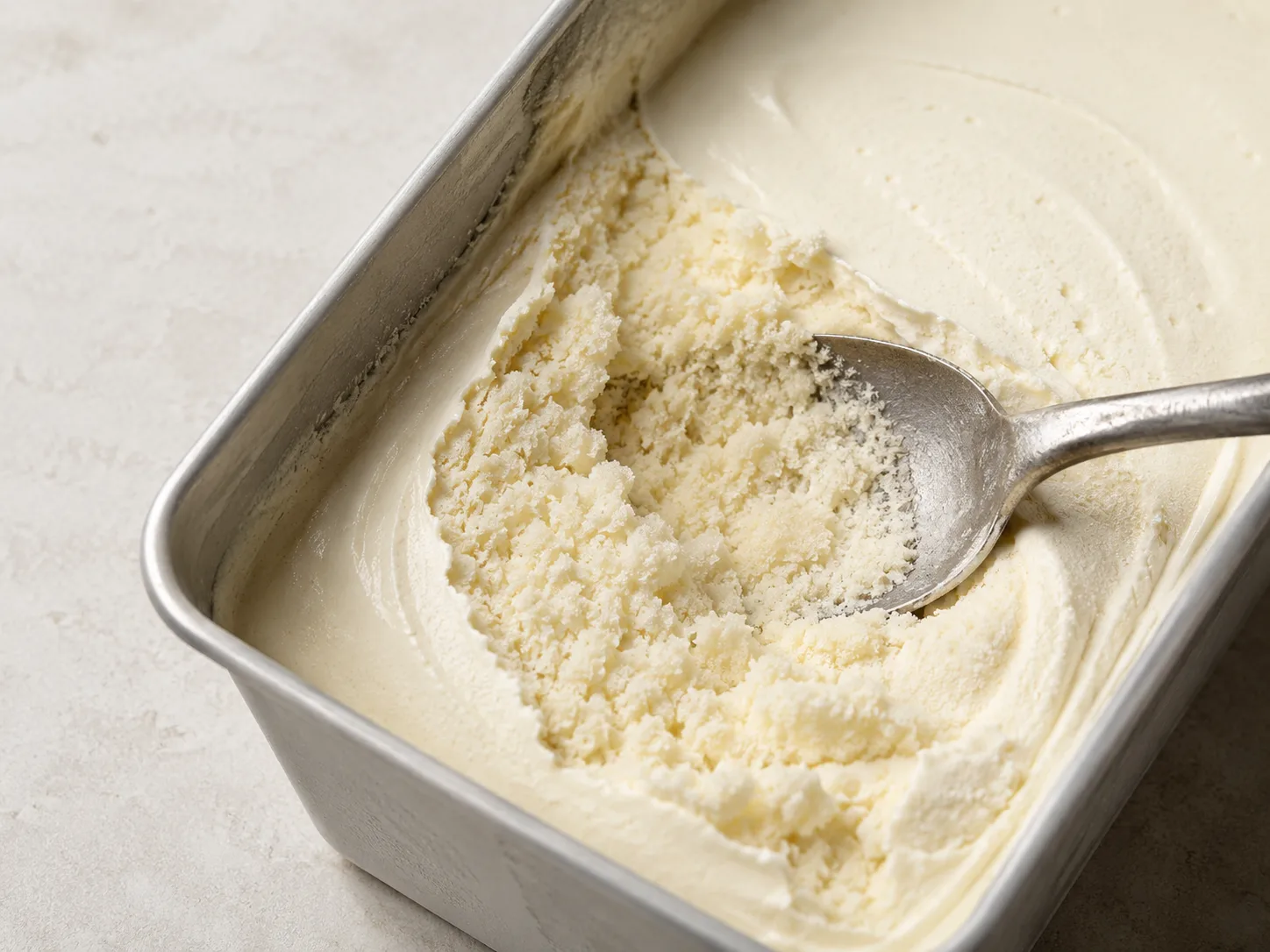
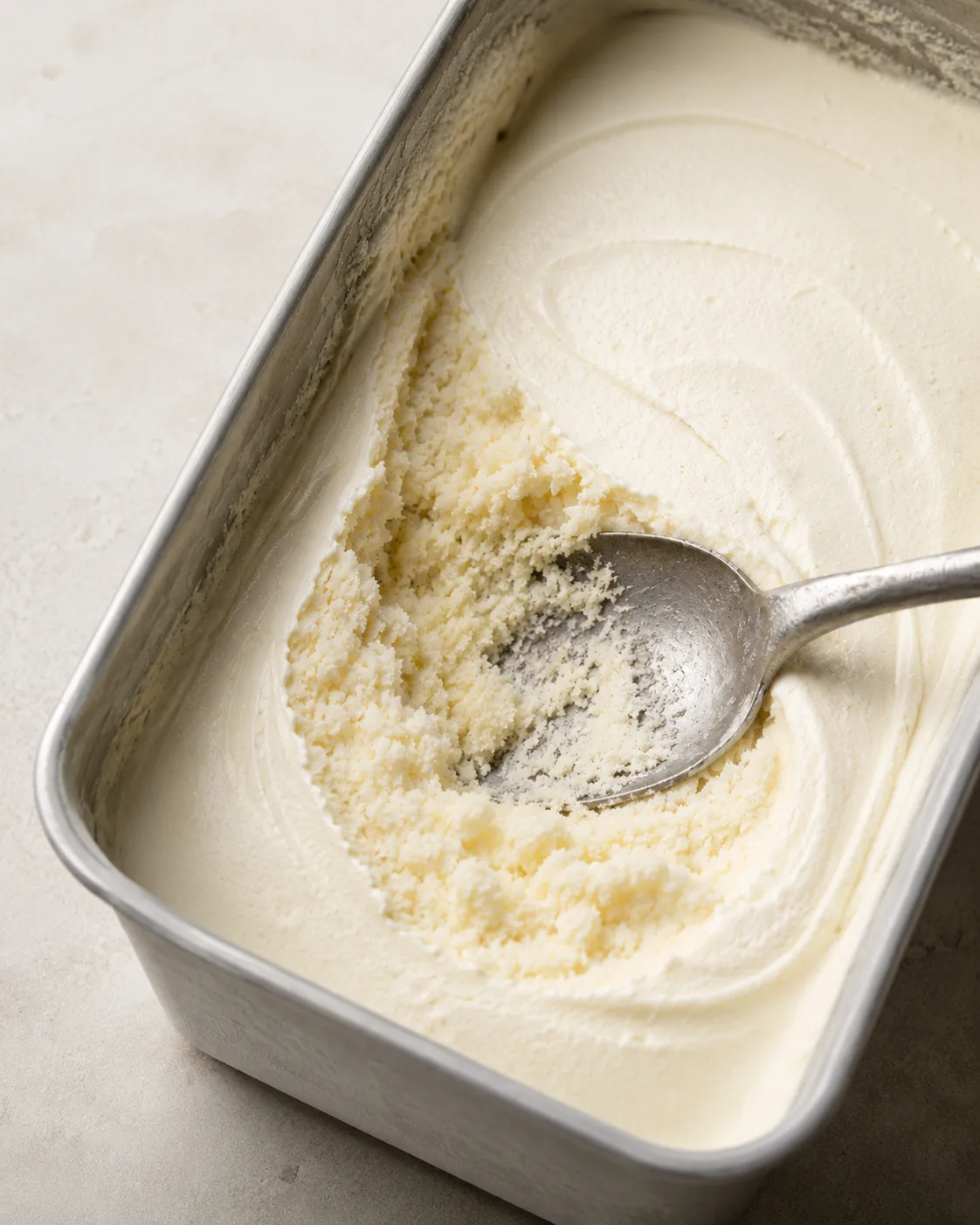
Because it has too much free water. When solids are missing — sugars, fat, milk powder — the water freezes into big crystals, and those crystals are exactly what you feel on your tongue. The flavour has not gone: it is diluted and frozen.
Why has mine come out sticky or chewy?
Almost always from too much stabiliser or from sugars with a very strong anti-freezing effect. The ice cream stops being creamy and starts stretching, like rubber. It is one of the few faults you fix by lowering something in the formula rather than raising it.
Why does it melt the moment I serve it?
From too little structure: not enough fat, not enough protein or not enough stabiliser. A well-built ice cream stands up for a few minutes before it starts to drip. If it turns into a puddle in seconds, the problem was in the mix, not in the freezer.
Why is it sandy?
There are two culprits and it pays to tell them apart: crystallised lactose, from overdoing the milk powder, or crystallised sugar, from a mix that is too concentrated. Both give that sandy feel, but they are fixed in different ways.
Why does it weep or separate?
Because the emulsion has broken: the fat has gone one way and the water the other. It usually comes from a badly done cooling or from not ageing the mix. If it happens to you, go back over the cooling-down step, which is where it is decided.