


Aprende · Fundamentos

What ice cream is,
really

Un helado no es solo “crema congelada”. Es uno de los alimentos físicamente más complejos que existen: hielo, aire, grasa, azúcares y agua conviviendo en equilibrio. Entender ese equilibrio es lo que separa un helado cremoso de un bloque de hielo dulce.

At heart, it is a mix of five key elements:
Hielo
Aire
Grasa
Sugar
Agua
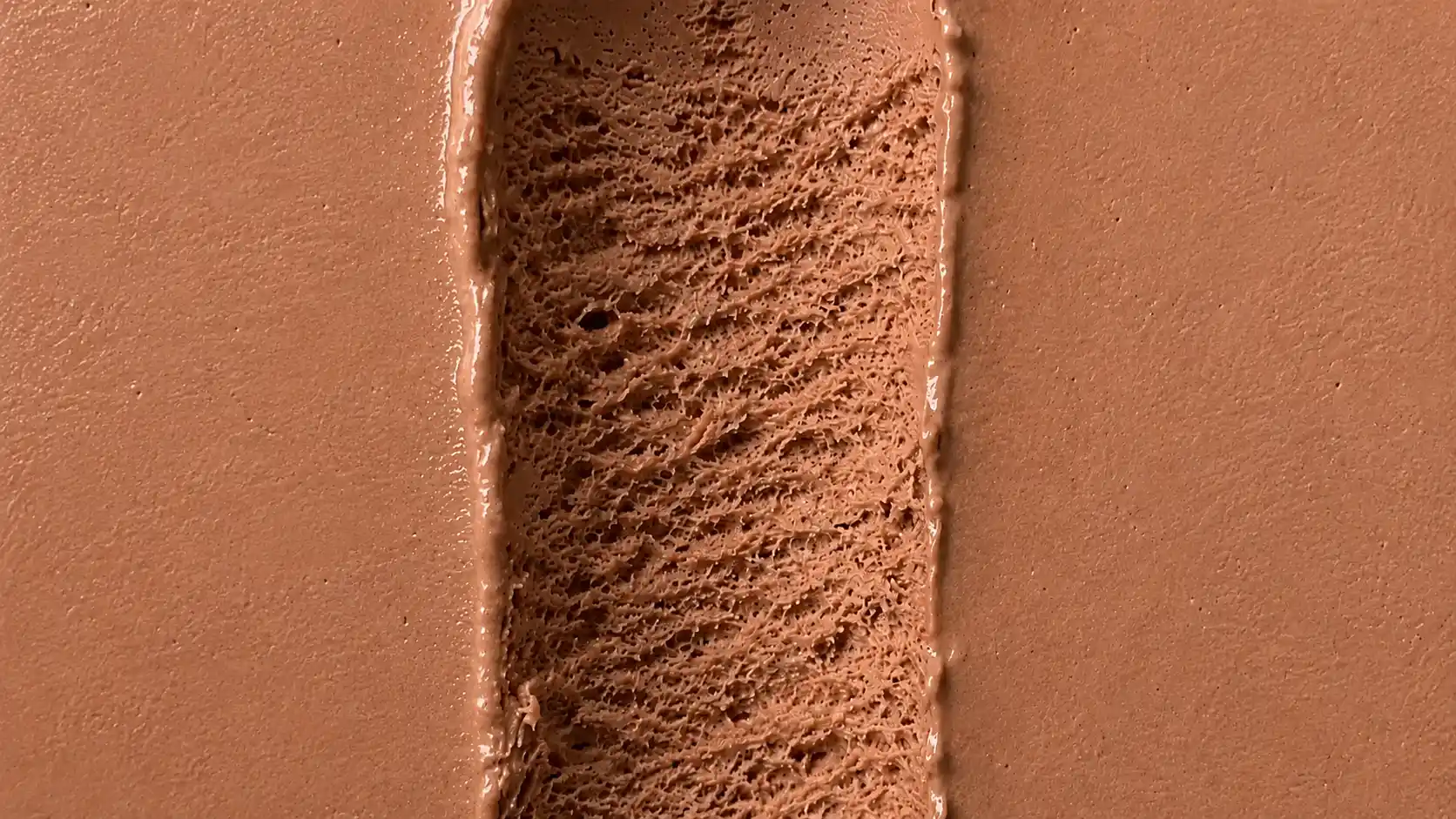
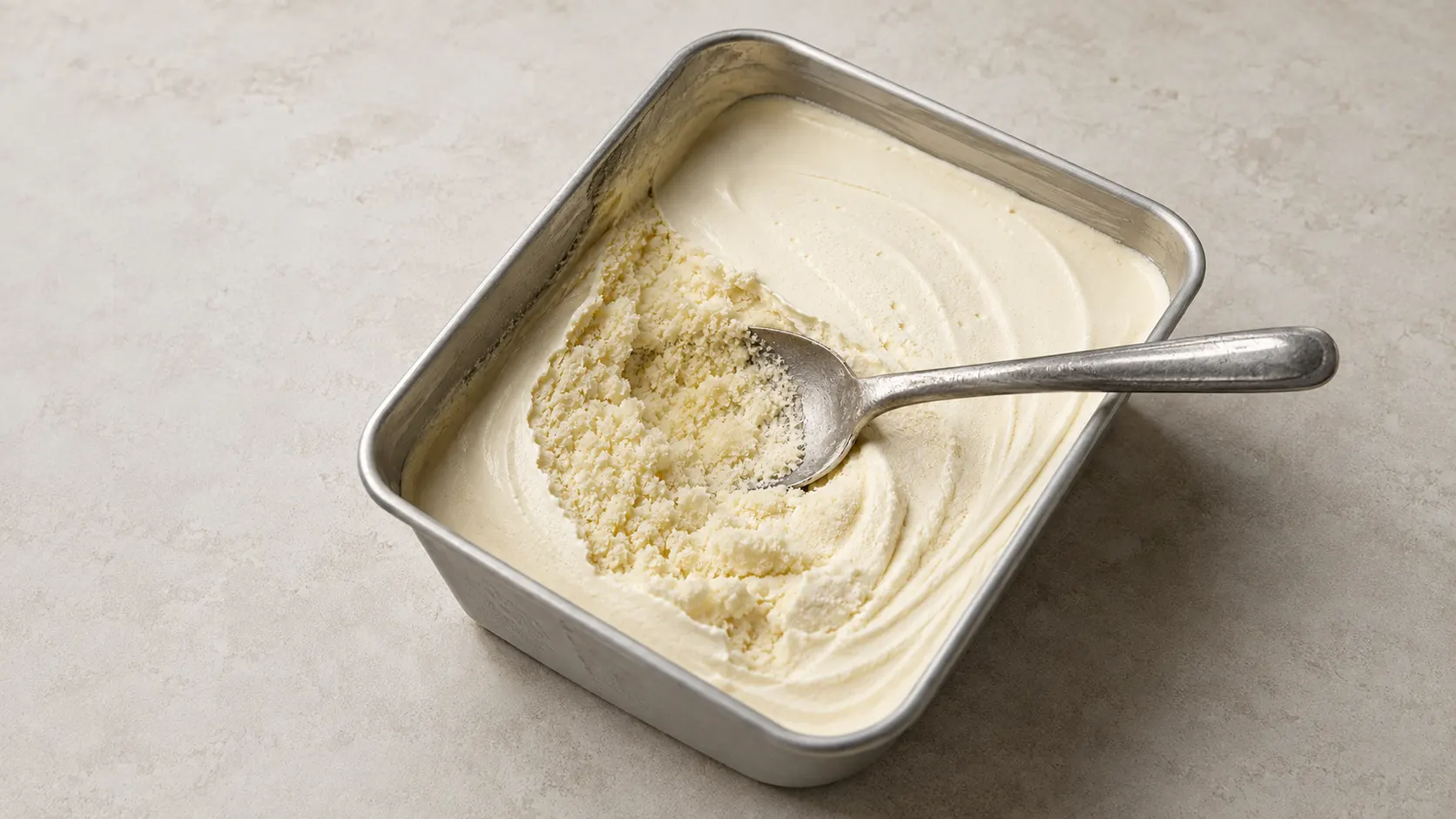
Textura de helado de chocolate recién espatulado en la cubeta
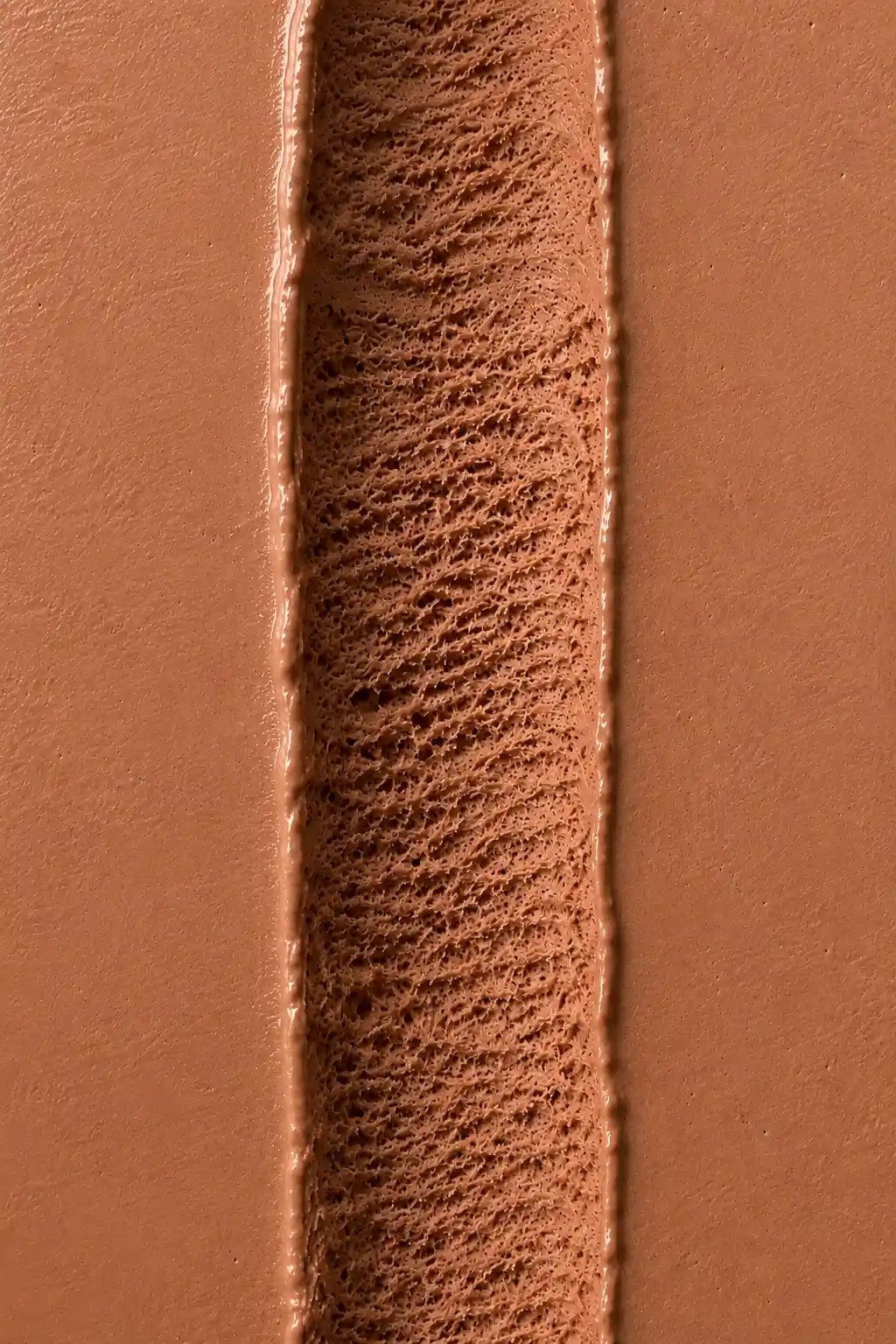
Textura de helado de chocolate con una franja espatulada en el centro
In one sentence

Ice cream is a partially frozen foam: tiny ice crystals and air bubbles caught in a creamy syrup of fat, sugars and milk solids that never freezes solid.

What it is made of

The players
in the formula

Cambia las proporciones y cambia el helado. Abre cada elemento para ver qué aporta y qué pasa cuando te pasas o te quedas corto.

The ingredient you do not pay for

El aire es un constituyente más del helado, y de los que más mandan en la sensación de ligereza o firmeza al servirlo. Se incorpora durante la mantecación, tomado del aire del propio obrador.

Fat: body and richness

Procede de la nata, la leche o de grasas vegetales. Envuelve las burbujas de aire y lubrica el paladar: es la principal responsable de esa sensación untuosa, del cuerpo en boca y de que el helado se derrita despacio y redondo. El punto está en el 8 %: it is the figure master ice cream makers recommend. Below it, richness is lost; above 12 %, it coats and dulls the flavour.

  En su punto

A rich mouthfeel, a round body and good resistance to melting.

  Outside the range

Too little: less richness and it melts sooner. Too much: it coats and dulls the aromas.

Sugars: sweetness and antifreeze

Hacen dos trabajos a la vez: aportan dulzor (POD) y rebajan el punto de congelación (PAC). Cada azúcar —sacarosa, dextrosa, fructosa, invertido, miel, glucosa…— tira de un lado distinto, y por eso casi nunca se usa uno solo. La sacarosa es la referencia, con POD 1; la dextrosa endulza menos pero freezes almost twice as much, and that is the trick that lets the scoop come out without a fight.

  En su punto

Balanced sweetness and an ice cream that is creamy and scoopable at serving temperature.

  Outside the range

Too few: hard as a rock and dull. Too many: cloying and it never sets properly.

Milk solids: structure

Son las proteínas y la lactosa de la leche, que se aportan sobre todo con leche en polvo desnatada. Retienen agua, dan cuerpo y ayudan a que los cristales de hielo se mantengan pequeños: eso es lo que se nota como textura fina. Pero esa leche en polvo lleva un 52 % de lactosa, and past 6 % of the total it crystallises and leaves an unmistakable sandiness. That is its ceiling, and it is best not to go near it if the ice cream will spend days in the freezer.

  En su punto

A firm body, a fine texture and good water retention, with fewer ice crystals.

  Outside the range

Too few: weak, icy ice cream. Too many: sandy texture from too much lactose.

Stabilisers: controlling the water

En dosis mínimas —décimas de porcentaje— ligan el agua libre y estabilizan la emulsión de grasa. Frenan el crecimiento de los cristales de hielo durante la conservación, que es cuando el helado suele estropearse de verdad. Se mueven entre el 0,3 y el 0,6 %, and they have to be stirred dry with some of the sugar: tipped straight onto the liquid they clump and nothing will break them up.

  En su punto

A texture that holds over time and less crystallisation after days in the freezer.

  Outside the range

Without them: it melts fast and crystallises early. In excess: gummy and heavy.

Water: the raw material of ice

It is the biggest component and the one that freezes. The whole job is governing how it does it: below about 40 micras the mouth reads it as cream; from about 50 it starts to notice them, and past 100 the ice cream reads as clearly coarse, icy. Coming out of the machine only half the water: the freezer handles the rest, and that is what makes it keep.

  En su punto

Frozen into microcrystals, it gives that creamy feel with no lumps of ice in the mouth.

  Outside the range

Too much free water, or water poorly handled: big crystals, coarse texture and hard ice cream.

Air: the invisible player

No sale en la báscula, pero sin él no hay helado: se incorpora al mantecar (el «overrun») y esponja la mezcla. Una heladera casera mete entre un 20 y un 40 % del volumen — por eso un litro de helado pesa bastante menos que un litro de mix. Esas burbujas miden entre 50 y 80 micras, almost the same as the ice crystals around them: that is why, when the crystals grow, they burst their walls and the ice cream loses air.

  En su punto

Light and creamy: the scoop comes out easily and the cold does not numb the flavour.

  Outside the range

Too little: dense, hard and very cold. Too much: foamy, with no body and little flavour.

The secret

Why good ice cream
never freezes solid

At serving temperature, between −12 and −10 °C, only part of the water is ice. The rest stays as unfrozen syrup: that is why you can scoop it.

Below that, more water freezes, the crystals grow and the ice cream turns hard as a rock.

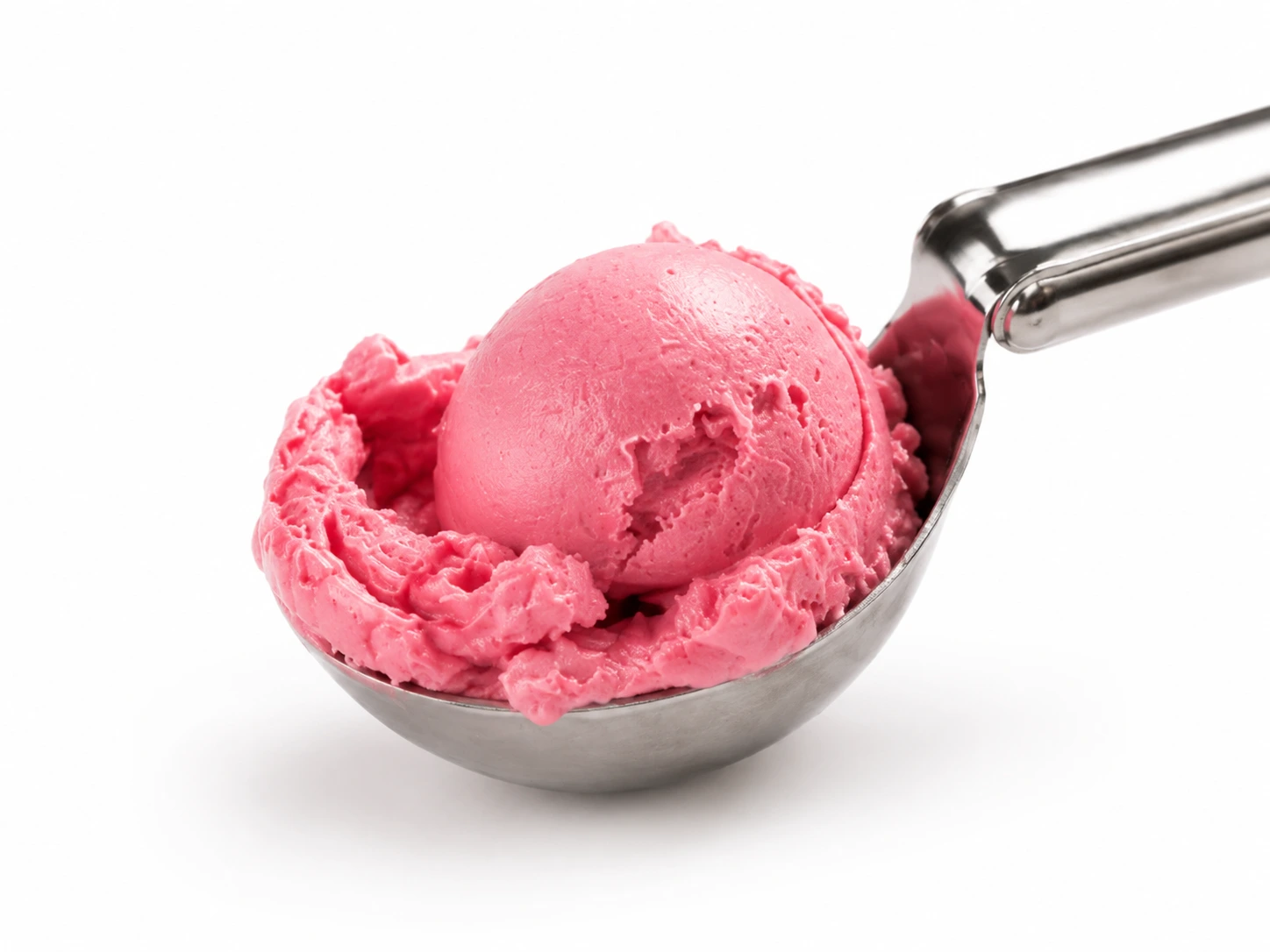
Bola de sorbete recién sacada con la cuchara de helado
POD · Poder edulcorante
%

Mide how much the recipe sweetens compared with ordinary sugar, which is the reference: sucrose = 1.

PAC · Poder anticongelante
°C

Mide how far it lowers the freezing point. The higher the PAC, the softer the ice cream stays at the same temperature.

Classification

Types of ice cream
by composition

In the UK the names come from the Food Labelling Regulations: what separates one from another is not the flavour, it is the fat and the milk protein.

Read the label, not the photo

«Dairy ice cream» needs at least 5 % fat and 2.5 % milk protein; plain «ice cream» allows vegetable fat. The legal name tells you more than the picture on the tub.

Que es un helado. Helado de crema

Dairy ice cream

In the UK, dairy ice cream needs at least 5 % fat and 2.5 % milk protein.

Que es un helado. Helado de leche

Ice cream

Plain «ice cream» needs at least 5 % fat, but that fat does not have to be dairy fat.

Que es un helado helado de leche desnatada

Reduced-fat ice cream

No separate legal name: what counts is whether it is dairy ice cream or plain ice cream.

Que es un helado helado

Ice cream

At least 5 % fat, dairy or vegetable, and milk protein for dairy ice cream.

Que es un helado helado de agua

Water ice

A water-based frozen product; it cannot be called ice cream.

Que es un helado. Sorbete

Sorbet

Sorbet is not a legal name in the UK: it is used by custom, for water-based fruit products.

Careful with «sherbet» in English

In the United States it is a legal name and asks for 2 to 5 % milk solids. In the UK a sherbet is a fizzy sweet, not a frozen dessert.. That is why one tub can carry two mentions at once: they are two labels that add up, not two different types.

«With strawberry» and «strawberry flavour» are not the same

In the UK there is no legal threshold for naming the fruit 15 % —un 10 % for citrus and exotic fruit, and a 7 % for nuts—. Where the law does not reach, read the ingredient list. «flavour».

In the UK there is no minimum weight per litre

Spanish law does set one: if so much air goes in that the litre drops below 430 g, it can no longer be called ice cream. That limit does not exist here. espuma, mousse o montado.

Artesano o industrial

Artisan ice cream and
industrial

La ley no distingue entre artesano e industrial: las siete denominaciones de arriba valen para los dos. Lo que de verdad los separa no aparece en el nombre, se ve en el envase y se nota en la cuchara —y casi todo se explica con una sola cifra: how much air it holds.

Check it yourself at the supermarket

The pack shows the volume in millilitres and the net weight in grams, though never together. Divide the weight by the volume y sabrás lo que pesa un litro de esa tarrina. Es la única manera de ver cuánto aire estás pagando.

Air is what separates them most

Industrial ice cream can reach 100 % air: half the tub is whipped air. Artisan stays well below that. So, for the same volume, the artisan one weighs a good deal more than the industrial one.

They are made in different ways

Artisan ice cream is churned in the workshop in small batches y se vende en días. El industrial se produce en continuo y está pensado para aguantar el transporte, el almacén y semanas en el congelador del súper.

Grasa láctea o grasa vegetal

The artisan works with milk, cream and fruit, which is what gives flavour and body. Industrial production often turns to grasas vegetales y aromas: they cost less and give the same result in every batch of the year.

So it works at home

Why your ice cream
casero sale mal

Almost every problem at home comes down to one of these five. The good news: they all have a technical fix.

Helado casero con cristales de hielo y textura arenosa en una cubeta

Sabe y cruje a hielo

Cristales grandes por falta de sólidos, demasiada agua libre o mantecación lenta. Sube el extracto seco y enfría bien la mezcla antes de mantecar.

Comes out hard as a rock

Not enough antifreeze (PAC). Swap some of the sucrose for dextrose or invert sugar: they lower the freezing point more and it stays scoopable.

Empalaga o no sabe a nada

POD out of balance. Too much sugar covers the flavour and softens too much; too little leaves it bland and hard. Measure the sweetening power before correcting the formula.

Melts into a puddle

No stabiliser or no ageing. Hydrate the mix cold for a few hours before churning: it holds the water and stands up better on the plate.

Crystallises after two days

Temperature swings in the freezer. Cover it in contact, keep it at a steady −18 °C and avoid opening and closing: the swing recrystallises the water in the ice cream.

The root of nearly everything

Formulating without measuring. Start from a balanced recipe and understand what each number does. And if yours already came out odd, diagnose your ice cream.

Vocabulario

Cuatro palabras
you will always hear

Master them and you will understand almost any ice cream recipe or formula.

You will see them in all our recipes and in the calculator: they are the language of formulas.

Overrun / aire

The increase in volume from the air taken in while churning. Too little = dense and heavy; too much = foamy and bland.

Extracto seco

Everything that is not water: fat, sugars and solids. The more total solids, the less free water and the more creaminess.

Mantecar

Freezing while beating at the same time. That beating breaks the ice crystals and takes in air: it is the step that gives the texture.

Maduración

El reposo en frío de la mezcla antes de mantecar. Hidrata proteínas y estabilizante y mejora cuerpo y textura.

Siguiente paso

Ya sabes qué es.
Ahora, con qué se hace

Ya conoces lo que pasa por dentro: grasa, azúcares, aire y frío trabajando juntos. El siguiente paso es llevarlo a tu cocina — la maquinaria que necesitas, los ingredientes que vas a comprar y el proceso completo, paso a paso.

Preguntas frecuentes

What is the difference between artisan and industrial ice cream?

En cuánto aire llevan dentro, en el tipo de grasa que usan y en el ritmo al que se producen. La ley, en cambio, no los distingue: the legal names apply to both. You have it set out above, in the artisan and industrial block.

What is overrun, the air in ice cream?

The air taken into the mix while churning, measured as a percentage of the starting volume. It is not a trick to sell less product: sin aire el helado no se puede comer, sería un bloque compacto. Lo que cambia entre uno bueno y uno malo es cuánto se mete.

Why does ice cream never freeze solid?

Porque los azúcares disueltos bajan el punto de congelación del agua. A la temperatura de una tarrina siempre queda una parte del agua sin congelar, y es justo esa parte la que hace que puedas meter la cuchara. En cada una de nuestras fichas te decimos qué porcentaje congela a cada temperatura.

Is mantecado a flavour or a technique?

Las dos cosas, y de ahí la confusión. Mantecar es la técnica de congelar batiendo. Mantecado, en cambio, es una denominación legal with a specific egg yolk requirement, not a flavour: you have it above, with the figure. That people ask for «a mantecado» meaning the classic flavour is another story.

Are ice cream, gelato and sorbet the same thing?

No. El gelato is Italian-style ice cream: less air and less fat than the American kind, and served a little less cold. A sorbete has no dairy, it is a base of water and fruit. And «ice cream» covers everything, which is part of the confusion.

How many families of ice cream are there?

Ojo, que son dos listas distintas. Las denominaciones legales son las que ves arriba y mandan en la etiqueta. Aparte están las familias de formulación that we work with: the calculations change, not the legal name. And the rest — vegan, lactose-free, sugar-free — are variantes de una base, no familias propias.

Entiende el helado

La teoría,
contada a tu medida

Te mandamos las guías técnicas y las recetas nuevas nada más publicarlas. Sin spam, solo helado bien hecho.