
Learn · Fundamentals

What machine do I need to
make ice cream?

The machine does not make the ice cream: the formula does. But the right equipment is the difference between a creamy texture and a block of ice. We tell you what you really need and what is optional.

Without a compressor
Ninja Creami
With a compressor
Batch freezer
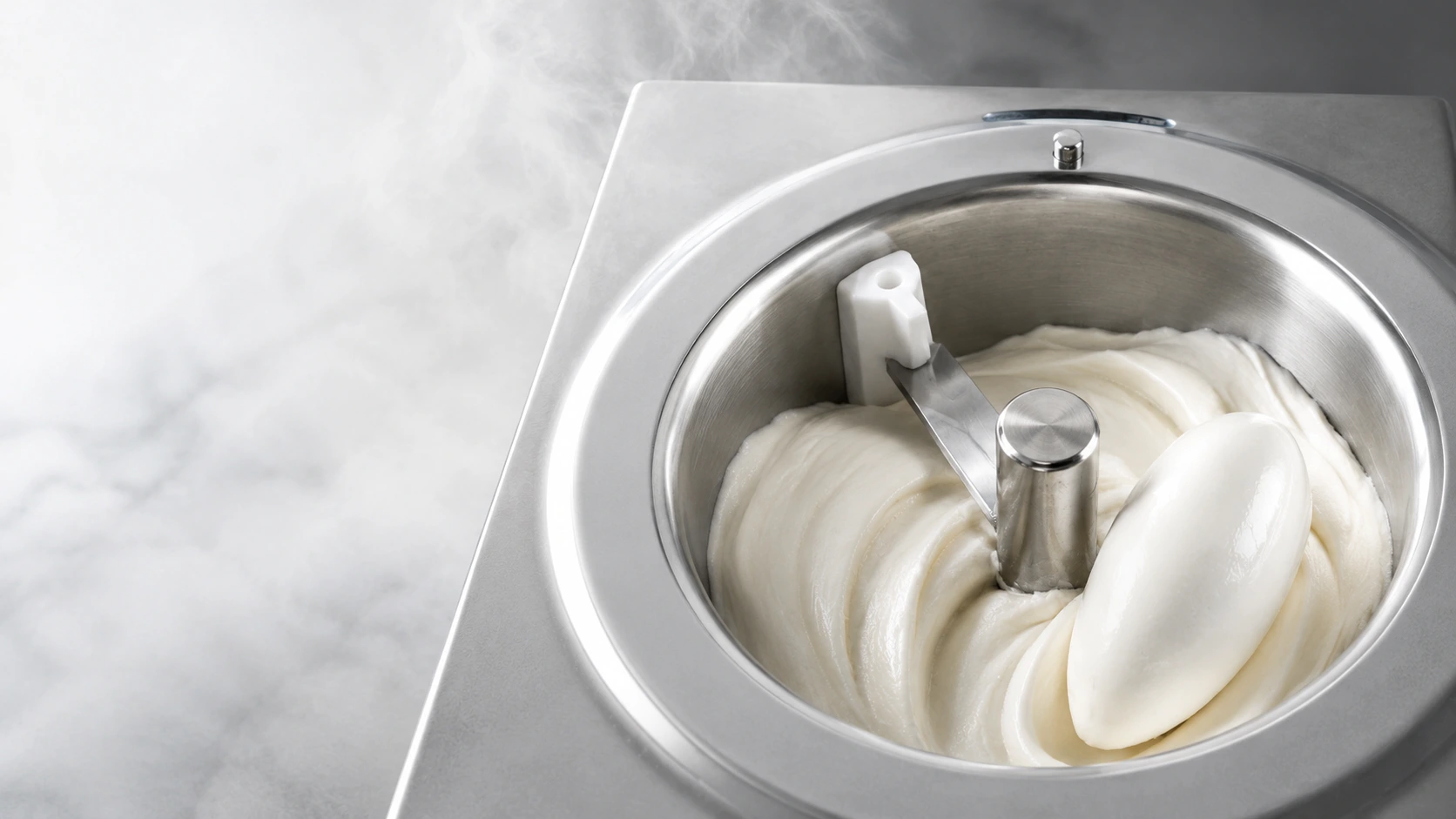
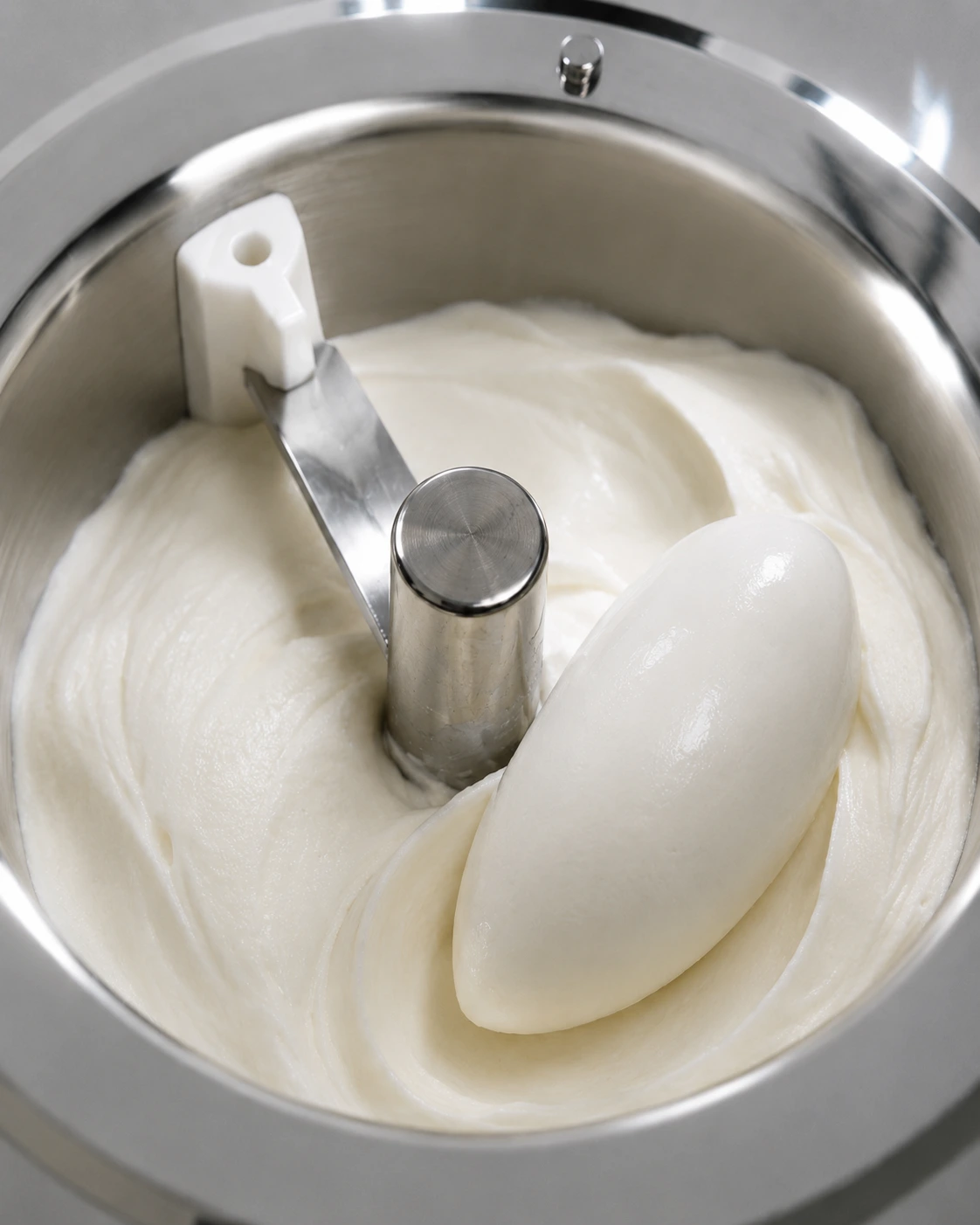
Ice cream machine bowl with freshly churned ice cream and a quenelle
What equipment do I need to make homemade ice cream. Header
The key idea

An ice cream maker does only two things: chill and churn at the same time.

That churning while it freezes is what breaks the ice crystals and gives the texture. Everything else is formula and technique.

Churns
Works in air and structure
Chills
Controls the temperature
Texture
Perfect creaminess
Consistent
Repeatable results
The main machine

Types of
ice cream maker

There are four broad types of ice cream machine — ice cream maker, sorbetière or batch freezer: the name changes, the job does not —, from least to most autonomy and price. Open each one to see how it works, its pros and its cons.

The machine will not fix a weak formula

It refines crystal size, but it does not fix free water or badly balanced sugars.

Without a compressor (freezer bowl)

€

A bowl with refrigerant liquid that you put in the freezer at least 24 h beforehand. The cold stored in the walls freezes the mix while a paddle churns it and works air in. Since the cold runs out, the churning loses force and only just enough air goes in: it comes out somewhat denser. It is the cheapest way to start.

  For

Cheap, compact and enough to start practising at home. The bowl lives in the freezer, ready for the next batch.

  Against

The bowl has to be frozen a day in advance and gives only one batch: for the next one, you wait all over again. And it takes up room: the bowl is not small and it lives in the freezer.

Frozen-block type (Pacojet / Ninja Creami style)

€€

It works the other way round from an ice cream maker: it does not churn a liquid to freeze it — you freeze the mix solid (24 h at −18 °C) and then a blade at very high speed shaves off micro-layers until it is a very fine cream. It is the Pacojet principle, which the Ninja Creami brought home.

Besides the Ninja CREAMi, we have analysed other frozen-block machines in depth, such as the Ufesa Gelatella and its touchscreen version, the Ufesa Gelatella Touch.

  For

Ultra-fine texture, little air (low overrun) and very intense flavour. Portions on demand and very forgiving with the formula.

  Against

The tub has to be frozen solid in advance and it works in small batches. It comes out dense and sometimes asks for a second pass (the “re-spin”).

With a compressor (self-contained)

€€€

It has its own cooling motor, like a mini fridge. Nothing to pre-freeze: switch on, pour in and it runs batch after batch. With constant cold, the paddle churns with the same force throughout and the air goes in evenly: fine crystal and stable overrun. The step up in quality for anyone serious about it.

  For

Constant cold from start to finish, so it freezes fast and the crystal comes out fine. You can run batches back to back without depending on the freezer.

  Against

More expensive, heavy and somewhat noisy, and it takes up a permanent spot on the worktop. Each batch takes between 30 and 60 min, cooling included.

Vertical batch freezer / professional

€€€€€

The gelateria machine: vertical or horizontal cylinder with industrial power and cold. It churns in minutes, with controlled overrun and a large capacity per batch; the vertical one is the classic workshop machine and the horizontal one takes more volume. It is designed for production, not for home use.

  For

Top quality and speed: it freezes in minutes, with fine control over the churning and the air worked in. It is the one that lets you work batch after batch.

  Against

Professional-level price and size, and it needs a place of its own. Overkill for home use unless you produce or sell regularly.

HOW TO CHOOSE

Which one
suits you?

If you are starting out and do not want to spend, the bowl one.
Most people end up with a compressor machine: it is the one that pays off most at home.

Quick tip

If you are torn between bowl and compressor, look at how many batches you will run back to back: for one, the bowl is enough; from two on, you need a compressor.

TYPE
PRICE
FOR WHOM
GUIDE
Freezer bowl
€
Starting without spending
—
Ninja Creami
€€
Ultra-fine texture, single servings
With a compressor
€€€
The step up in quality at home
★ RECOMMENDED
Batch freezer
€€€€
Production and sale
—
Besides the machine

The kit that makes
the difference

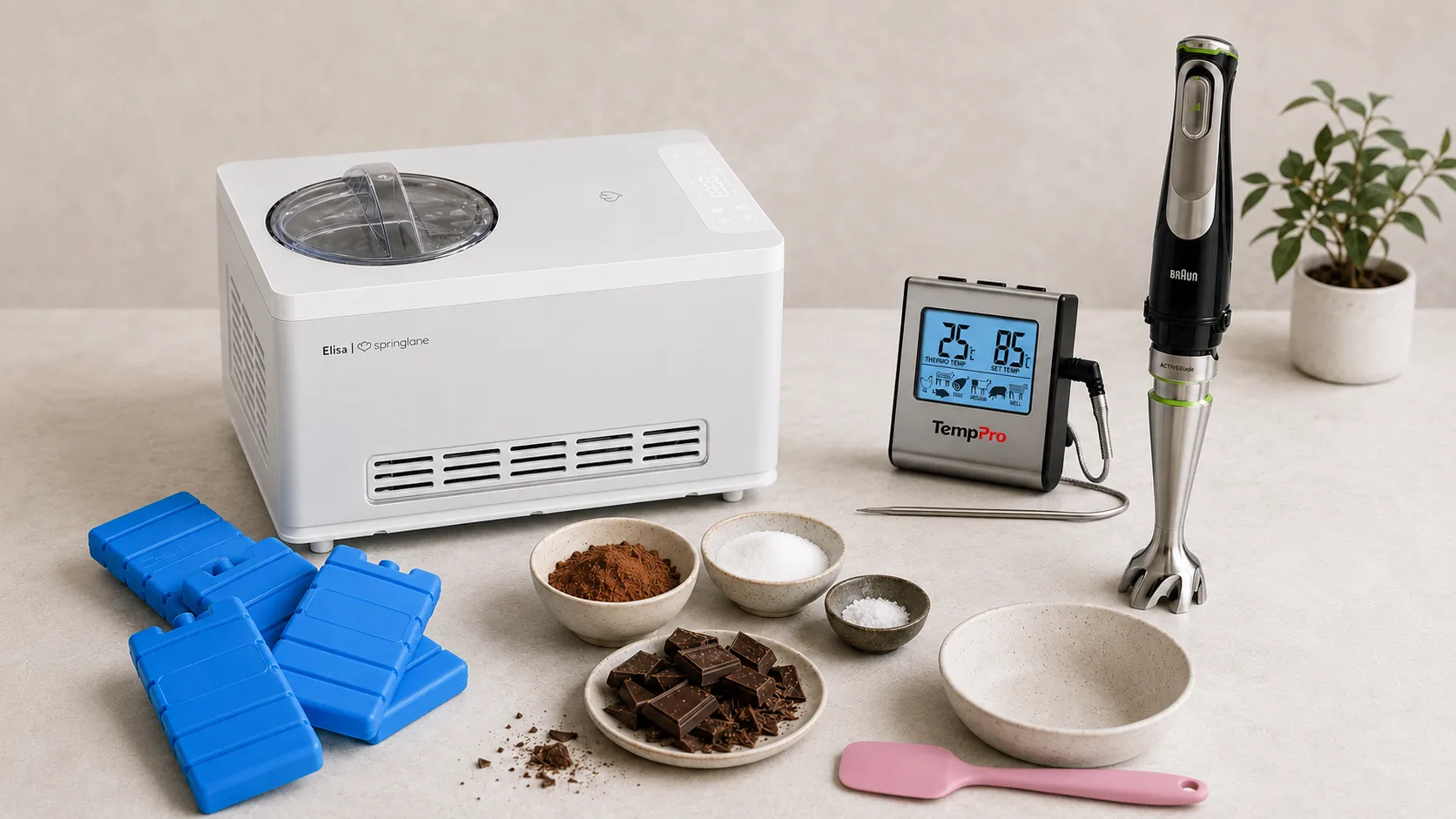
You do not need a workshop. With these tools you control the points where an ice cream is really won or lost: the pasteurisation temperature, the exact weight of each sugar and how fast you cool the mix.

What equipment do I need — overview

Kitchen thermometer

Essential. It controls pasteurisation (85 °C) and cooling. Without one you are blind at the most delicate step. The probe, halfway up and without touching the bottom: pressed against the metal it measures how hot the pan is, not the mix.

Precision scale

Essential. Down to 0.1 g for the stabiliser and the sugars. Formulating means weighing to the gram, not “by eye”.

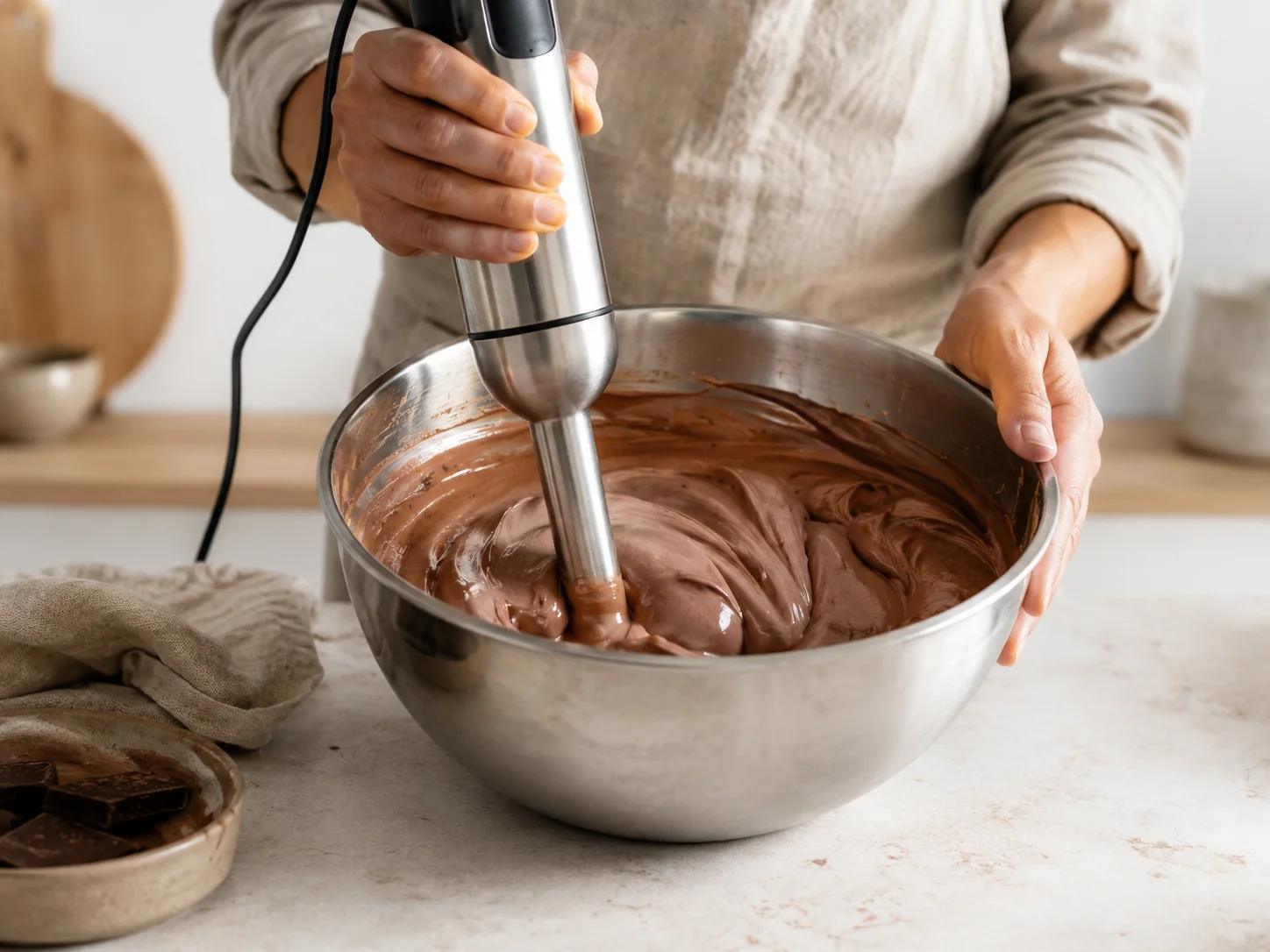
Hand blender / stick blender

Strongly recommended. It emulsifies the mix and spreads the fat: a finer, more homogeneous base before churning.

Stainless steel bowl

Essential. For mixing and, above all, for blast-chilling: sitting in iced water, steel brings the temperature down far faster than plastic.

Cool packs

Strongly recommended. Ice packs to cross the lukewarm band as fast as possible while cooling the mix: less risk and better keeping.

Scoop / ice cream spoon

Optional. For serving clean, good-looking scoops. Dip it in hot water between scoops and they will come out perfect.

What equipment do I need for ice cream — ice cream without a machine
The million-dollar question

Can you make ice cream
without a machine?

Yes, but with a trick. Without continuous churning, the water forms big crystals. The home method is to freeze the mix and beat it hard every 30-40 minutes during the first few hours to break those crystals by hand.

It works better the more balanced the formula is: the more dry extract, the less free water is left loose and the less crystal forms. Even so, the result will never be as fine as with a machine that churns and freezes at the same time.

And with a Thermomix-style food processor? It grinds the frozen mix, so it belongs to this same family of workarounds: it does not shave micro-layers like a Ninja, breaks the block up by force and in doing so it warms it. It comes out grainy and has to be served straight away. It gets you out of a bind if you already have one at home; it is not an alternative to buying an ice cream maker.

Freeze the mix

Put it in the freezer in a wide container.

Beat often

With force, not by stirring: the point is to break the crystals, not to mix.

A balanced mix

The sugar and the fat are the ones that bind the water; without them there is nothing to be done.

Before you buy

Mistakes when
choosing a machine

Speed decides the texture

The faster the mix freezes, the finer the crystal. That is where the compressor wins.

1

Buying on price alone

The pre-frozen bowl one is cheap, but it limits batches and power. If you are serious, the compressor pays for itself quickly.

2

Ignoring the usable capacity

The bowl is not filled to the top: ice cream grows with the air. Count on 60–70 % of the nominal capacity.

3

Forgetting the freezer

The machine leaves the ice cream soft; to store it you need a freezer that really reaches −18 °C.

4

Not looking at noise and time

Compressor machines are noisier and take 30–60 min per batch. That is normal, but worth knowing beforehand.

Next step

Now you know what it is made with.
Now, what it is filled with

You now know which machine you need and how far it goes. The next step is the pantry: which ingredients to buy, what each one is for and how they combine in the mix.

Frequently asked questions

Ice cream maker with or without a compressor?

The compressor one cools by itself and lets you run batches back to back; the bowl one has to be frozen 12 or 24 hours ahead and gives a single batch. If you make ice cream now and then, the frozen-bowl one does the job. If you get hooked, the compressor one pays for itself in time saved.

Is the Ninja Creami worth it?

It is a different thing, not a worse ice cream maker. It does not churn: freezes a block and then shaves it. It works very well for single-serve tubs and for high-protein recipes, and only so-so for anything with alcohol, because those mixes never freeze hard enough. In our reviews you will see the formula adapted to it where there is one.

Is a Thermomix-style food processor any good for making ice cream?

As a stopgap, yes, but do not expect the same texture: the bowl breaks the ice into pieces instead of shaving it, and that shows on the spoon. If you already have one at home, try it before spending anything; if what you are after is creaminess, this is not the way.

What else do I need besides the machine?

Less than you'd think: a scale that weighs to the gram — this is not negotiable, because formulating works in grams —, a thermometer, a stick blender and tubs with lids. Everything else is comfort.

What machine capacity do I need?

Look at the litre of mix, not the bowl's: churning grows the volume with air, so a machine is never filled to the brim. At home, a litre of mix per batch is plenty.

And if I don't want to buy any machine?

It can be done by hand, with the method explained above. The result is worse and it is a good deal more work, but it can be done, and it is the honest way to find out whether this is for you before spending anything.

Make the most of it

Recipes designed
for your machine

We send you the new recipes and the technical guides as soon as we publish them. No spam, just properly made ice cream.