
Learn · Fundamentals

What ingredients
do I need to
make ice cream?

There are not many, but each one performs a technical job. Understanding what fat, solids, sugars and stabiliser contribute is what lets you formulate instead of copying recipes blindly.

Fat
Milk solids
Sugars
Stabilisers
Flavourings
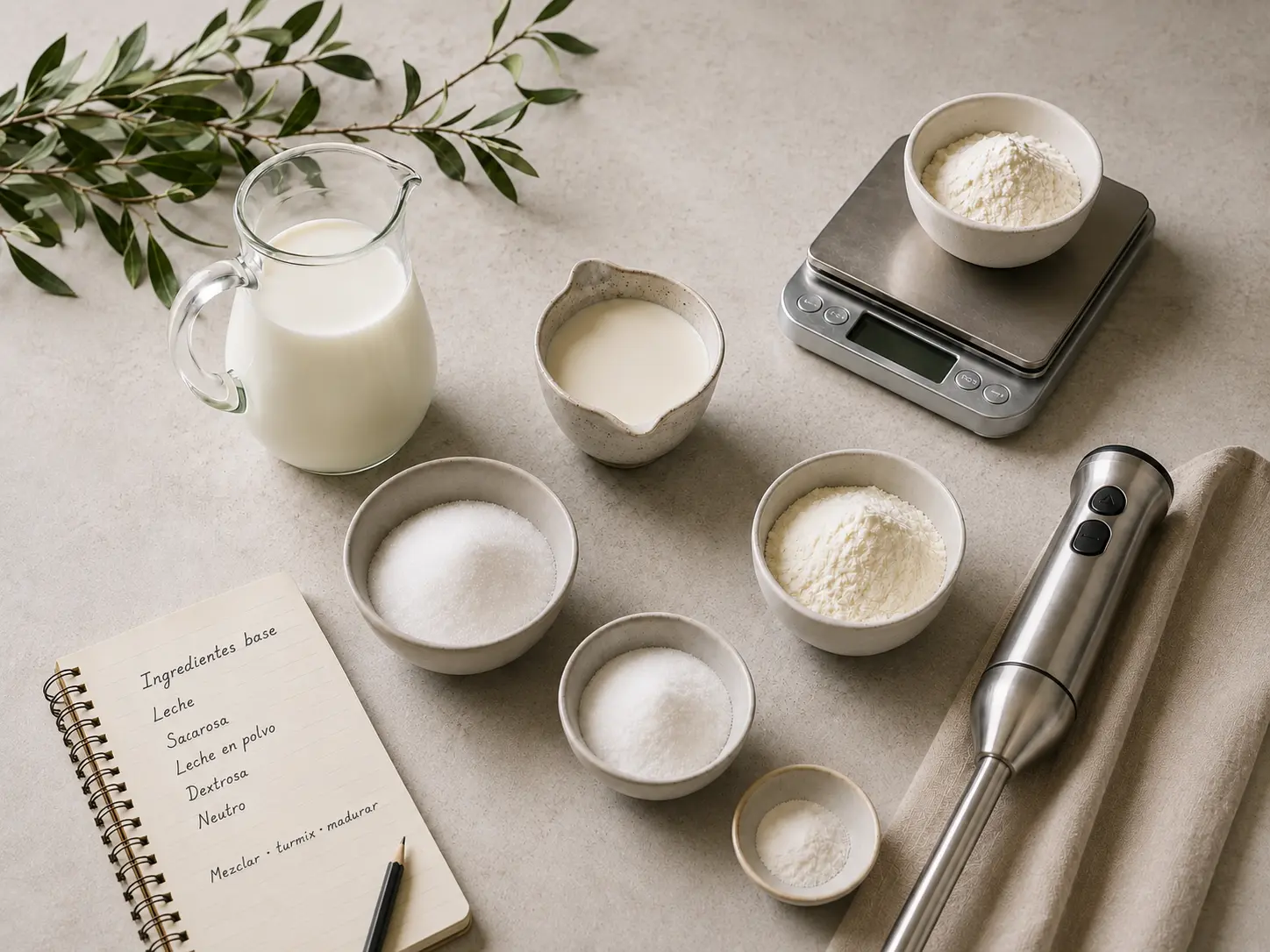
Base ingredients for homemade ice cream weighed out on the worktop
The key idea

An ice cream is built by balancing four groups: fat, milk solids, sugars and stabilisers. Changing one affects the others; that is why you formulate rather than improvise.

The groups

The ingredients for making ice cream,
by function

Tap each group to see what it contributes, which products belong to it and what proportion it moves in.

Fat

Usual proportion: 2.5–12 % in milk and cream ice creams; 0 in sorbets.

It brings body, unctuousness and a slow, pleasant melt in the mouth. It coats the air bubbles and carries a good share of the aromas, which are fat-soluble. It can be dairy (cream, butter, whole milk) or vegetable in the lactose-free versions.

Common products

Cream 35 %

Whole milk

Butter

Egg yolk

Coconut fat

Tip: do not chase maximum fat: overdone, it clogs and masks the flavour. Balance rules.

Proteins and milk solids

Usual proportion: 8–12 %

These are the milk proteins (casein and whey) plus the lactose. They give structure and body, help take in and hold air, hold the water and keep the ice crystals small. They come in with skimmed milk powder, and whey powder even works for sorbets.

Common products

Skimmed milk powder

Whey protein

Milk protein

Condensed milk

Whey powder

Tip: the proteins improve texture, but they come along with the lactose: above 6 % relative, lactose crystallises and turns gritty. Raise the protein without letting it run away.

Sugars

Usual proportion: 16–22 %

They do two things at once: they sweeten — POD, sweetening power — and they lower the freezing point — PAC, anti-freezing power. Combining several lets you set sweetness and hardness separately, which is impossible with ordinary sugar alone: that is why a serious recipe never uses a single sugar.

Common products

Sucrose

Dextrose

Spray-dried glucose

Invert sugar

Honey

Fructose

Maltodextrin

Tip: dextrose lowers the freezing point more than sucrose and sweetens less: perfect for softening without cloying.

Stabilisers and emulsifiers for ice cream

Usual proportion: 0.3–0.6 %

An ice cream stabiliser works in tiny doses: it binds the free water, stabilises the fat emulsion and slows crystal formation during storage. It is the difference between an ice cream that lasts days in the freezer and one that crystallises within a few hours.

Common products

Ice cream stabiliser

Locust bean gum

Guar

Mono- and diglycerides

Tip: always hydrate them mixed with part of the sugar and while hot; tip them in all at once and they clump.

Flavourings and flavour ingredients

Usual proportion: variable

What gives personality: fruit, chocolate, nuts, vanilla, coffee… They bring flavour, but also their own water, fat or sugar, so they have to be counted inside the recipe's balance and not added on top.

Common products

Pistachio paste

Cocoa / couverture

Vanilla pod

Fruit and purées

Coffee

Tip: an acidic or very watery fruit changes the balance: adjust it in the formula, do not throw it in “by eye”.

The group that causes most confusion

The sugars,
in detail

Not all sugars sweeten or freeze the same: that is the tool for steering the ice cream. They are measured with two coefficients, the POD (sweetening power, sucrose = 1) and the PAC (anti-freezing power, negative per gram).

More POD, sweeter; a more negative PAC, softer ice cream. Adding up what each sugar contributes gives the figure for the whole, and the PAC of the mix is expressed in negative °C.

They sweeten

They provide the sweetness you perceive. That is measured by the POD.

They act as antifreeze

They lower the freezing point. That is measured by the PAC.

They give body

They are solids: they give texture and hold back the ice crystals.

Sugar
POD
PAC
What we use it for
Sucrose (ordinary sugar)
1
−0,64
The reference. It brings sweetness and structure; it is the baseline everything is measured against.
Dextrose
0,7
−1,22
It sweetens less and lowers the freezing point a lot: it softens the ice cream without cloying.
Dried glucose 21 DE
0,15
−0,30
It barely sweetens or lowers the freezing point: pure body and solids. The basis of low-sweetness ice creams.
Dried glucose 38 DE
0,3
−0,39
It gives body and solids, sweetens and lowers the freezing point only a little: texture and a brake on crystals.
Maltodextrin
0,15
−0,21
Very low DE glucose: body and solids without sweetness. The one for ice creams with alcohol.
Invert sugar 70 %
1,25
−1,22
Very sweet and very anti-freezing. In a small dose, for creaminess and intense flavours.
Honey
1,25
−1,22
Like invert sugar, but it brings its own flavour. Use it when you want to taste it.
Fructose
1,7
−1,22
The most powerful in sweetness and anti-freezing. Use it sparingly, above all in sorbets.

Reference coefficients: POD as a factor (sucrose = 1) y PAC as a negative coefficient per gram. The contributions of every sugar are added up to get the mix's POD (in %) and PAC (in negative °C). They vary somewhat by manufacturer, especially glucoses according to their DE.

A professional nuance

Relative PAC vs absolute PAC

PAC is calculated over the whole recipe (relative), but the only thing that freezes is the water. The figure that really sets serving hardness is the Absolute PAC, which relates that calculation only to the water it contains.

Absolute PAC = relative PAC × (100 − total solids) ÷ 100

A sorbet with relative PAC −16.5 and 30 % solids → −16.5 × 0.70 = −11,5 °C real serving ones.

In practice

Three ingredients that come in through two doors

Some ingredients do not fill a single box: they contribute to two or three groups at once. If you do not subtract them from the rest, the formula slips away without your knowing where.

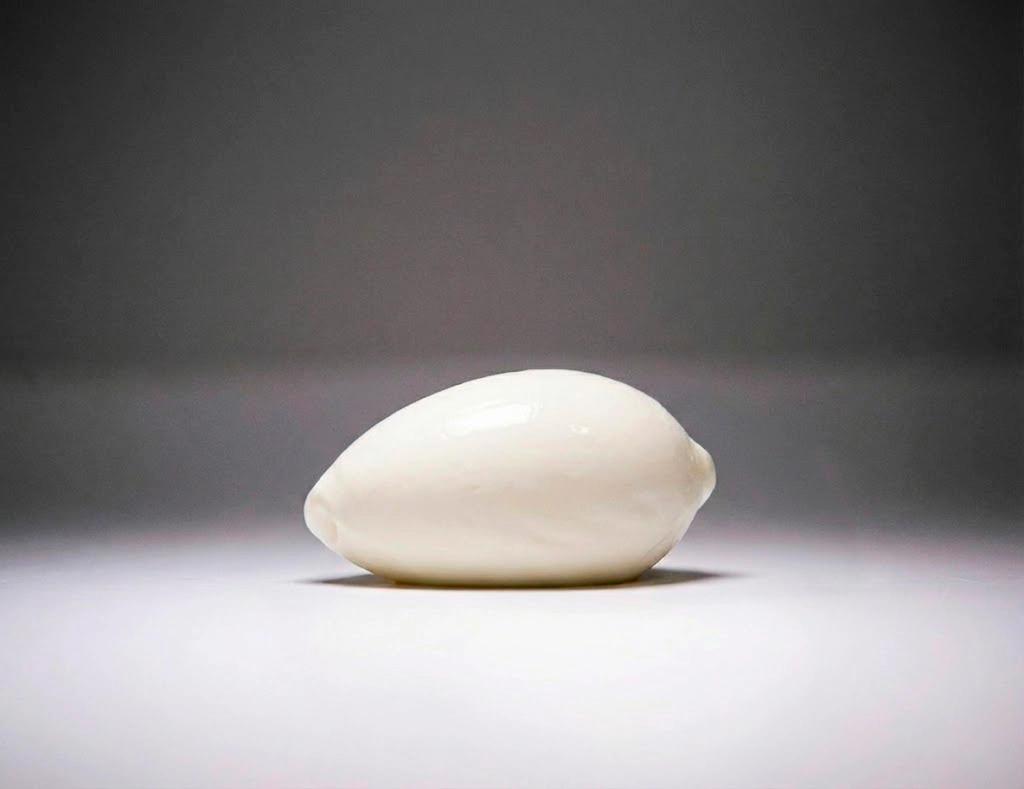
Quenelle of yoghurt ice cream
Milk solids

The yoghurt counts twice: it brings protein and acidity, and gives body without raising the fat. A plain yoghurt puts in about 3.9% protein and a 4 % lactose, and that lactose counts against the 6 % ceiling.

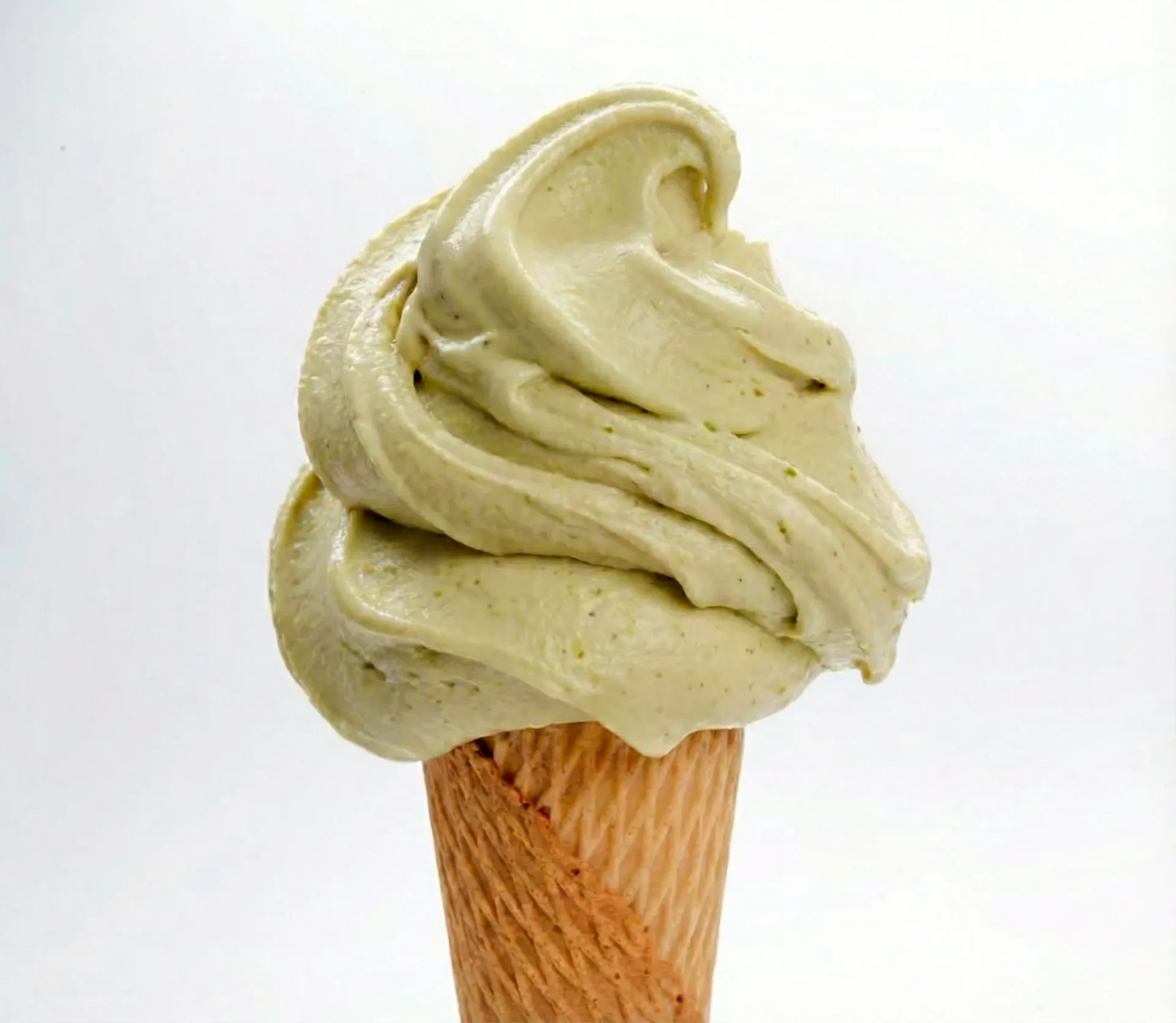
Pistachio ice cream in a cone
Vegetable fat

La pistachio paste brings its own fat and its own solids: 100 g bring 52 g of fat — more than 150 g of cream — and 94 g of solids. They always have to be counted, whether the base is milk or water.

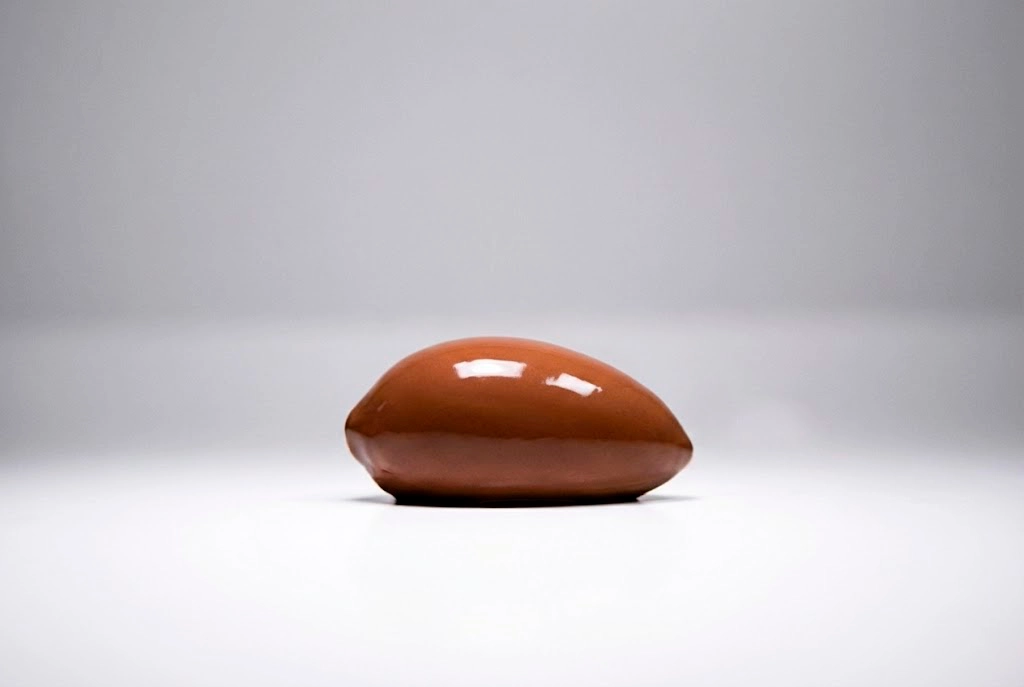
Quenelle of chocolate ice cream
Fat and sugar

The chocolate brings its own butter and its own sugar: a 64 % couverture puts in 36 g of fat and 34 g of sugar per 100. They have to be subtracted from the rest, or it will come out hard and cloying.

Where to aim

Indicative parameters
by type

There is no ideal recipe — it depends on your area, your display cabinet and the flavour — but there are reference ranges so your formula lands where it should. The POD is in % and the PAC is the absolute one, that is, the actual serving temperature in negative °C.

How to read the table

Use these ranges as a starting point. Then fine-tune with the calculator according to your flavour and your raw material.

Type
POD (%)
PAC abs. (°C)
Solids
Fat

Notes

Custard ice cream
POD (%)15–18
PAC abs. (°C)−11
Solids36–42 %
Fat8–12 %

The creamiest: fat and cream rule. Below 8 % it is a milk ice.

Ice cream
POD (%)15–18
PAC abs. (°C)−11 a −12
Solids34–38 %
Fat2,5–8 %

Lighter, with a cleaner dairy flavour. From 8 % up it is a cream ice.

Fruit sorbet
POD (%)16–20
PAC abs. (°C)−11 a −12,5
Solids26–34 %
Fat0 %

No fat: the body comes from the fruit, the sugars and the stabiliser.

Reference ranges cross-checked against the formulated recipes on this site. For sorbet we give a deliberately wide range: the classic reference is POD 18–20 % and PAC −11 to −12 °C, but taste has moved towards less sweet desserts and today a sorbet works very well from 16 % POD, with a slightly colder PAC to compensate. Adjust for your area too: for hot climates or for serving from a freezer cabinet, a colder (more negative) PAC is preferable.

Next level

What really
makes the difference

Four ideas that separate a correct ice cream from a rounded one. Not tricks: this is how the mix behaves inside.

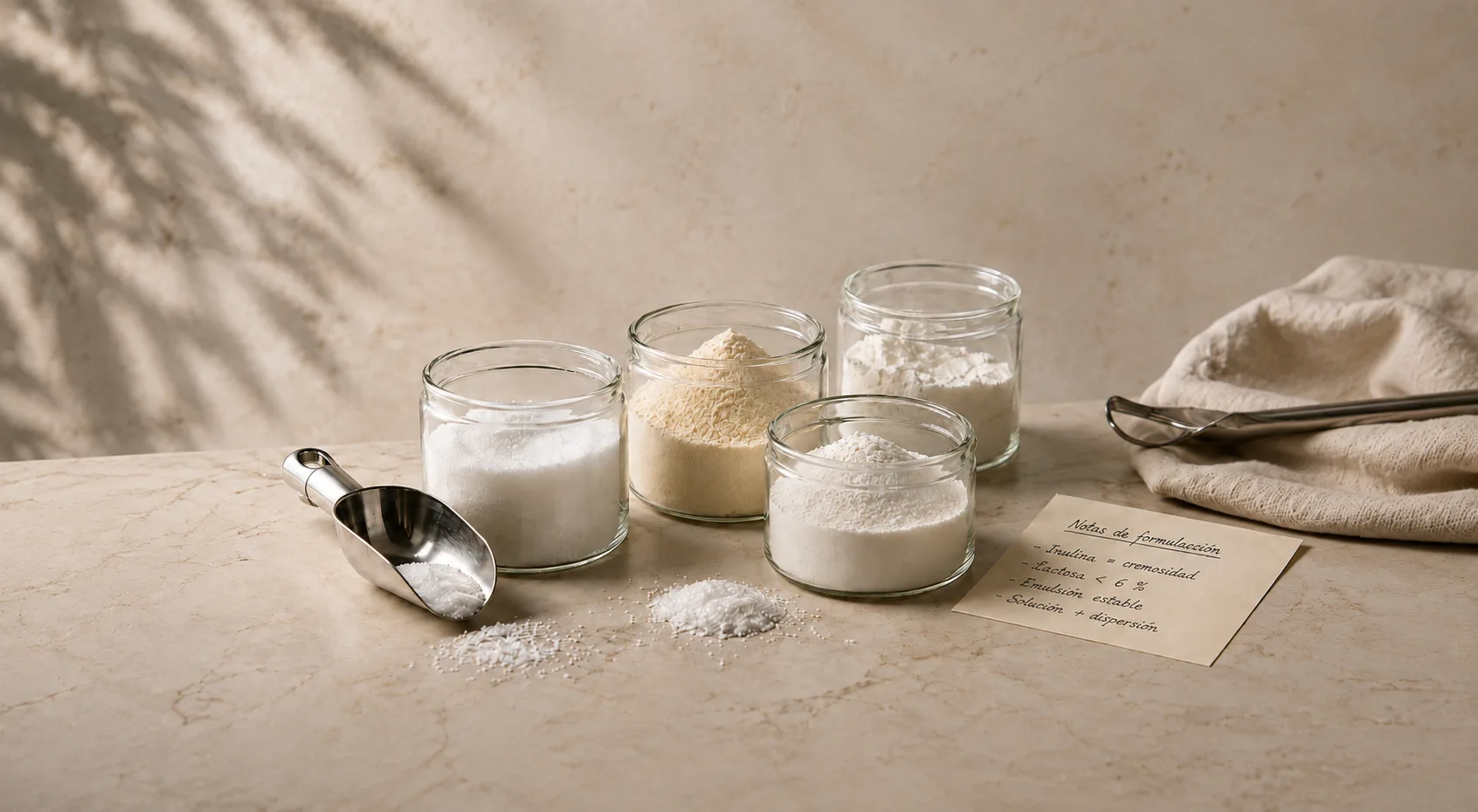
Powdered sugars and stabilisers weighed out in glass jars
Plant fibre

Inulin: creamier and less cold

Inulin is a soluble fibre that raises the solids while barely touching POD or PAC. It brings body, creaminess and warmth, and leaves you cut the sugar without the ice cream coming out colder. Usual dose: 1–3 %, and no more than 40 g per litre: past that dose it causes wind and is laxative.

A common myth

Emulsifiers do not emulsify

An emulsifier does not join fat and water on its own: it only holds an emulsion you have created mechanically beforehand. That is why the mix has to be beaten well — whisk, stick blender or better still a high-speed emulsifier — and to do it while hot, which is when the fat breaks up best.

The forgotten sugar

Watch out for lactose

It is milk's own sugar and the most troublesome: above a 6 % of the total mix it crystallises and leaves an unpleasant sandy texture. It cannot be removed if you use milk, but it can be controlled — careful, because the skimmed milk powder contains ~52 % lactose—.

What it looks like inside

Solution, emulsion and dispersion

In an ice cream three states coexist at once: the solution (sugars and salts dissolved in water), the emulsion (fat spread through the water) and the dispersion (fibres, nuts, cocoa that do not dissolve). A good ice cream keeps all three together and stable until you eat it.

Haztuhelado product pack
We make it easy

Not sure what to buy, or where?
We show you where

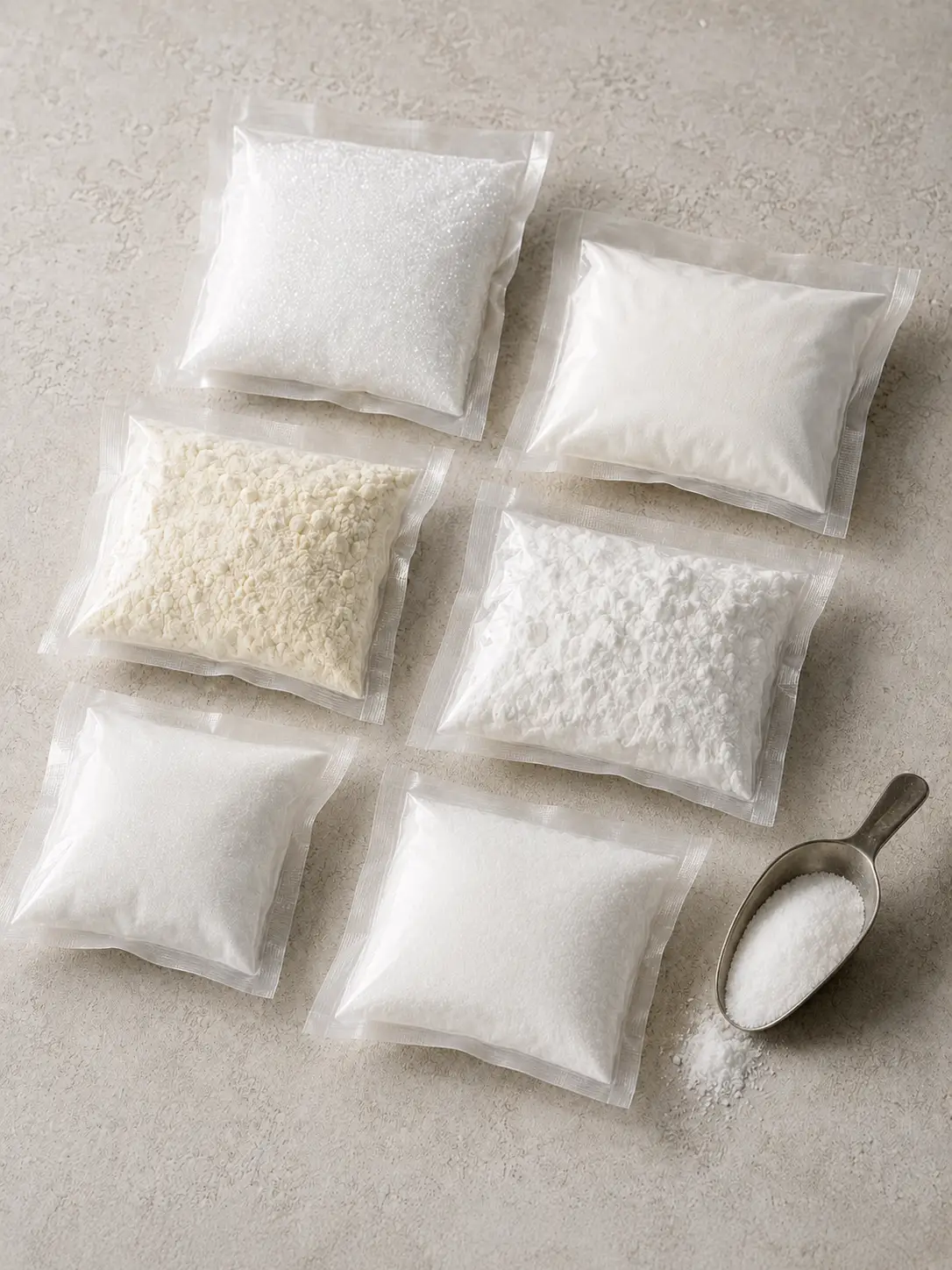
Many ice cream ingredients (dextrose, atomised glucose, neutrals, inulin) are hard to find in a supermarket. In the shop you have the technical ingredients we work with , each with a link to buy it.

The exact ingredients our recipes use

Professional-quality ingredients, at the right dose

Without the hassle of hunting down separate suppliers

See the technical ingredients

We reply fast, with no obligation.

So nothing goes wrong

Common mistakes
with the ingredients

Four slips that keep coming back. None of them shows while weighing: they show later, in the texture and the flavour.

Golden rule
With ordinary sugar alone, ice cream comes out hard at serving temperature: the antifreeze sugars are the ones that lower the PAC and leave it creamy.

Using only ordinary sugar

Sucrose on its own sweetens but softens little. Add dextrose to bring the hardness down, and atomised glucose to give body without sweetness.

Forgetting the milk solids

Without milk powder the base stays watery and crystallises: the solids give body, hold water and prevent those ice crystals.

Overdoing the stabiliser

More is not better: in excess it turns gummy and chewy. It moves in tenths of a percent, so weigh it precisely and never by eye.

Poor-quality ingredients

The final flavour cannot be invented: a mediocre vanilla or cocoa gives a mediocre ice cream. Always start from good raw material.

Formulating is precision: half a tenth too much of a sugar already shows on the spoon.

Next step

Now you know what to buy.
Now, how it comes together

You now know what goes into the mix and what each thing contributes. The next step is the process: weighing, pasteurising, ageing and churning until you hit the texture you are after.

Frequently asked questions

Do you need a stabiliser to make ice cream at home?

For a tub you are going to eat today, no. For it to last a week without filling with crystals, yes, it helps a lot. The stabiliser holds the free water and stops it from moving and refreezing into big crystals, which is what makes a three-day-old ice cream taste of ice.

What exactly is an ice cream stabiliser?

A ready-made blend of stabilisers and emulsifiers, dosed so you do not have to weigh each gum separately. There are for custard and for fruit, and they are not interchangeable: they work with very different amounts of water.

Why isn't ordinary sugar alone enough?

Because ordinary sugar does two jobs at once — sweetening and keeping the water from freezing — and you do not always want them in the same proportion. With dextrose and glucose you can lower the freezing point without raising sweetness, or the other way round. That is half of formulating.

Whole milk or skimmed?

We mean the liquid one: whole, unless you are making up the fat elsewhere. Its fat is part of the creaminess, and if you take it out you have to replace it with cream. The powdered one is another story: always skimmed, because we use it precisely to raise solids without raising fat.

Can you make ice cream without cream?

Yes, but the fat has to come from somewhere else: more whole milk, butter, egg yolk or a vegetable fat. A cream ice needs around 8 % fat; below that it shows in the texture before it shows in the flavour.

What is milk powder for?

To raise the solids without raising the water, which is an ice cream's constant problem. It brings protein and lactose, and both help the texture. Careful not to overdo it: above a certain amount lactose crystallises and the ice cream turns out sandy.

Know your ingredients

Technical guides
in your inbox

We send you the ingredient guides and the new recipes as soon as we publish them. No spam, just properly made ice cream.