
Lemon sorbet
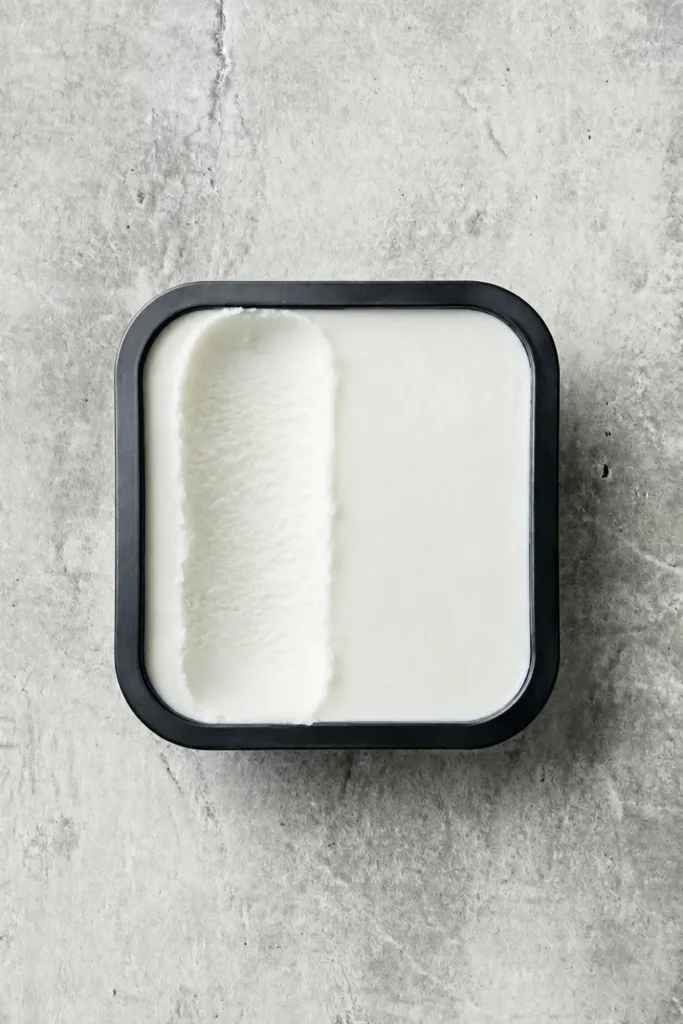
Pure lemon: sharp, cutting and clean. The sorbet you ask for between courses and the one that rescues a long meal.
The juice is not pasteurised: it goes in with the mix already at 4 °C. A boiled lemon loses its fresh aroma and leaves a jammy note you cannot get rid of.
Ingredients
For 1 kgTick each ingredient as you get it ready.
Need to adjust the formula?
Step by step
9 steps · follow the order for the best result
Chef's notes
- ·The zest, with none of the white pith: the pith turns it bitter, and cold does not take bitterness away.
- ·Do not skip the cold ageing: it hydrates proteins and stabiliser and clearly improves the texture.
- ·The serving temperature depends on your recipe: if you formulate to a softer PAC than your freezer (say -11 °C with the chest at -18 °C), temper it for 5–10 min before serving; if the PAC matches your freezer, it can be eaten straight out.
- ·Why formulate at -11 and not at -18 °C: even though your freezer sits at -18 °C, formulating at -11 makes the ice cream tastes better — at -18 it is so cold that the taste buds barely pick up the flavour and the fat is slow to melt in the mouth. And keeps better: ice cream formulated at -11 and kept at -18 has less free water, suffers less from Ostwald ripening (ice crystals joining and growing) and keeps its creaminess longer.
- ·Keep your own notes: write down the POD and PAC that work best with your machine.
The texture
spot on
The sharpest of the lot: a quarter of the weight is juice and, with no fat to soften it, the acidity arrives head-on. The double dose of inulin is what gives it body, because juice on its own would leave little but ice.
Everything about this lemon sorbet
A lemon sorbet has nowhere to hide: with no milk, no cream and no fat, all the work is done by the water, the sugars and the fruit. Here the lemon comes in from two different places and at two different moments.
The peel is grated with none of the white and blitzed with the sucrose: out comes a lemon sugar that traps the essential oil and carries it whole to the end. That sugar does go through the pan. The juice, by contrast, is squeezed at the end and added with the mix already cold, at 4 °C.
Both versions end up in the same place — the same solids and the same sweetness — and differ only in the juice: the sharp one is loaded with it and the less sharp one dials it back and makes up the difference with water. The sharp one costs a little more than the mild.
The ingredients and what each does
The fruit brings the flavour, the colour and much of the water in the mix. Sucrose and dextrose set the sweetness and the hardness at serving temperature. Glucose adds body and barely sweetens. Inulin adds solids with almost no sweetness, the job milk would do in an ice cream. The stabiliser holds the free water and stops crystals forming in the freezer. Water adjusts the concentration so the flavour is neither watery nor pasty.
Technique and controlling the numbers
Adjusting the POD (sweetening power) and the PAC (antifreezing power, given as a target temperature) lets you match sweetness and hardness to your taste and your machine. With the selectors in the side bar the formula recalculates itself and you will see how the amount of each ingredient changes.
Storage and common mistakes
Store at -18 °C in an airtight container and avoid freeze-thaw cycles. The commonest faults are not ageing it enough, too much sugar so it never freezes properly, and over-churning, which whips in too much air and wrecks the texture.
Recommended for this recipe
Equipment and ingredients that make the difference.
Ad links: we link to Amazon. We are not an Amazon affiliate in your market yet, so we earn nothing from these links.
Answers to your questions
Frequently asked questions
Other recipes
you might like
Missing a sugar?
Tick the one you haven't got and which alternatives you do have. We'll tell you whether you can make it with what's there.