
Hello Adolfo, it's a real luxury and a pleasure to have you here on haztuhelado.com; we were looking forward to talking with you for a while.
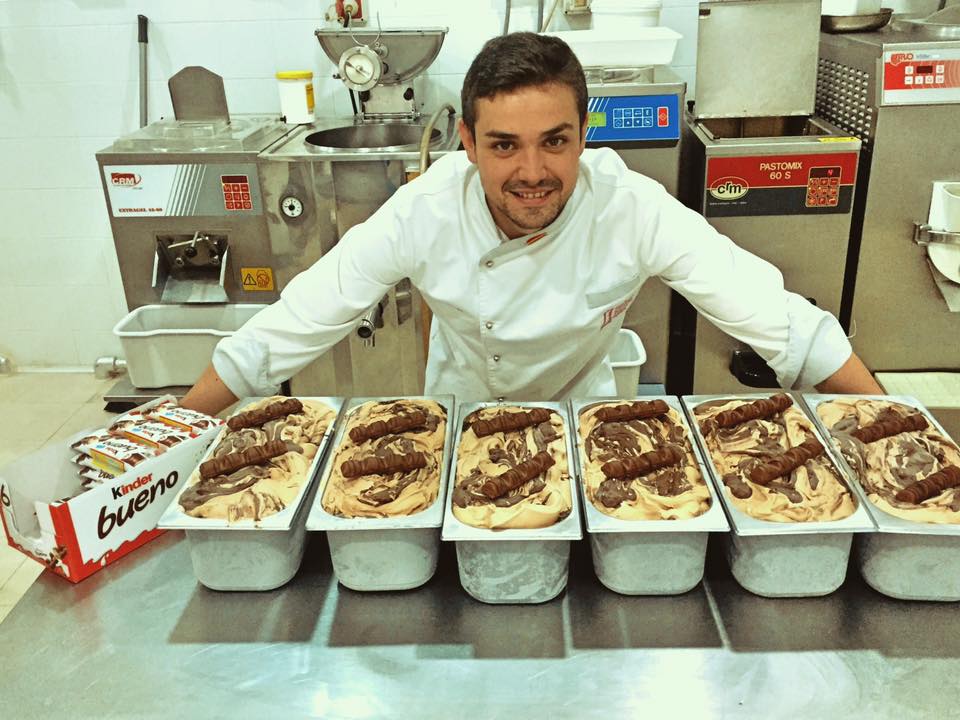
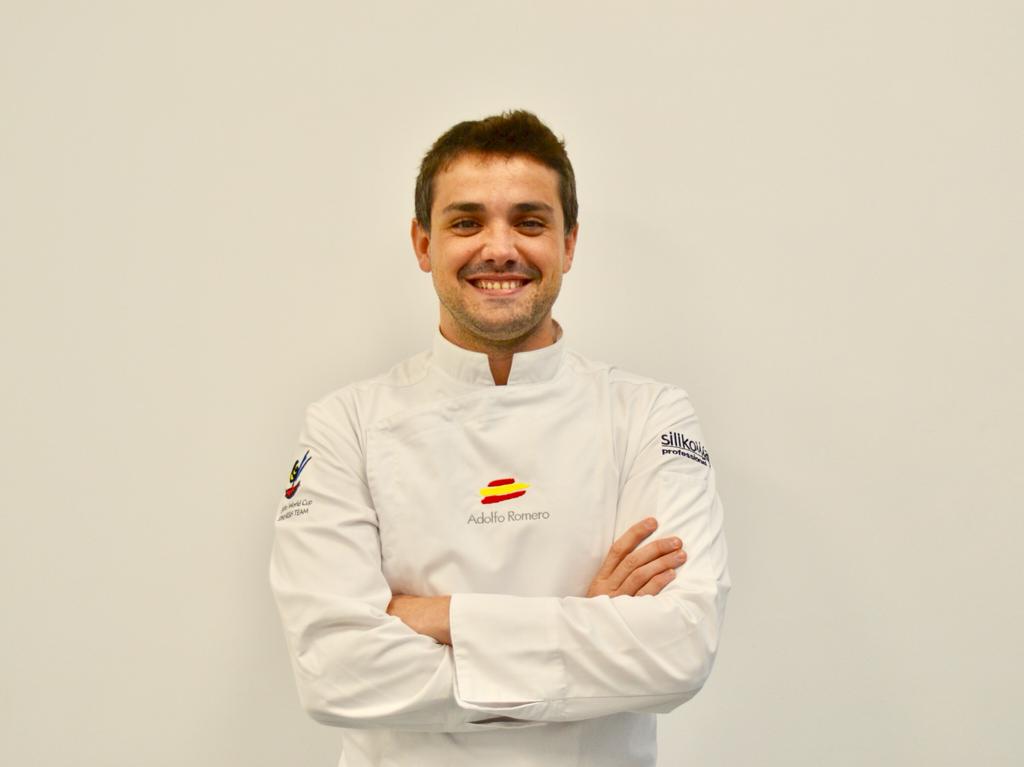
For anyone who doesn't know Adolfo, he is head ice cream maker at the shop «Helados Romero» in Puertollano (Ciudad Real). He also has a double runner-up title, in Spain and in the world — in other words, he is a genuine ace of ice cream making in this country.
01Three generations
From what we know about you, «Helados Romero» comes from a long family tradition; you're the third generation. How did your forebears start out in ice cream?
My grandfather, after the civil war, when he was living in Valencia, learned from a friend how «mantecado helado» was made. They made it in cork drums with brine.
Later they went back to Puertollano and, together with my father, began selling that sweet and much-desired treat in the streets of the town.
It's clear where your passion for ice cream comes from, but tell us a bit about your beginnings.
I grew up behind a counter and in an ice cream workshop; I've always been a restless person and I've always wanted to know the «why» of things.
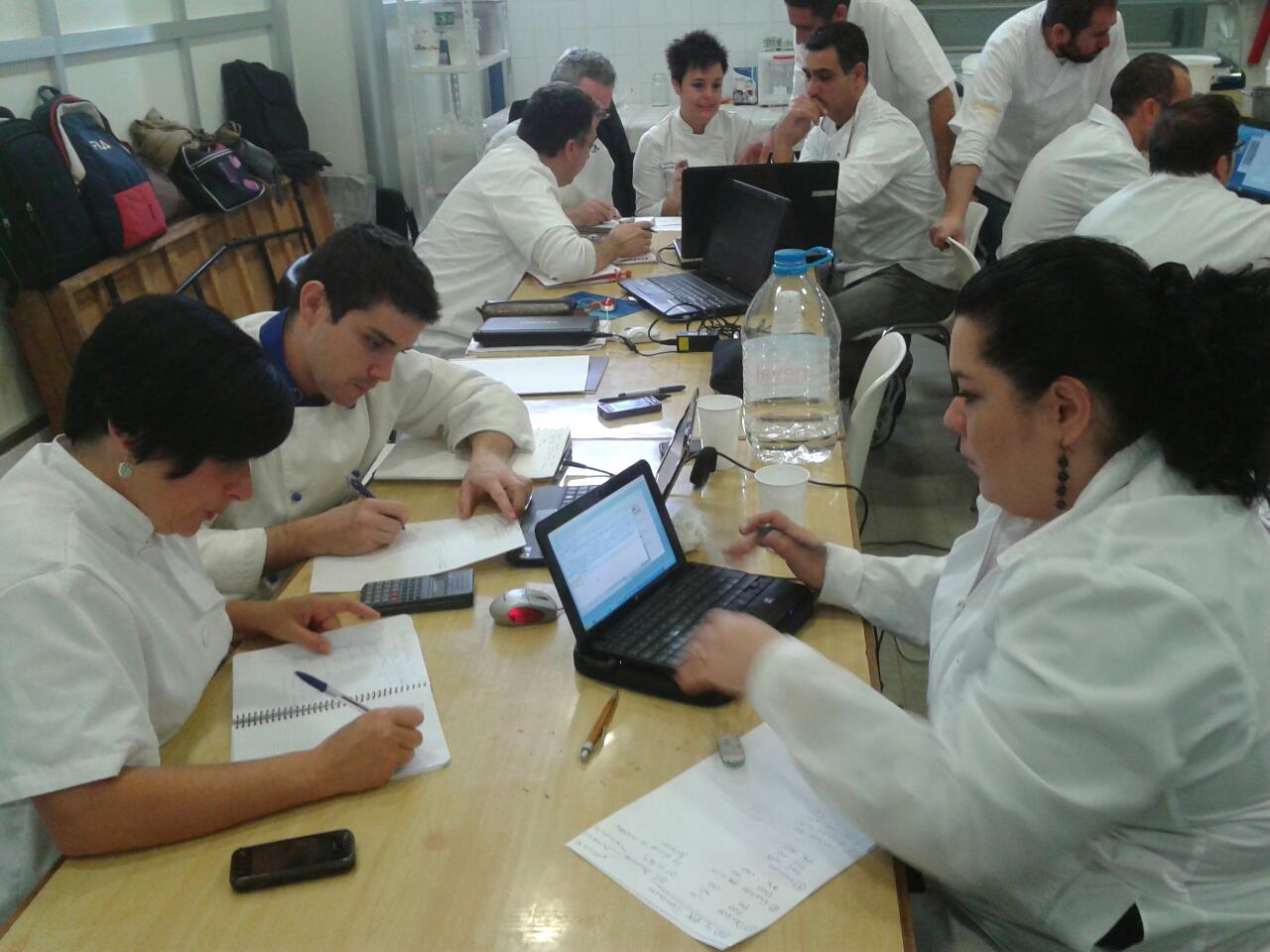
My first knowledge of formulation was self-taught: books, talks, forums, colleagues… Later I took the University Expert Course at the University of Alicante, and there I was able to understand and close the circle on many of the questions I'd been asking myself.
Start hereAre you missing the why as well?Our guide to making ice cream at home, step by step and with no mysteries.See how it's done →You were a very curious child. At what point did you start asking your father questions he could no longer answer?
It was when I began to take the reins of the workshop; as my father delegated production to me, the more questions I asked him and myself.
My father had a traditional, self-taught training; knowledge was passed from one friend to another, but that wasn't enough for me: I needed to know the «why» of things, and there came a point where my father, scientifically speaking, could not and did not know how to give me any more explanations.
You were able to satisfy that hunger for knowledge with the university expert course. Did all your ideas fall into place there? What was that experience like?
Completely… it was a before and after in how I understood ice cream: physico-chemical reactions, the sensory side and so on.
Knowing what percentages I should work an ice cream at, and knowing what happens if I vary them, was a great discovery for me, and it later served me in many personal, professional and competition developments.
The experience was unique both academically and humanly… it makes you more professional.
The human side was as important as the academic; ten years have passed since that training and I still keep those classmates who remain my friends — we shared an incredible time together. That friendship, to this day, helps us exchange ideas, put projects together and so on.
The University Expert Course is a very important and very useful tool for the world of ice cream.
From what we know, besides you as the third generation, the fourth is already at work: your nephew. How is he getting on? Does he show promise?
My nephew is my faithful squire; he started with me in 2011, at 19. He began because he liked the world of ice cream and wanted me to teach him; he even came with me to the first Spanish Championship in 2012 and to the 2019 one as an assistant. Curiosity about competitions hasn't bitten him yet, but you never know, heh.
He's a thoroughly decent person, he takes care of all his tasks every day, he's my right hand; when I'm not in the workshop because of a course or something else, he stays there on his own and I trust him completely with making the ice cream. He's been with me many years and he's entirely capable of running production at «Helados Romero».
02The shop today
How is the shop doing?
Really very well, we grow every year and that's incredible, all the more so with the health situation we're living through.
Changes have been made every year; these shifts can't be done all at once, they have to be made gradually. They're risky changes, with new textures and new flavours, and you can't take the customer from 0 to 100 in a single season; it takes slow, steady work. Thanks to that work, the clientele has grown year after year and the shop's performance keeps getting better.
Which ice cream do you sell most of?
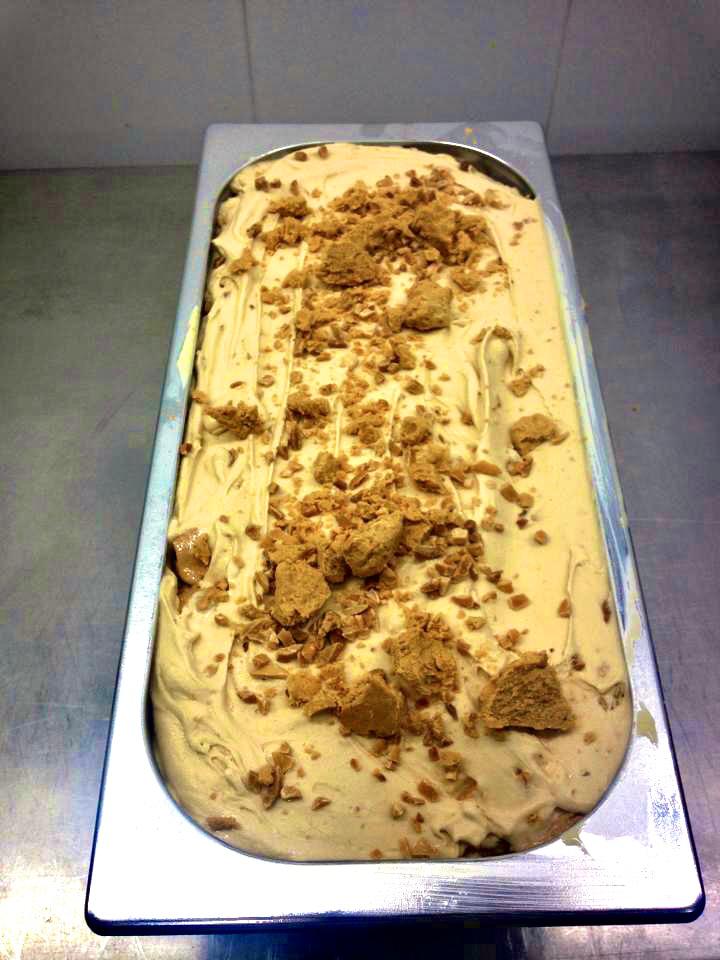
Without any doubt the turrón one. In our area people eat a lot of sweet, substantial ice creams with a fairly high POD, which can be around 20%. Turrón is a classic, it's been with us for more than 50 years, it needs no advertising; with a good recipe and good raw materials, this ice cream is automatically the best seller, by taste and by tradition.
Which is your favourite ice cream?
I have several; I compare them to a child, it's hard to settle on one… rather, depending on many factors I eat one or another. By factors I mean how I'm feeling at that moment: hungry, thirsty, sad, over-full…
It's true that the ice creams made at the championships, both Spanish and world, are like the apple of my eye; they're the ones that raise a smile every time I talk about them.
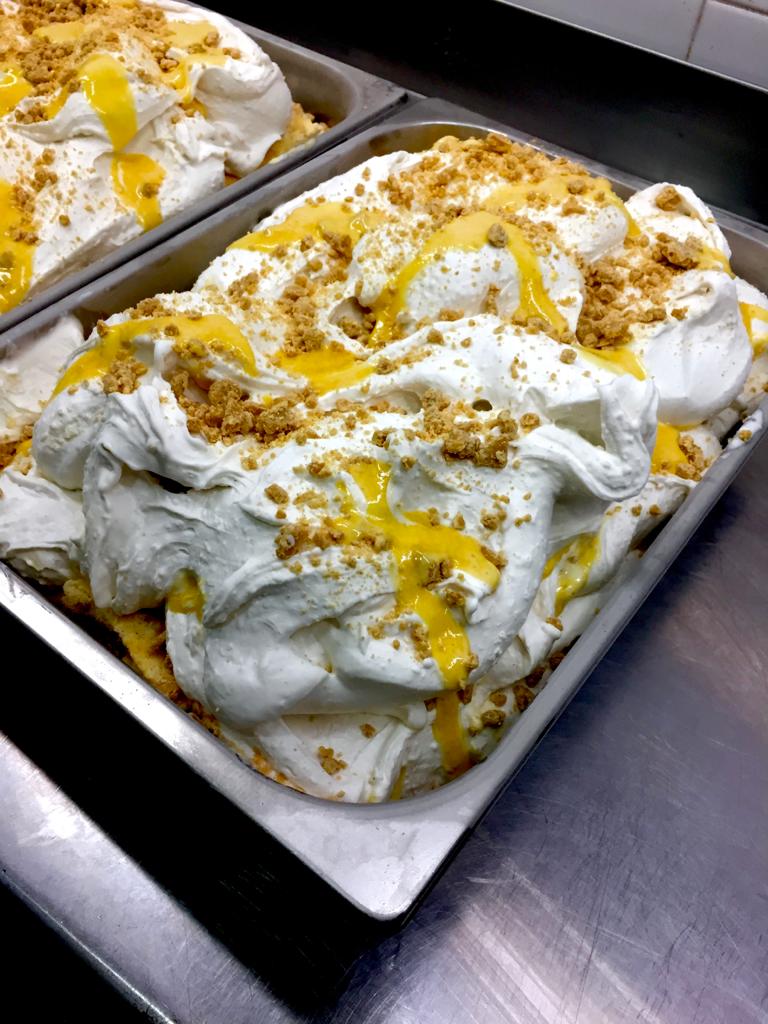
Merlin is an ice cream in tribute to the Mistery Box round of the 2018 Ice Cream World Cup, which Spain won, and it consists of a coconut ice cream with a passion fruit sauce, a pineapple and vanilla sponge with a passion fruit and lime crisp.
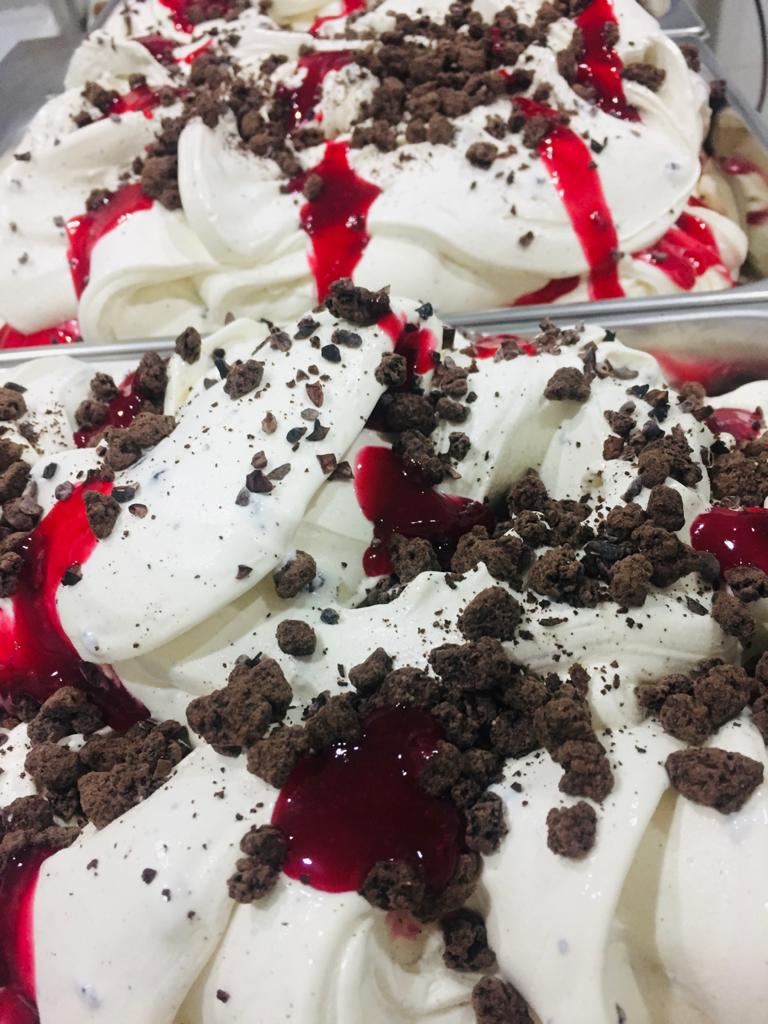
Little Red Riding Hood is a custard of two types of vanilla, Bourbon and Tahiti. It carries a raspberry sauce and a cocoa crumble. To give it that bitter note, there are cocoa nibs in between.
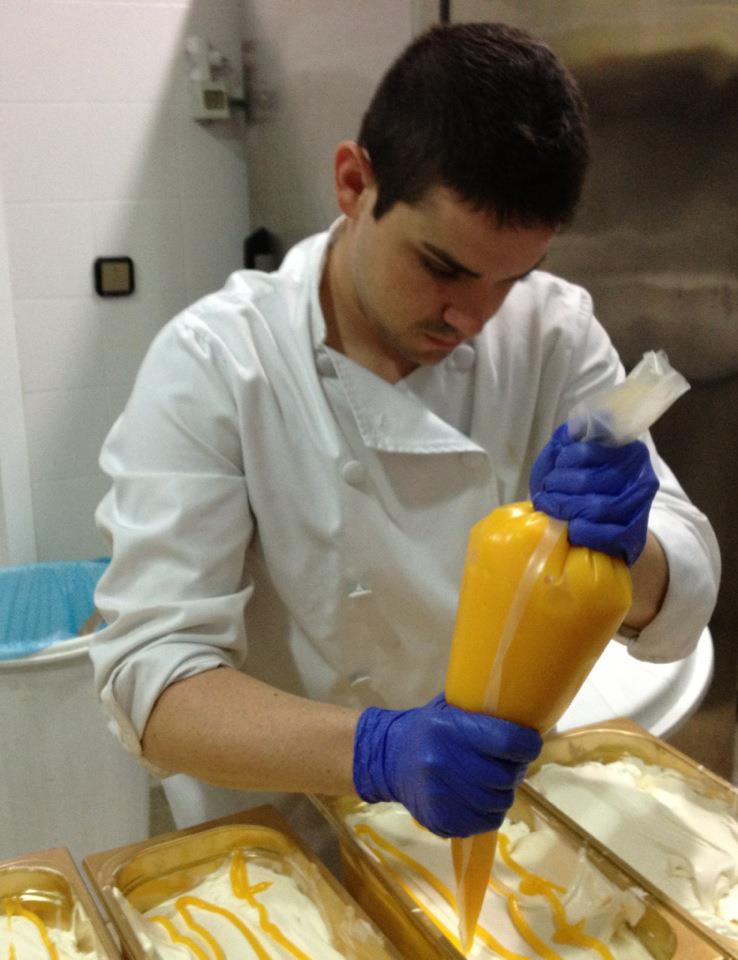
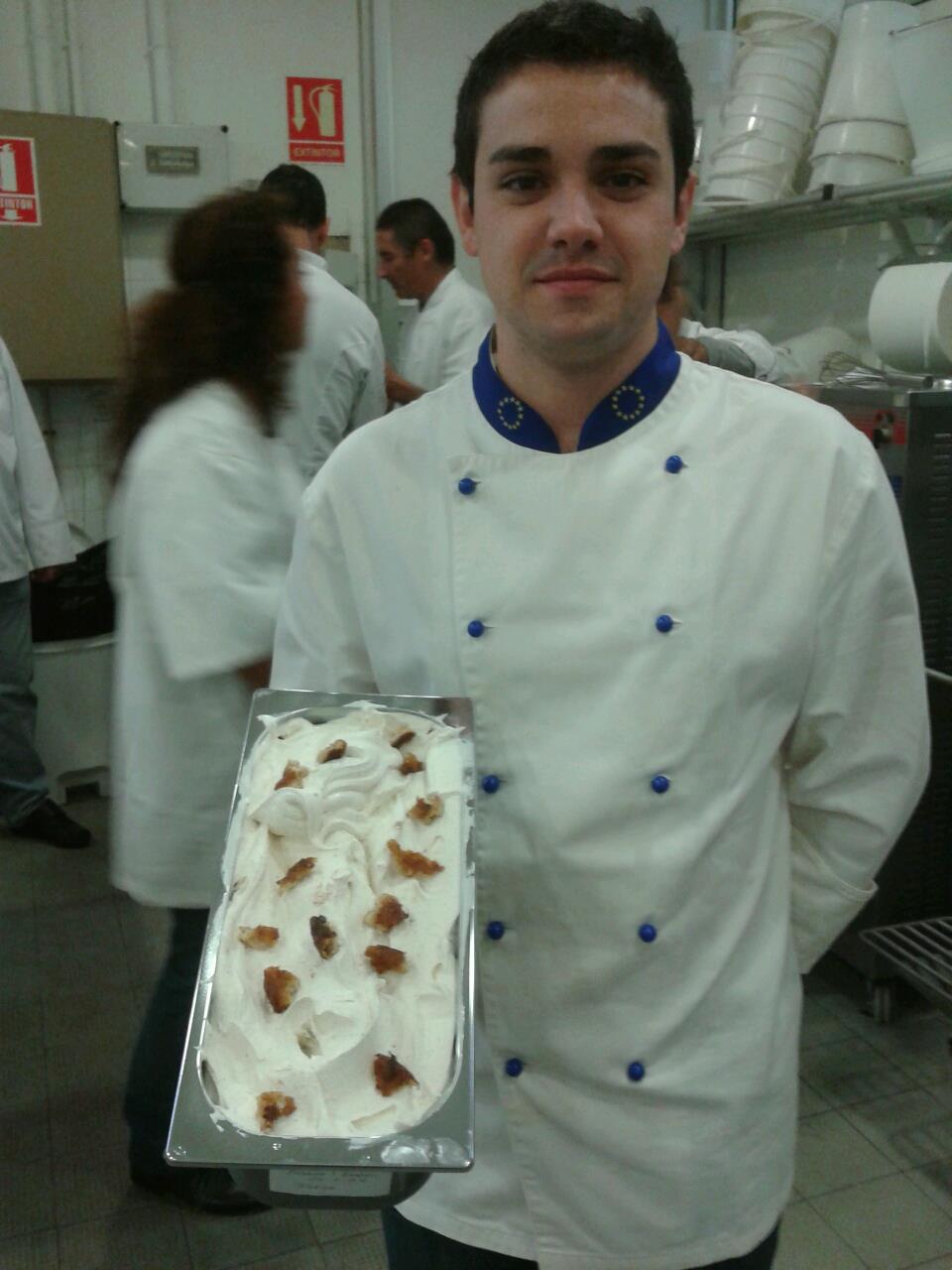
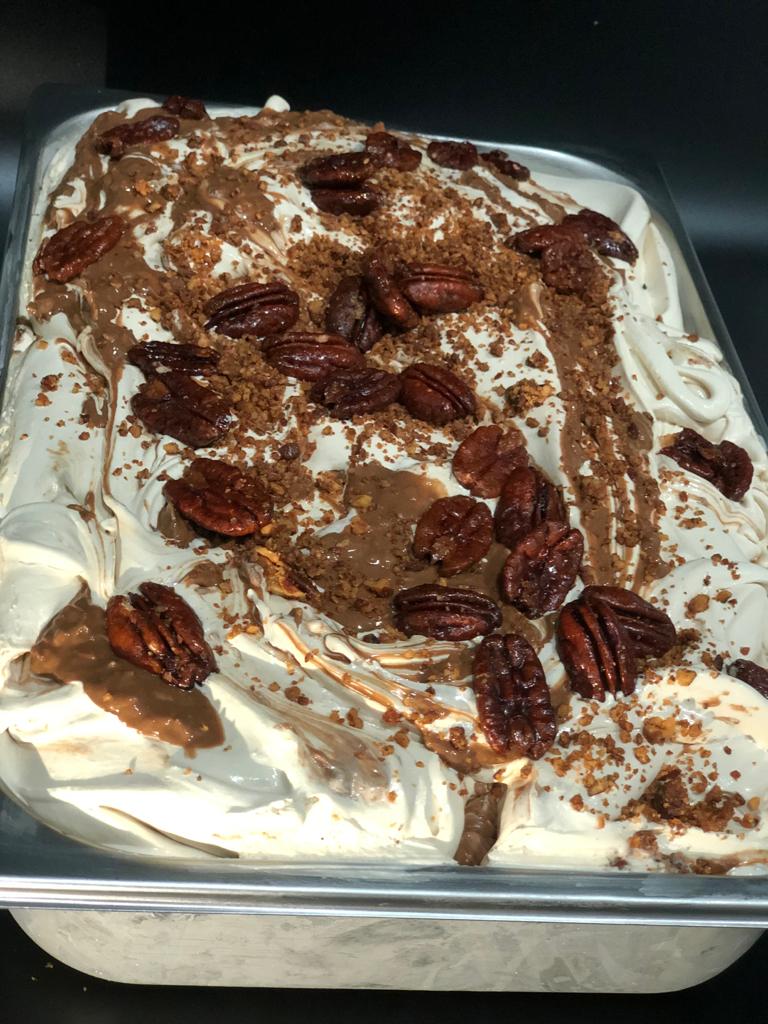
Elixir de vida comes from one of the rounds of the last Spanish championship, the coupe transferred into a tub; it consists of a banana ice cream with Dulcey chocolate, crunchy pecan praline and, in between, caramelised pecans.
What's the most curious ice cream you've tasted?
Phew, I could give you a very long list, but I'd mention one we made at the World Cup: it was cannelloni Rossini.
Since the World Cup was held in Italy, we wanted to give them a nod. Making this ice cream gave us a bit of a headache: it had great complexity of flavour and texture. The filling of the cannelloni is minced meat and vegetables; the danger was a sandy texture — we had to get maximum flavour without tiny bits of meat giving an uncomfortable mouthfeel.
It was an ice cream that drew a great deal of attention. The cannelloni Rossini we made the ice cream with was prepared by Marc Piqué, being the fine cook that he is.
03The championships
How did your itch for competitions start?
It all began when some teachers persuaded me to enter Jóvenes Cocineros de España, sponsored by Zoco Pacharán. Since then the competition bug has had me.
My first ice-cream-related contest was an ANHCEA competition for coupe decoration.
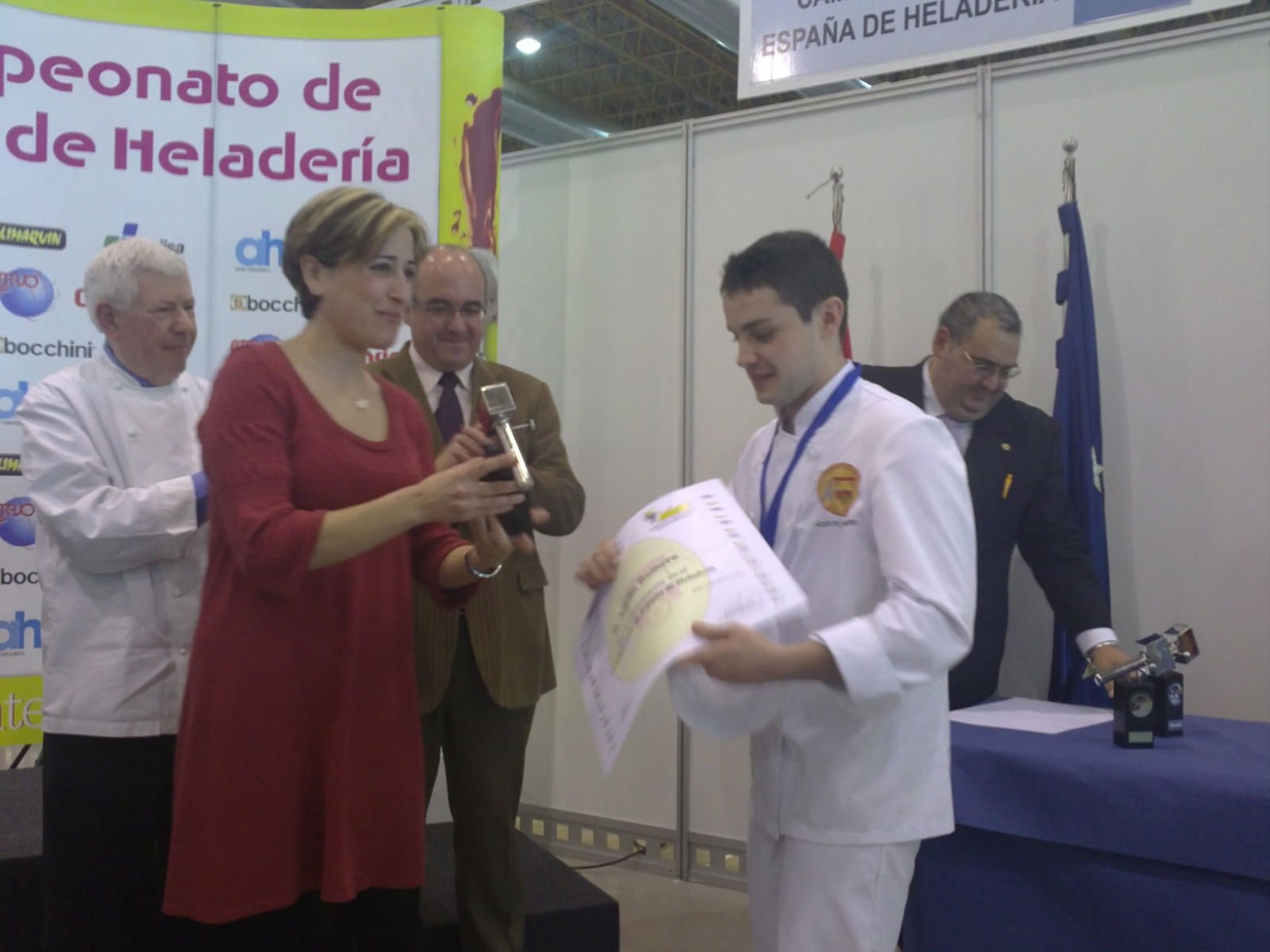
In 2011, when I still hadn't done any training in ice cream, I wanted to enter the first Spanish Championship that was held. I entered with the sole intention of learning, since there were very well-regarded professionals there and it could be a great experience for me. In the end it went far better than I expected and I came third — a surprise and a triumph for me at that moment.
At the next Spanish Championship, having already done the university expert course, I was far better trained, more professional, and clearer about what I wanted. I took my first Spanish runner-up title.
After that I was offered a place as reserve at the 2014 World Championship along with the two Spanish champions, Jaume Turró and Mario Masiá. It was a very interesting experience for me personally; the team was put together in a month and a half and we came fifth, which is very good for the little time we had to prepare.
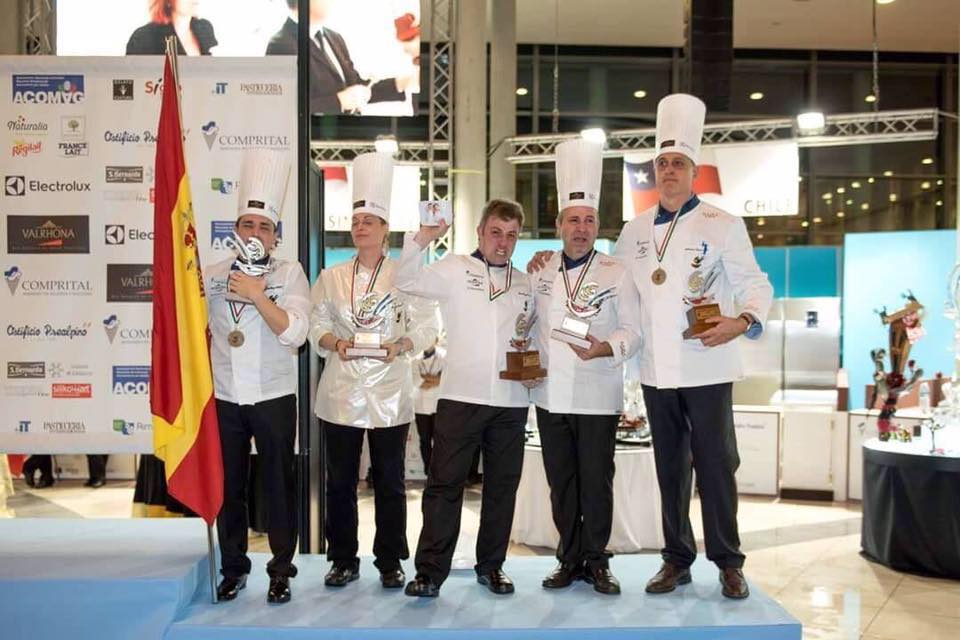
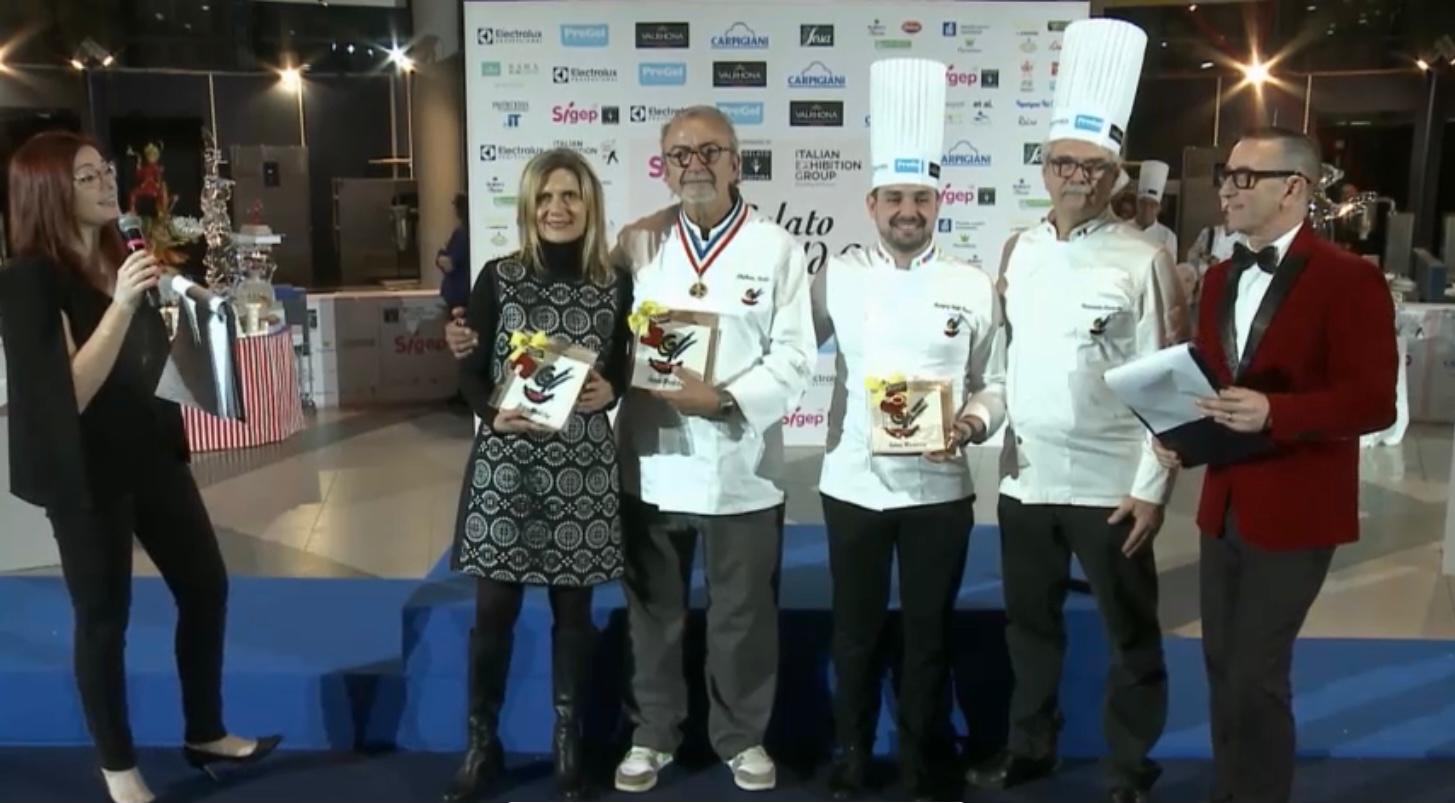
From there the team for the 2016 World Championship was put together. Jaume couldn't attend for professional reasons and Marc Piqué replaced him; with Mario, Judit Comes and Antonio Sirvent we formed the team that, for the first time in history, took a world runner-up title.
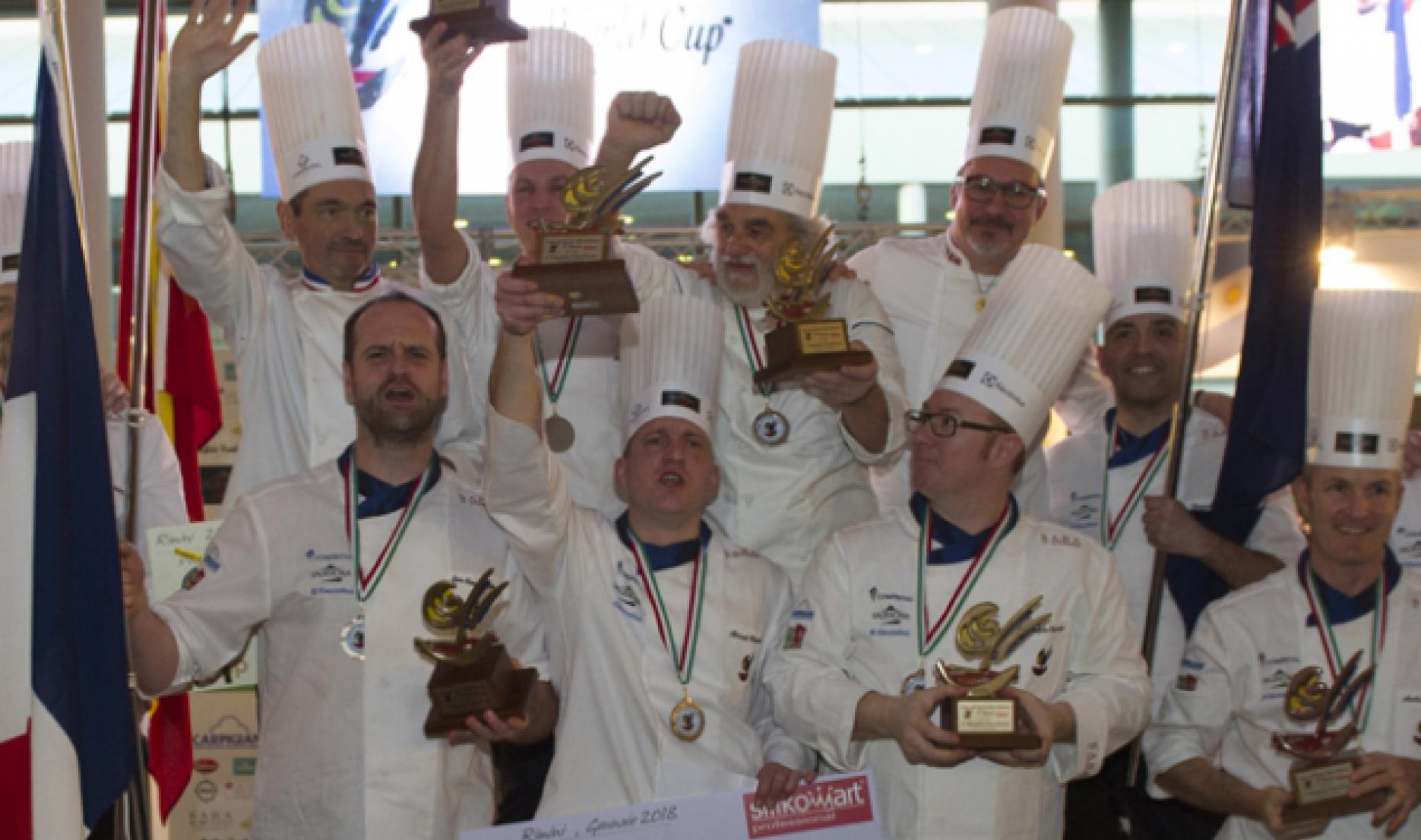
In 2018 my colleagues didn't want to do it again given everything preparing for a World Championship involves. The condition I set for entering was that I could put the team together myself. They accepted the proposal and I formed a team not only of professionals but of people, all with an incredible human capacity, and we became a real family. That team was Marc Balaguer, Migue Señoris, Jose Manuel Marcos Candela and Jordi Guillem, plus Antonio Sirvent and Marc Piqué as advisers and other advisers who came with us. Once again we came very close: we took the world runner-up title.
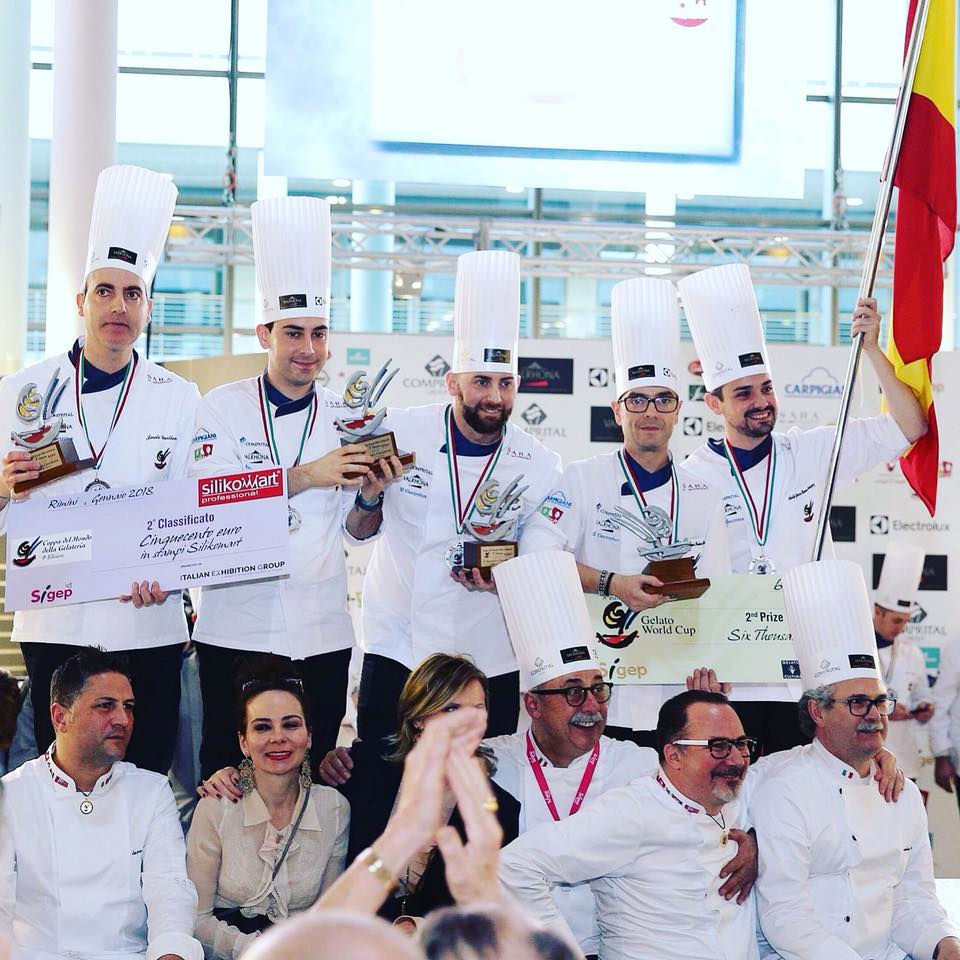
At the following Spanish Championship in 2019 I was runner-up again; that time Albert Soler won.
Set up your workshop at homeWhich machine do you need to start?We compare compressor and frozen-bowl machines, with their pros and cons.See which machine you need →How much preparation does a championship take? How many things do you have to sacrifice?
An enormous amount of preparation, both psychological and financial. You need very good training in the discipline you're going to compete in and above all a lot of passion for your work.
The sacrifice is incalculable: you put family, partners, money and friendships on the line — in short EVERYTHING, because you throw yourself into the project 100%.
The sacrifice is incalculable: you put family, partners, money and friendships on the line… EVERYTHING.
Do you think that in these championships, which demand so much flourish and so much pâtisserie, the best ice creams and the best ice cream makers are really valued?
Without any doubt, the whole is valued; it's like a car: for it to be the best, every part has to be the best, from the engine to the wheel trim. That doesn't mean there aren't superb ice cream makers who don't need to go to competitions for their work to be valued.
Which moment do you keep from all the championships you've been through?
The pep talk we gave before every performance in 2018. It wasn't a team, it was a family. A picture is worth a thousand words…
People always say the referees favour Madrid or Barça. Do you think something similar happens here with Italy and France? Heh.
Good question, heh. It's like sitting down to eat in a 3-Michelin-star restaurant: from the moment you walk in, the suggestion starts about what you're going to taste. It's the same here: they've been doing very good work for many years and your mind knows that these professionals rarely slip up.
I imagine championships must be a very enriching experience. Have they helped you a lot in your day-to-day at the shop? Does competition set trends?
They've helped me enormously, above all in sacrifice, organisation and developing new products.
Competition sparks curiosity in other colleagues, and that leads to an exchange of information that each of us can develop in our own business.
We've also seen you as a judge in other championships. How do the bulls look from the barrier? More relaxed, no? Ha.
It seems unlikely, but you learn more, because you get information from other teams that you normally don't see, and that's a real luxury.
More «relaxed» — I'm a ringside type and the nerves go on inside. It's like «Boss, put me on, I've already warmed up», heh.
04Creation and trends
Do you think the synergy between ice cream and pâtisserie is becoming more and more important?
It isn't that I think so, it's that it is so; I think that synergy has been coming for a long time. An ice cream maker has to go hand in hand with pâtisserie and vice versa. It's a marriage destined to live together.
An ice cream maker has to go hand in hand with pâtisserie and vice versa. It's a marriage destined to live together.
If you look, a large part of the make-up of world championship teams is pastry chefs; they have an artistic eye for creating very visual products that we lifelong ice cream makers still lack.
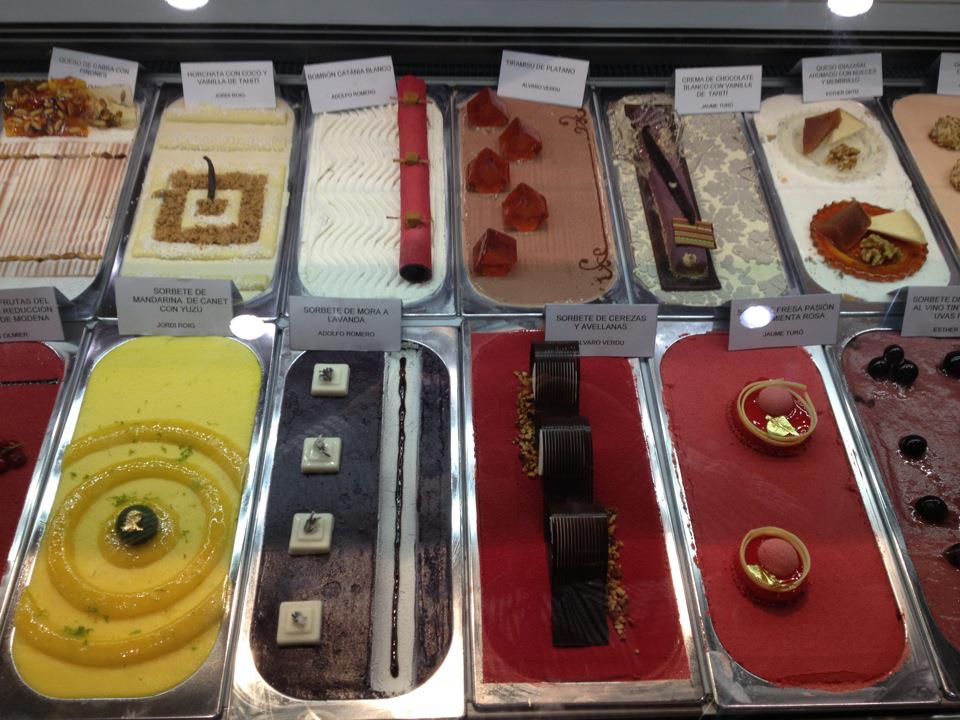
In our early days, ice cream went into a completely closed tub inside chest freezers; the next level was displaying it in a case, and now there's another step: decorating the tub. The trend is to build a pâtisserie element into each ice cream, something added to what would be the custard, such as a sponge, a praline and so on.
I think this union is perfect: the scientific side is what the pastry chef was missing, while the line the ice cream maker was missing, and where he's training most today, is pâtisserie.
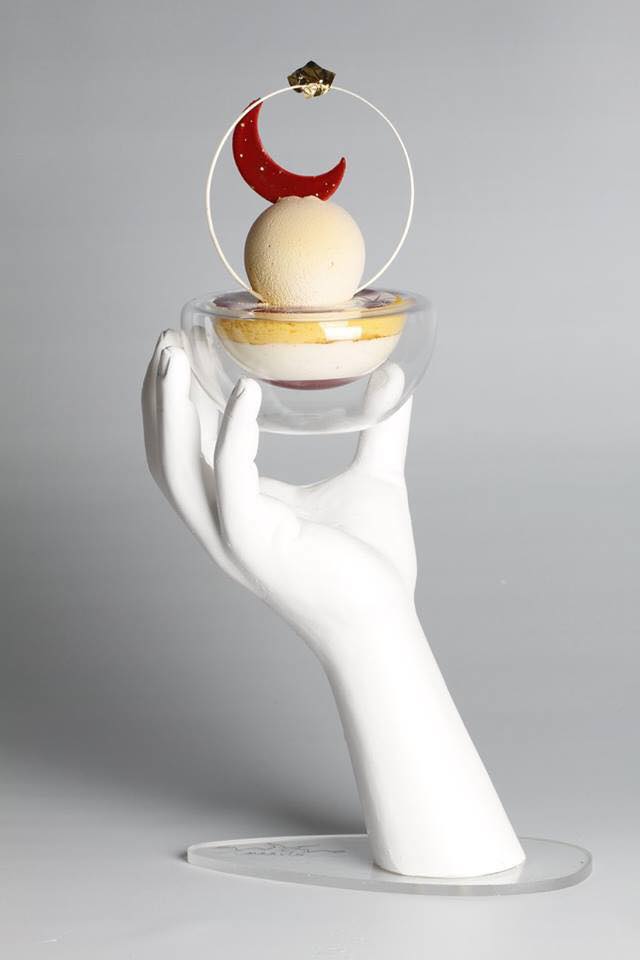
What's the most complicated creation you've made?
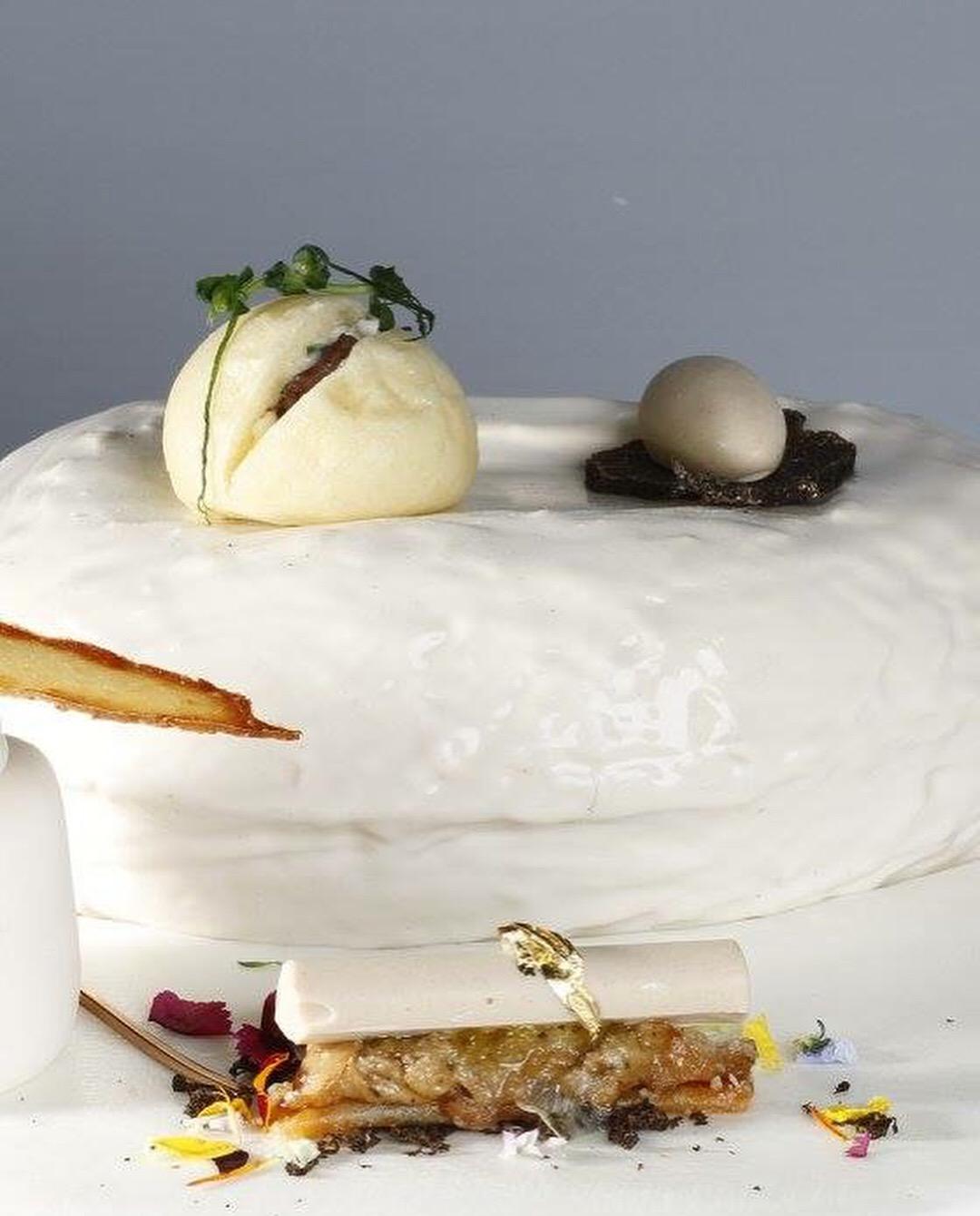
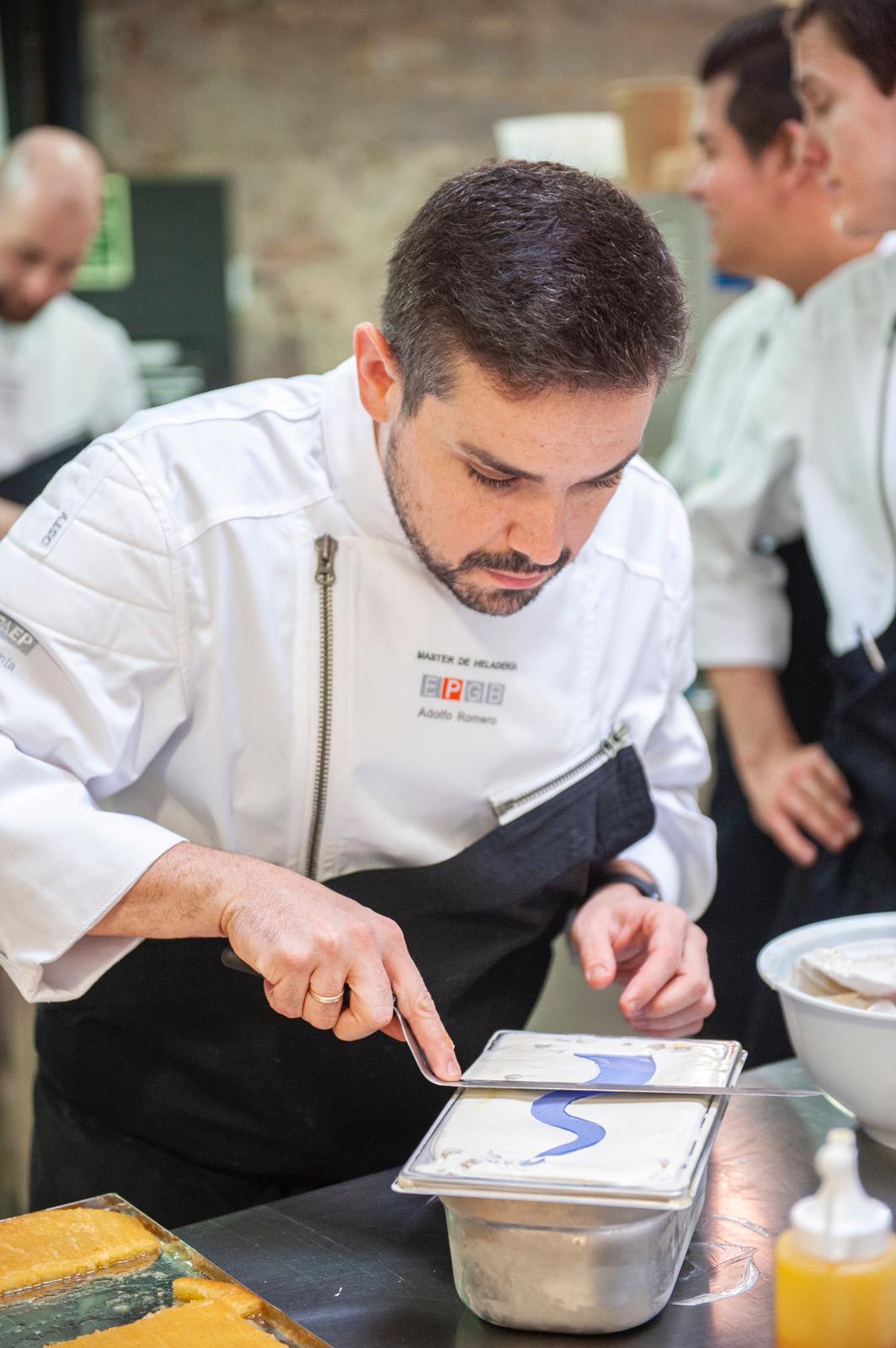
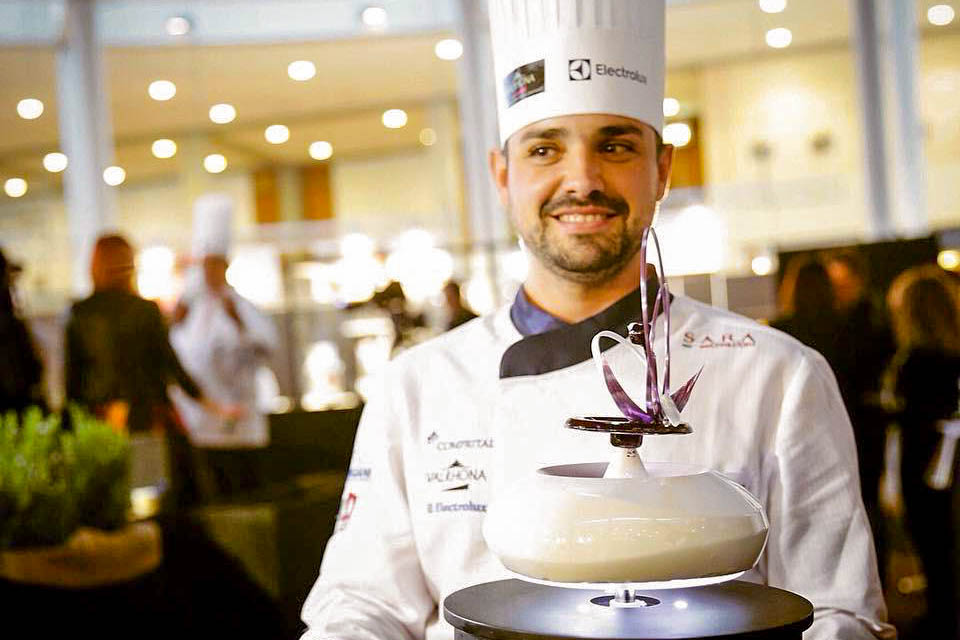
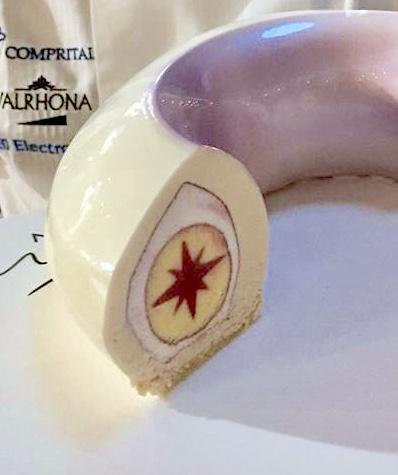
The star of the 2018 world cup cake, because it had very sharp points and it was tricky to find the right texture. Filling it was very difficult, because you had to get the custard between the edges of the star and then enclose it all in a torus. All of that with the added complexity of time: in a championship the clock runs while you fill, blast-freeze, unmould and blast-freeze again. Bear in mind that this cake had a mould for the star, another mould for the cylinder, which itself carried a painted finish, plus an ice cream and finally another mould. Four moulds in all, then blast-freeze — and it had to come out perfect.
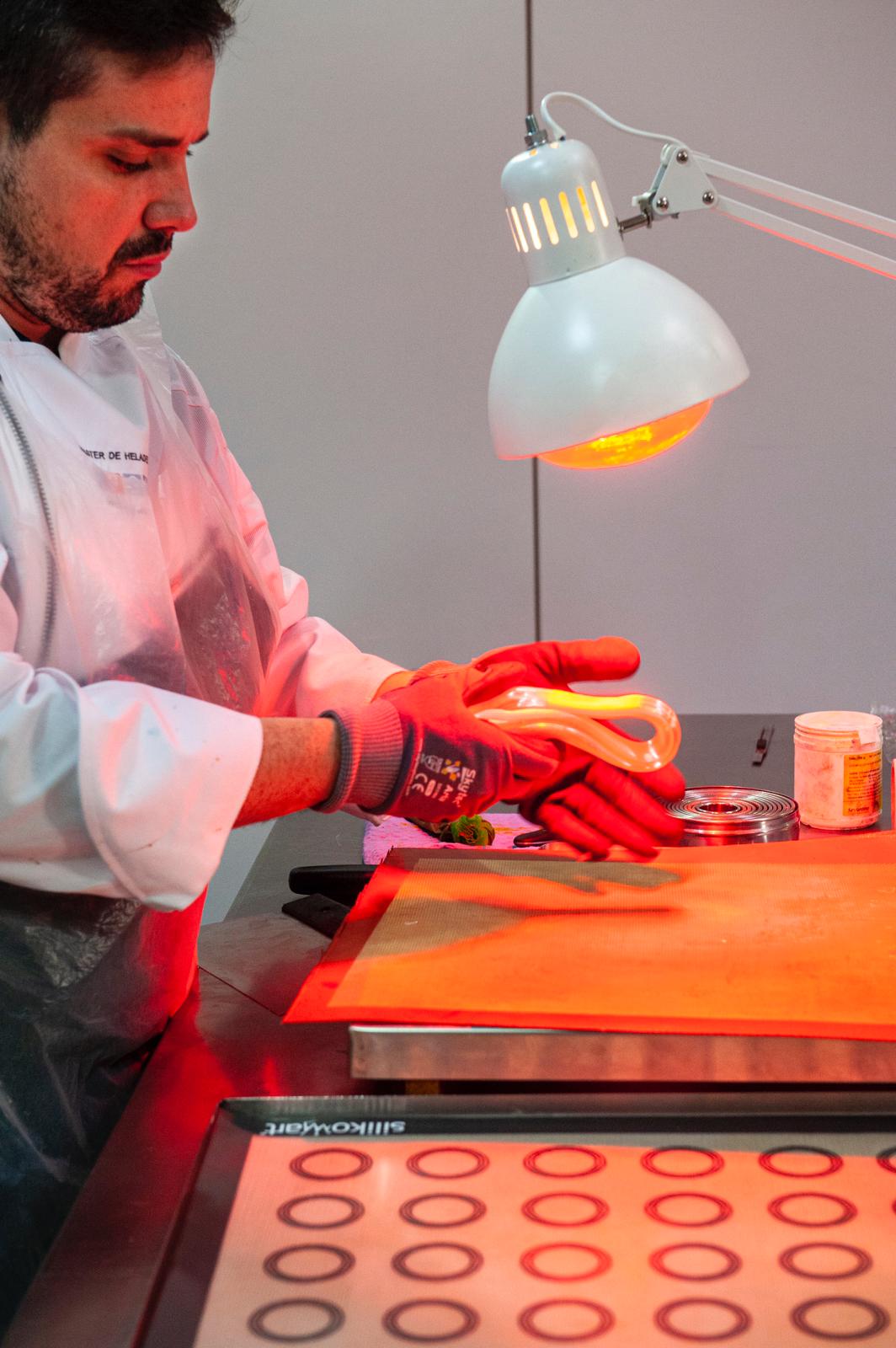
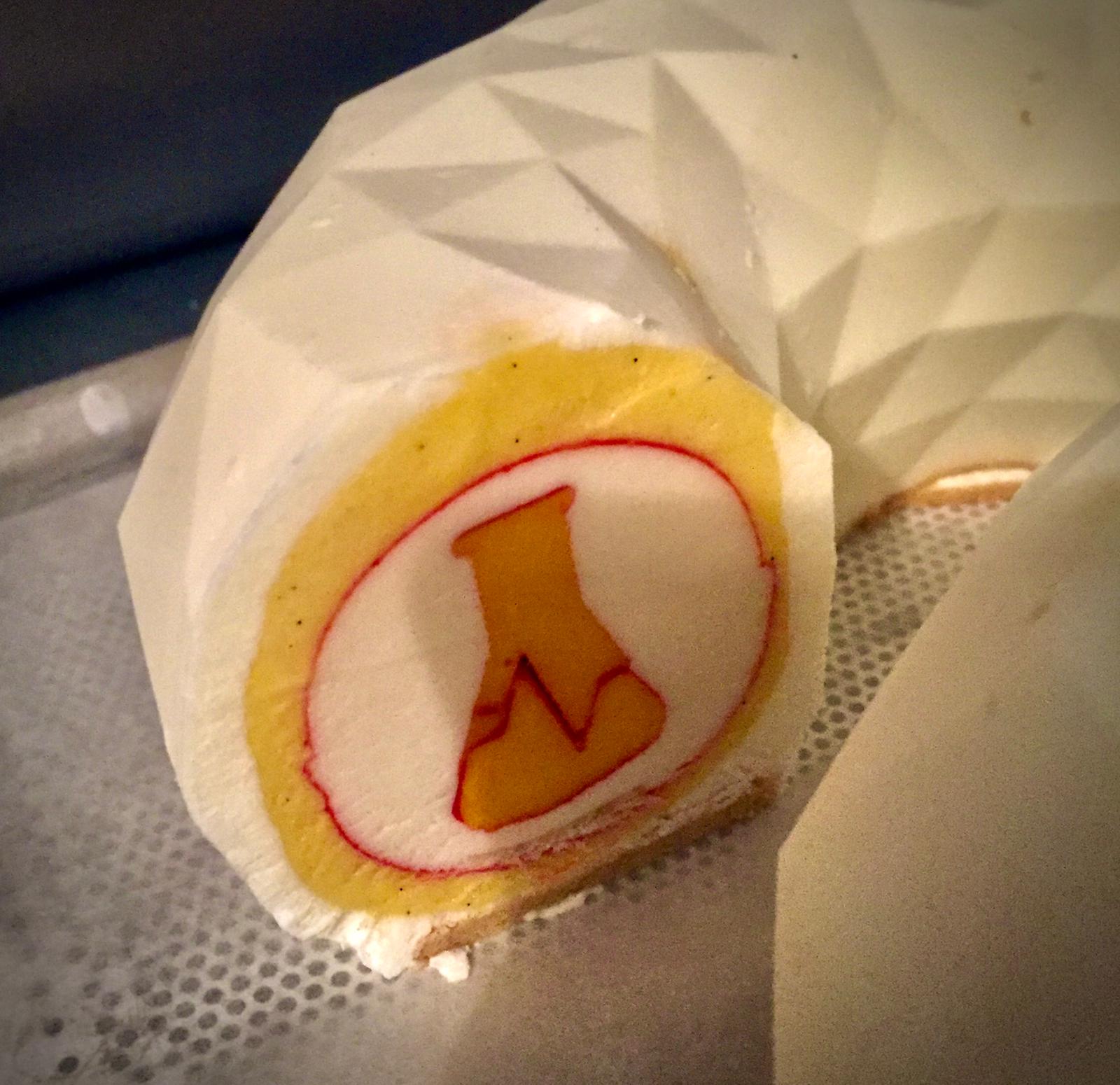
Another very complicated creation was the test tube from the 2019 Spanish championship cake. It had a very complex shape, above all the neck of the bottle, which was under 1 mm and could snap; it also carried a painted exterior. The hardest part was the drawing of the electrocardiogram, done with the same paint as the outside of the tube, so the slightest deviation could ruin the whole job.
We keep asking more of ice cream shops: not simply a display case with perfectly rippled tubs, but other kinds of work beyond the usual cone and tub. What new formats do you make? How do they go down with the public?
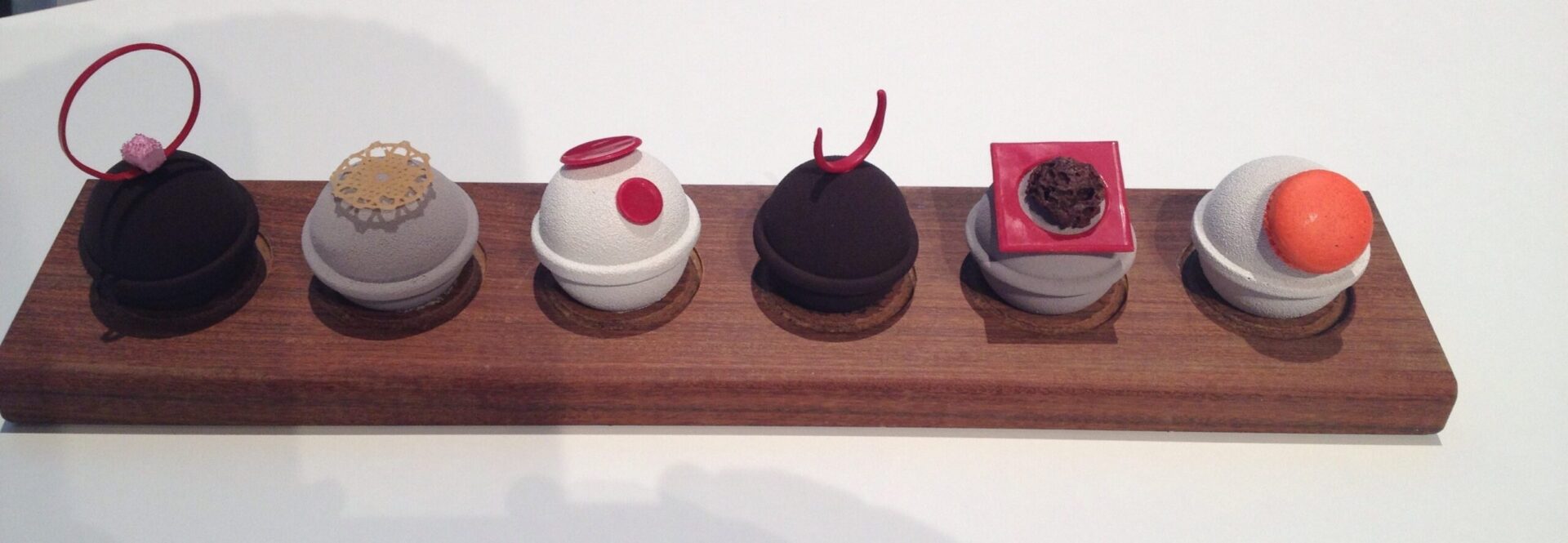
My shop is in a town, so the clientele is usually always the same; it isn't easy to bring out new formats. What we do try is to innovate in individual-portion formats and cake decoration.
05Teaching
We've seen you give various courses around Spain. Do you enjoy teaching? Where and when can we sign up for one of your courses?
I love passing on EVERYTHING I know; what's more, in every course I go all out, I give 200%. Thanks to VALRHONA I travel to many places around the country. I hope very soon, once the virus allows, to take up in-person teaching again.
We've seen you closely linked to the chocolate brand Valrhona; we love it, especially the Guanaja 70% couverture, and in fact we have on the site the recipe you made at the world championship with that couverture. So far we haven't found another chocolate ice cream recipe to unseat it. What's so special about these remarkable chocolates?
Above all their production philosophy: they look after every detail, both human at the cocoa harvest and in the development, drying, transport and later production.
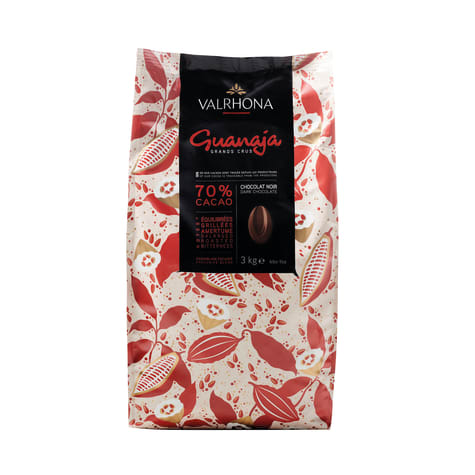
They fight for the development of the communities around the cocoa plantations, so it's a chocolate that creates lives.
Go deeperA chocolate that creates lives: what bean to bar isFrom cocoa to bar, and why it shows so much in the ice cream.Read about bean to bar →Adolfo would like to make a special mention of the people who, over the course of his still short career — academically, professionally and personally — mean a great deal to him.
To the first teachers I had at university, Enrique Coloma and Pablo Galiana, for helping me understand many of the things I was wondering about and for the generosity they showed me back then in passing on their passion for the world of ice cream.
To ANHCEA, for the fight for artisan ice cream and especially to the two presidents I've had most contact with, José Luis Gisbert and above all Marco Miquel, for the fight to unite the sector and revive fields that had been left aside, such as the Spanish championship, training courses and something as fine as the research centre in Jijona for all of Spain's ice cream makers.
I've also had the chance to get to know an excellent person and professional in Antonio Sirvent, a man who sets the standard within Spanish ice cream. A man who stays in the background, because he doesn't like the limelight, but from whom we can learn a great deal, because his experience and wisdom can make us far better. What's more, his generosity is immense, because whenever you need him he's there for you.
To my brothers from the 2018 team, who are always there for whatever comes up in my life, both to support me and to help me with the things I can't reach on my own.