
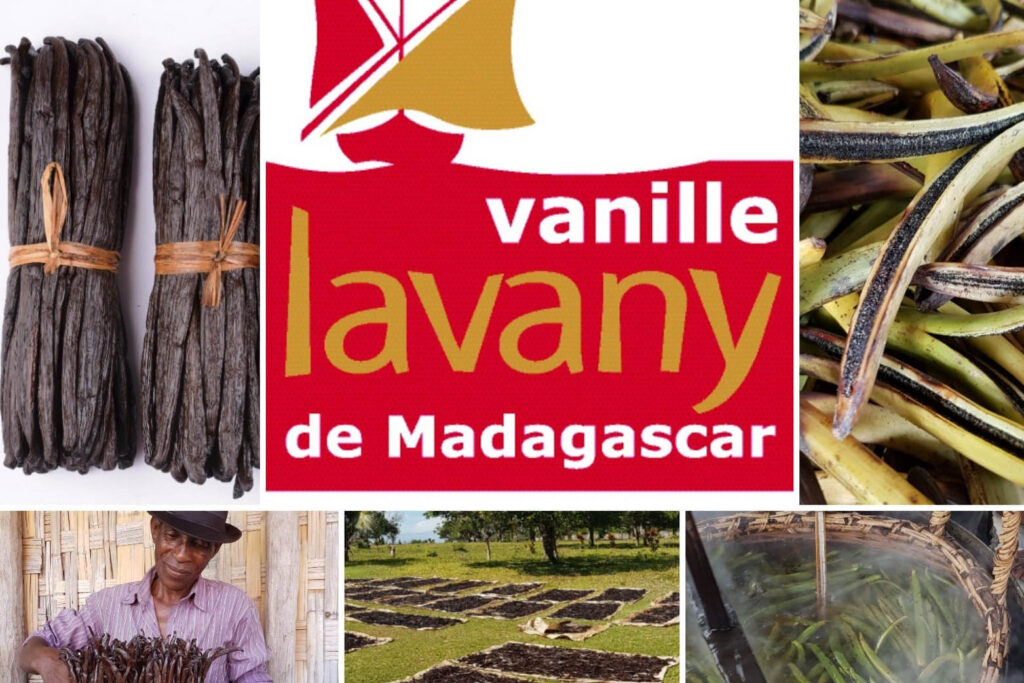
Bourbon vanilla is the one almost all of us use and almost nobody has seen growing. In this interview, Sonia Sosa Tuneu answers what she's asked most: why it costs what it costs, how it's pollinated and what's lost when the pod is swapped for a flavouring.
We had the pleasure of talking with Sonia Sosa Tuneu, who will tell us first-hand where and how this special, prized ingredient is grown — for any artisan who wants to give their work an authentic, natural vanilla flavour, obviously using the product itself, unaltered: the vanilla pods.
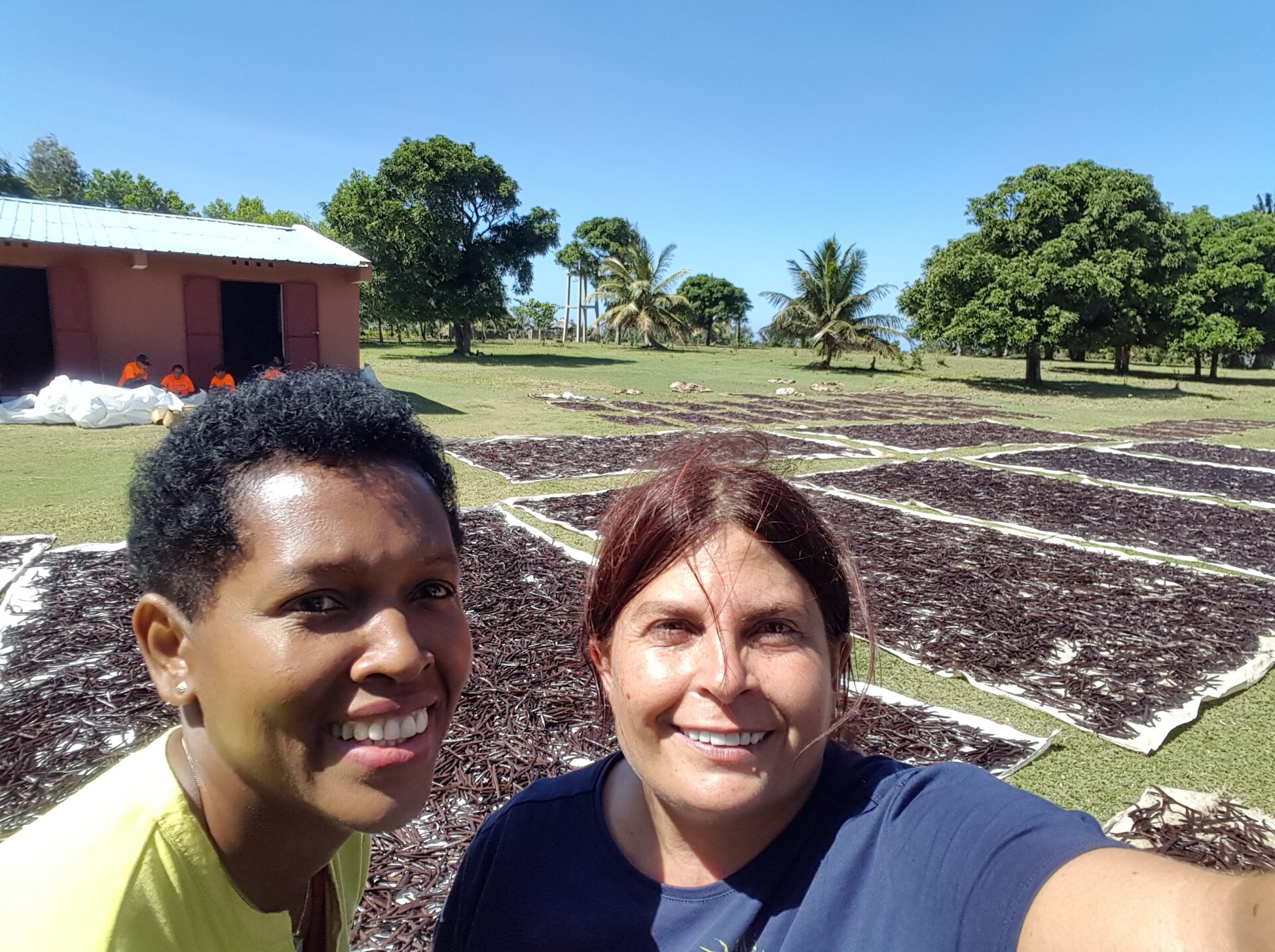
It's already 14 years of travelling to Madagascar, always to the heart of vanilla growing. Specifically to the SAVA region (the four initials of the four main towns that mark out the country's core vanilla-growing area: Sambava, Andapa, Vohemar and Antalaha).
My link to the growers comes through my contact, friend and partner Lucia Ranja. She and her family are already the third generation of a family devoted exclusively to growing, curing and distributing their vanilla directly and without middlemen — theirs, their neighbours', their relatives' and their friends' from their home area.
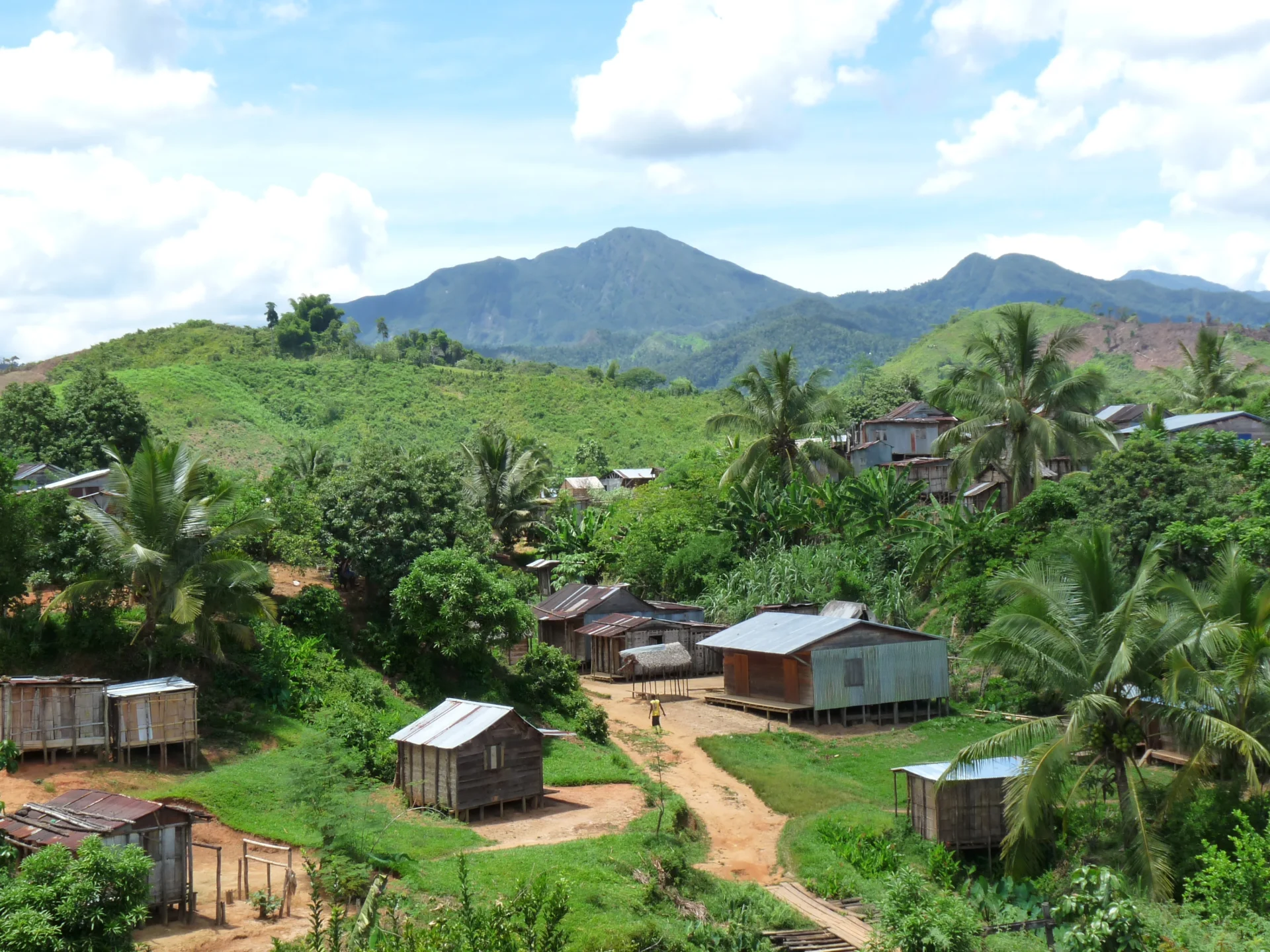
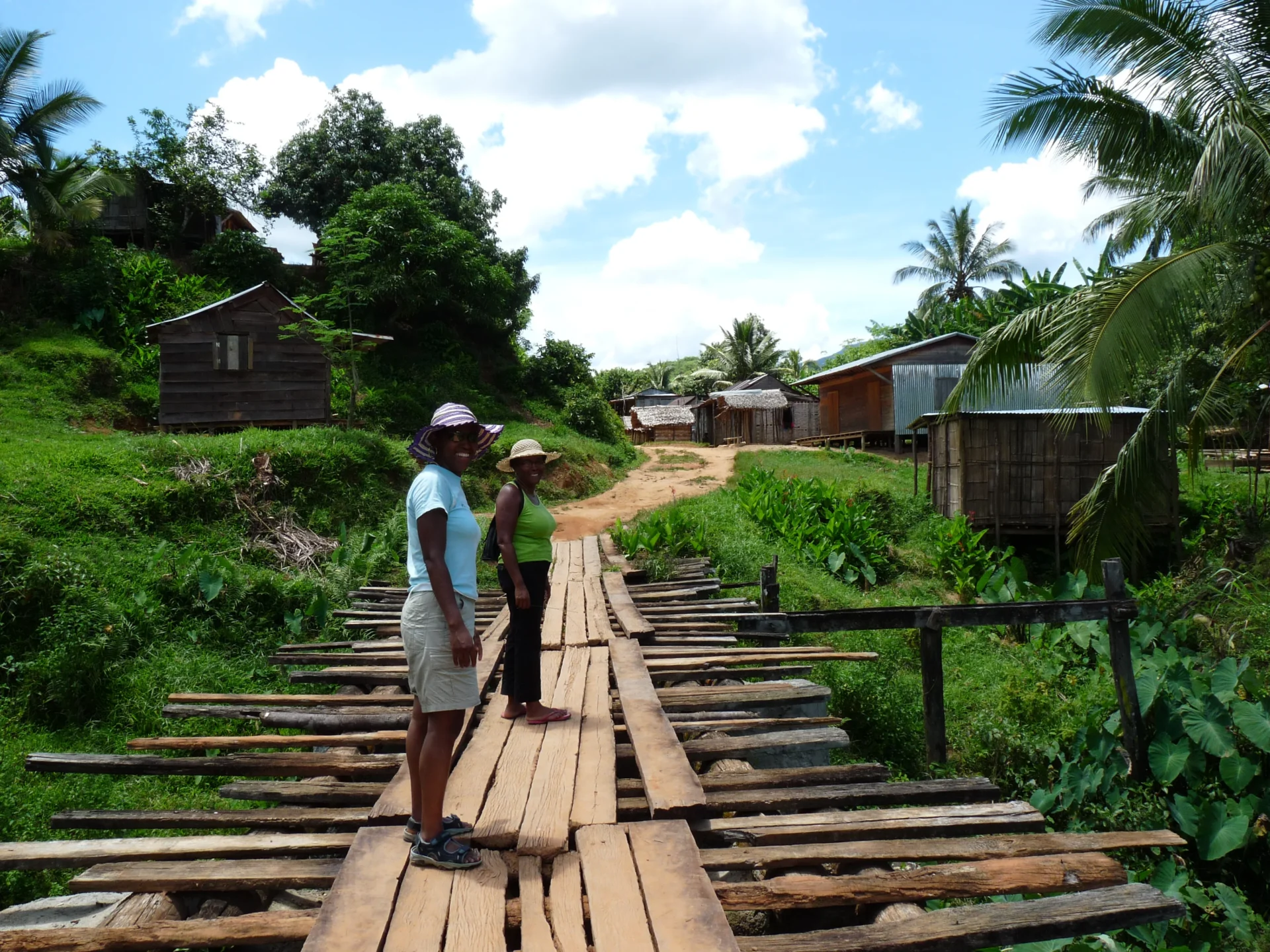
Their plantations are in the village of Betavilona (Antsiranana region, in SAVA) in north-east Madagascar. It's a small village of no more than 600 people, all of them very, very poor, living in little houses made of wood, banana leaves and palm. They live essentially off vanilla and their own crops of rice, cassava, coffee and fruit according to the season, their livestock, their hunting and so on.
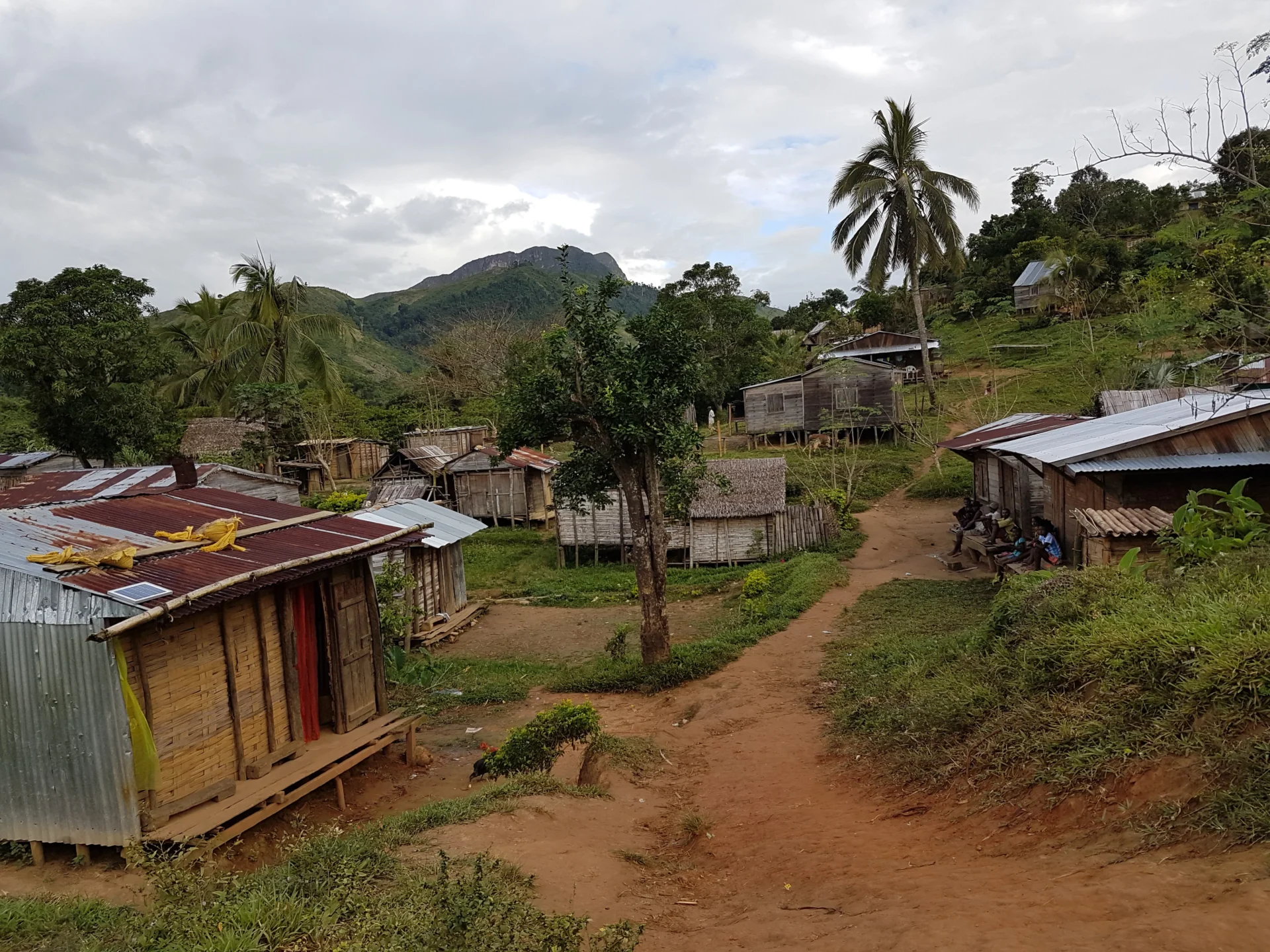
All of them, with the help and advice of the Ranja family, have learned to grow, tend and get the most out of their vanilla plants, always treating them in the traditional, natural way, with no pesticides or insecticides.
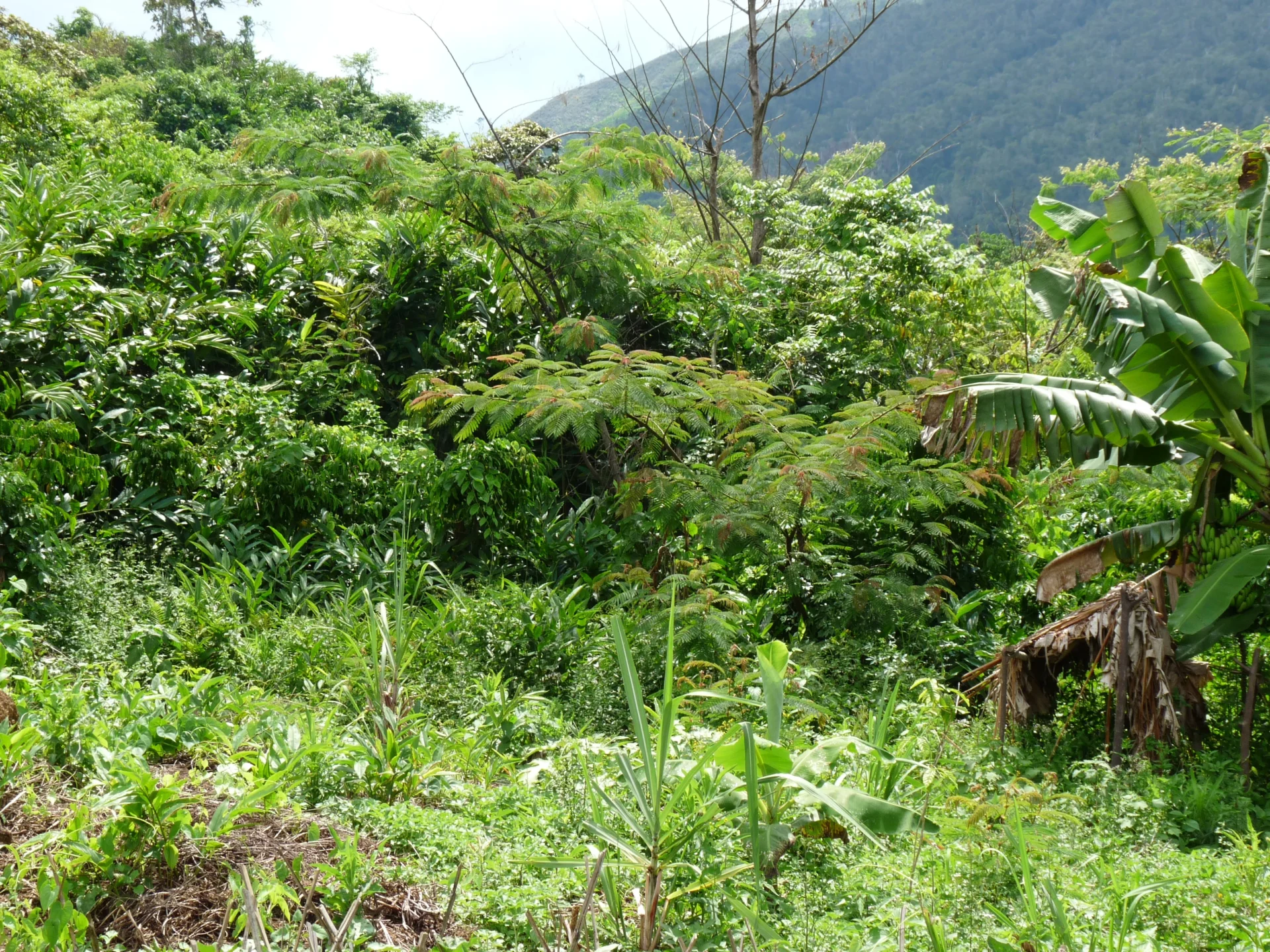
The vanilla plant belongs to the orchid family; it's a climber, and in this area it grows naturally among tropical forest, coffee trees, cacao and palms… always in the dampest spots and not always easy to reach.
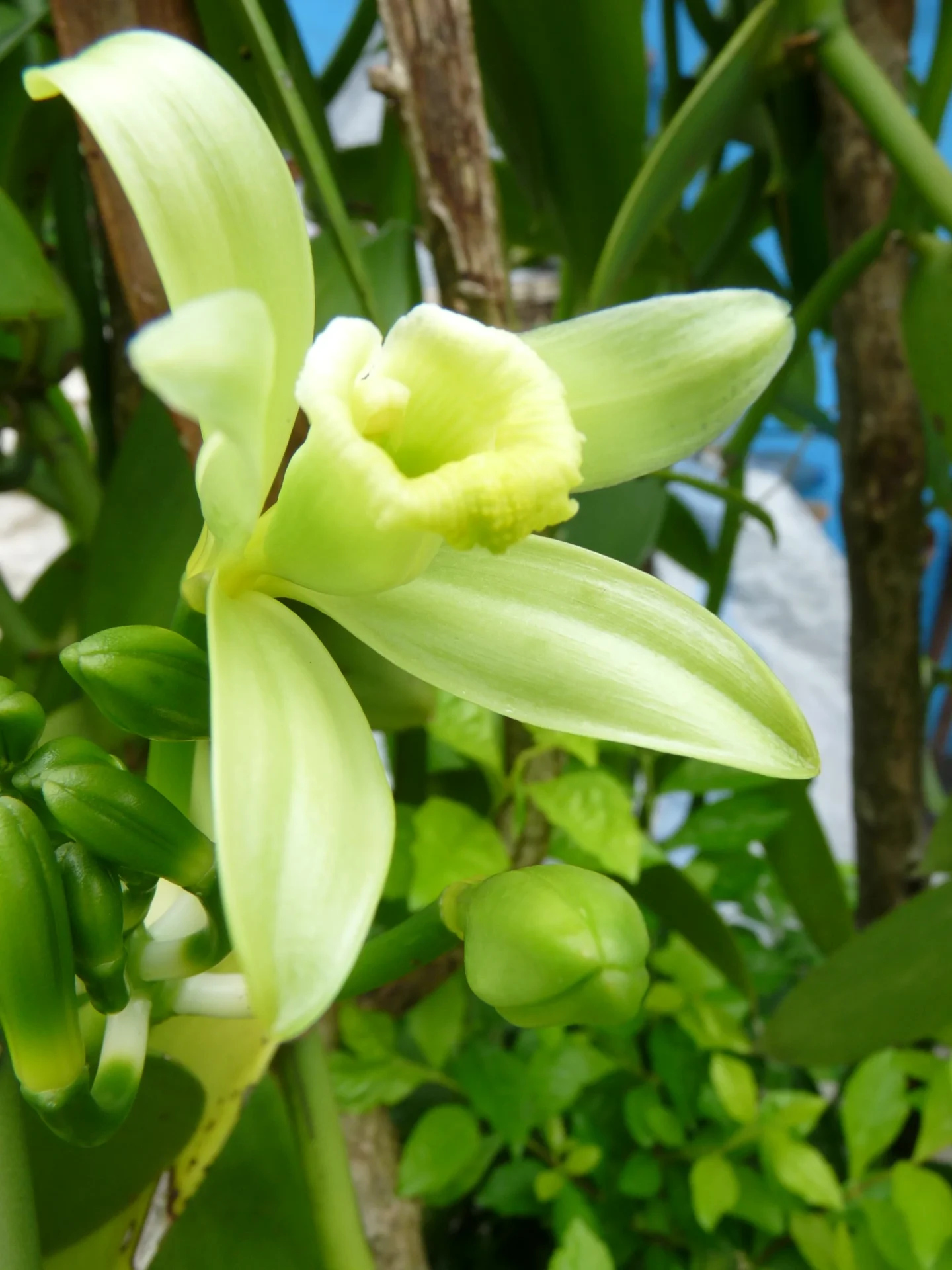
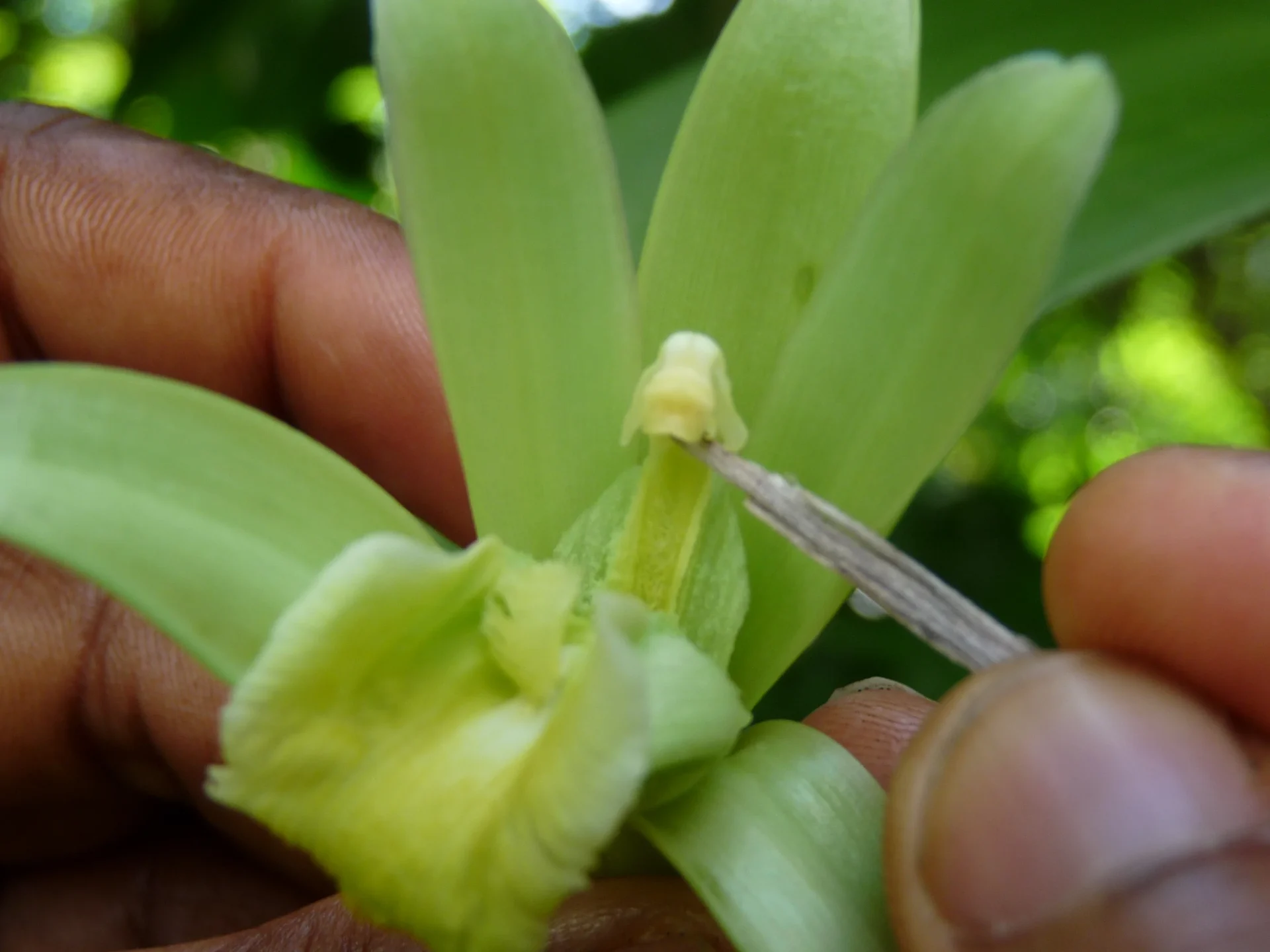
Vanilla flowers appear for no more than 2 months a year depending on that year's weather; I could even say it really comes down to a month. That orchid flower, always closed, opens for only 8 hours of its life, and it's then that it is fertile and must be pollinated to get vanilla pods. Without that pollination there is no fruit, and without fruit we have no pods.
Como ya dije, el trato a nuestras plantas es tradicional y eso quiere decir que esta polinización se hace de manera manual y una a una, juntando delicadamente los dos pistilos, los pinzamos con la ayuda de un pequeño trozo de maderita (tipo palillo plano) y así, una a una y solo cuando estas flores se abren de manera natural. Este proceso es delicado y agotador, ya que todos los agricultores deben de estar muy atentos a que la flor se abra y obviamente no pasa con todas por igual, así que hay un periodo que se pasan horas y horas vigilándolas para que sean polinizadas y obtengan su fruto. Este periodo es entre finales de octubre y noviembre, o máximo hasta inicios de diciembre. Luego son aproximadamente 9 meses mientras las tan apreciadas vainas crecen y se puedan recoger.
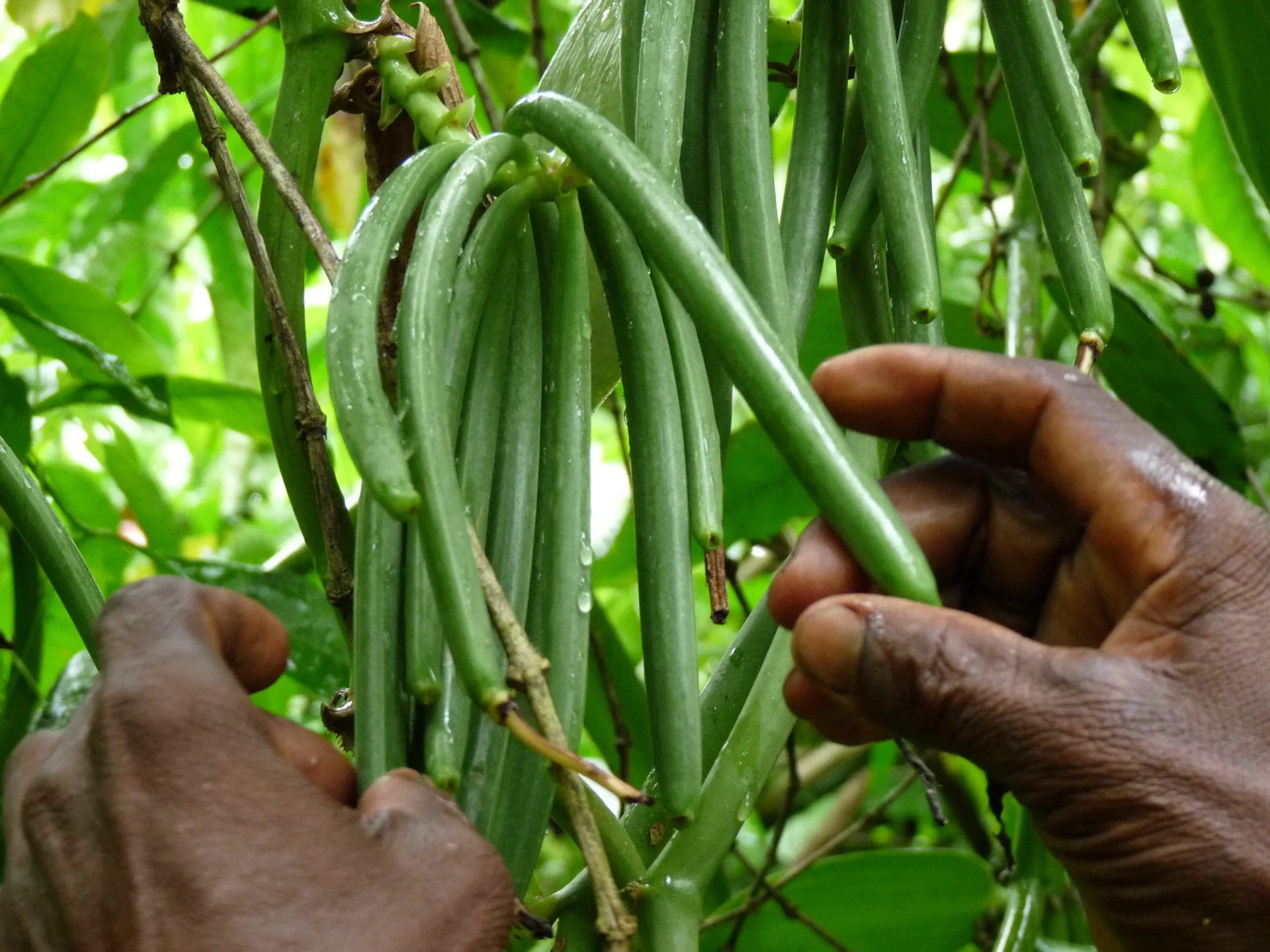
From late June to August the pods start being harvested on the plantations. It's one of the hardest stages of the whole process, because the growers have to go through the forest plant by plant picking the green pods, watching that they aren't stolen, carrying sacks of up to 30 kg on foot, in the rainy season, through hard-to-reach corners from one village to another as far as our house in the village. A meeting point and by now a landmark for many of our neighbours and the growers of the area. Our family harvests its own whole plantation and everyone else's.
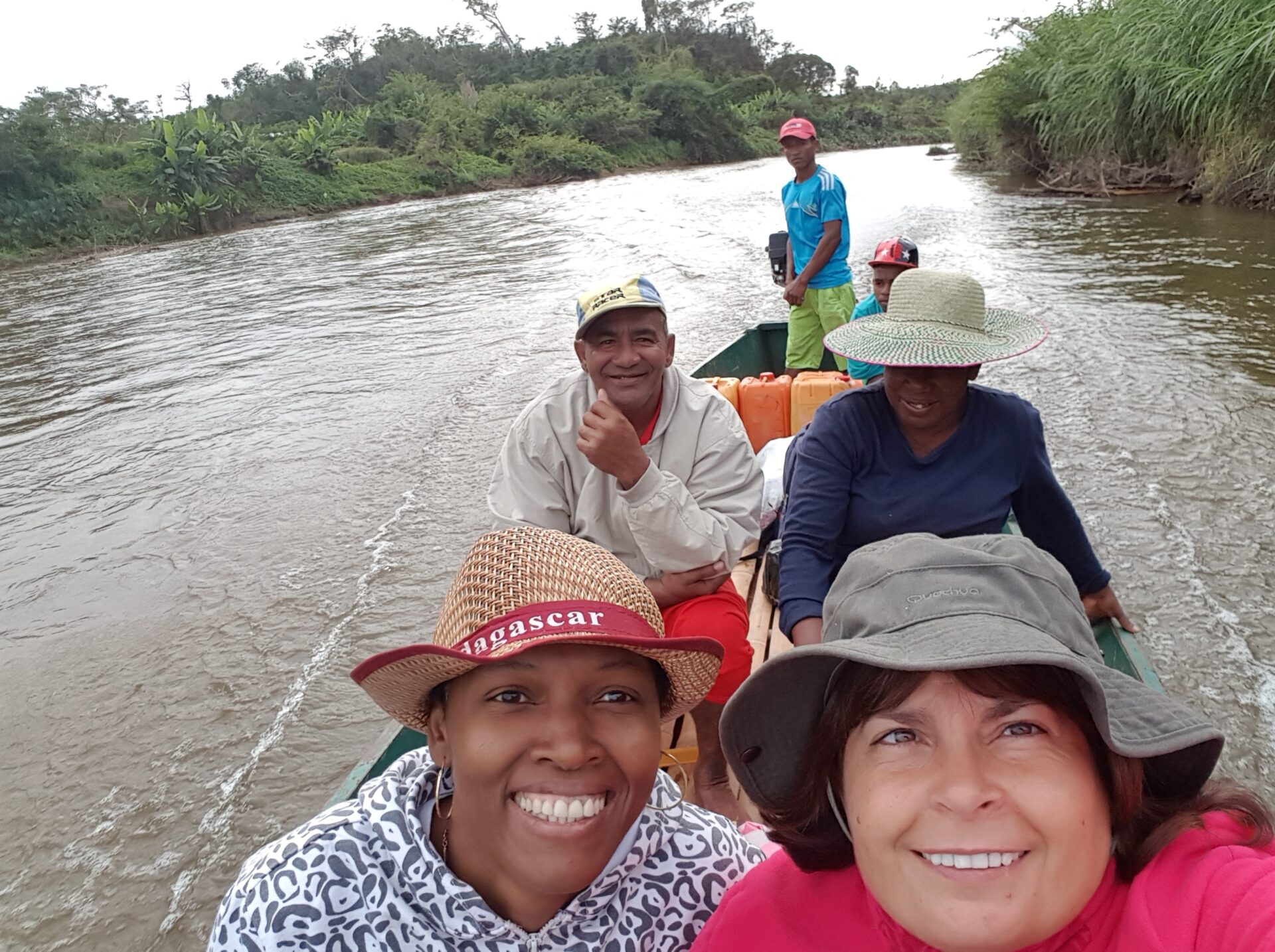
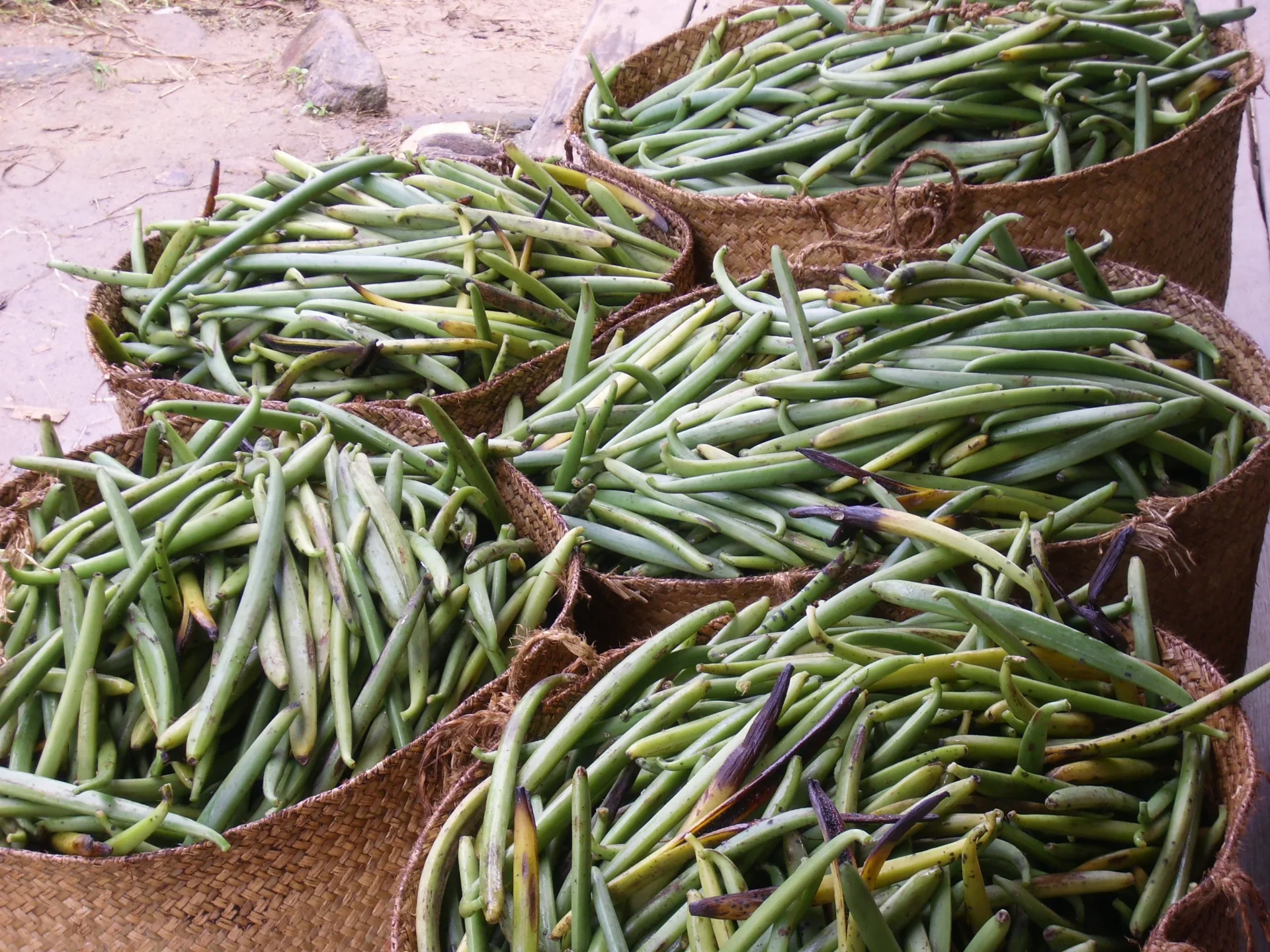
Once we have many kilos of green pod, the family organises the trip downriver by canoe to reach the more «civilised» part, at Manambato, 8 km from Antalaha.
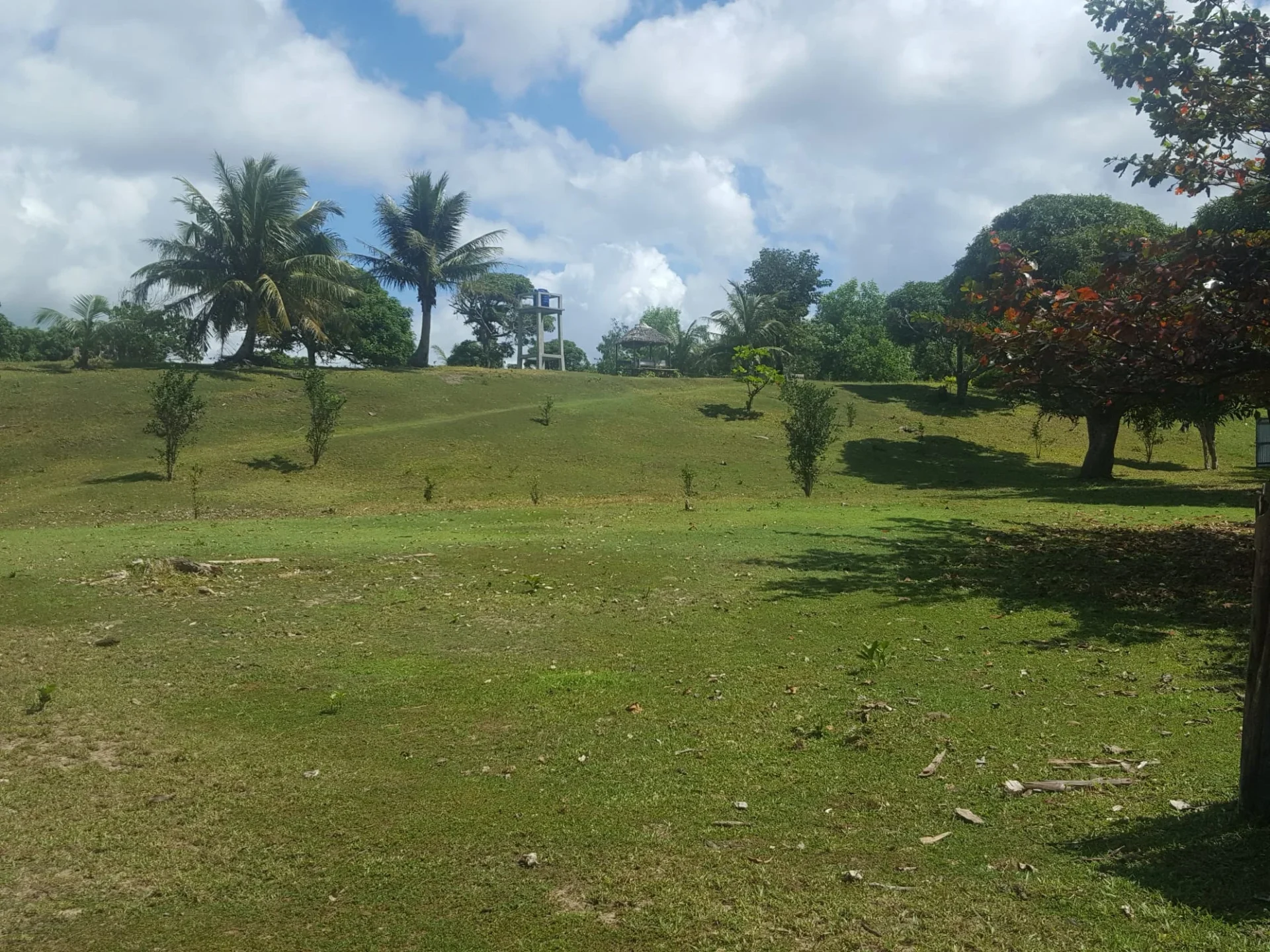
At Manambato is where our Ranja family has the land, the base for curing and drying all our vanilla. This is where we and our workers spend hours and hours day after day sun-drying the pods, where we carry out the selection, fermentation and resting before the sun-drying period.
First we sort the green pods by size, split or non split (open or closed) and whole or in pieces.
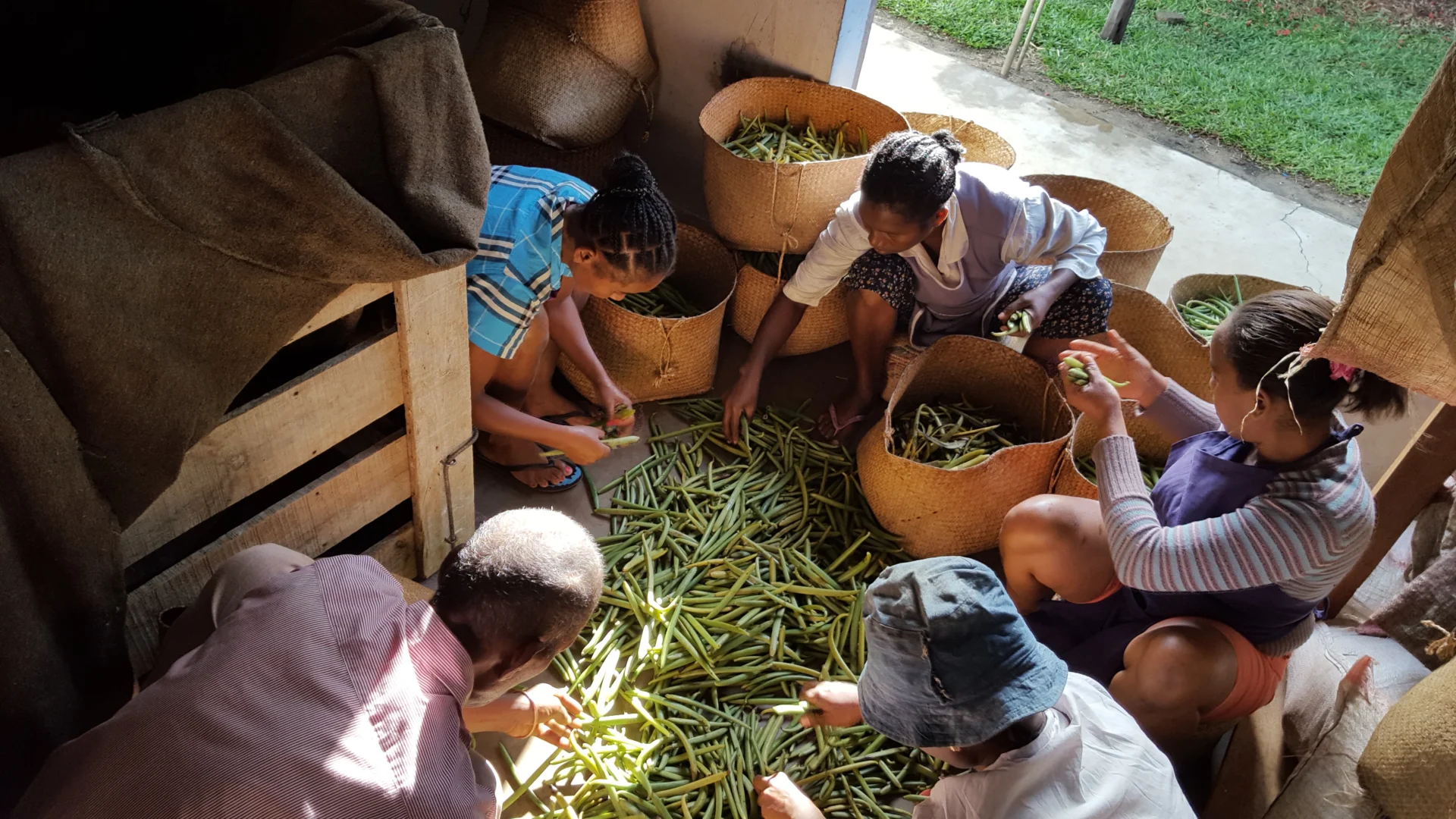
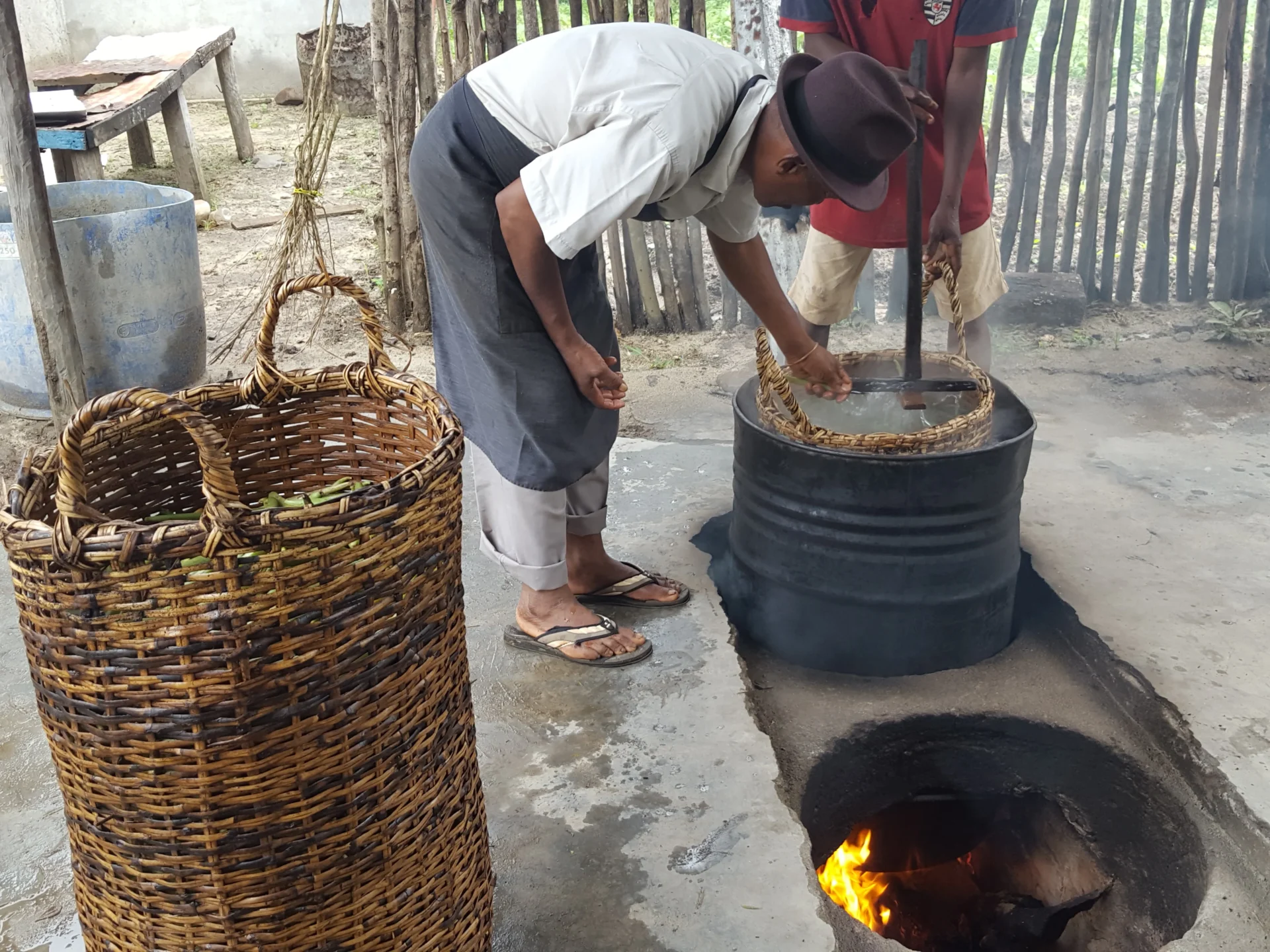
Then we get ready for the most delicate moment, the scalding: quick, and with great attention to the water temperature. We're talking 30-40 seconds, so it really is a delicate moment, with the family's leading experts overseeing it.
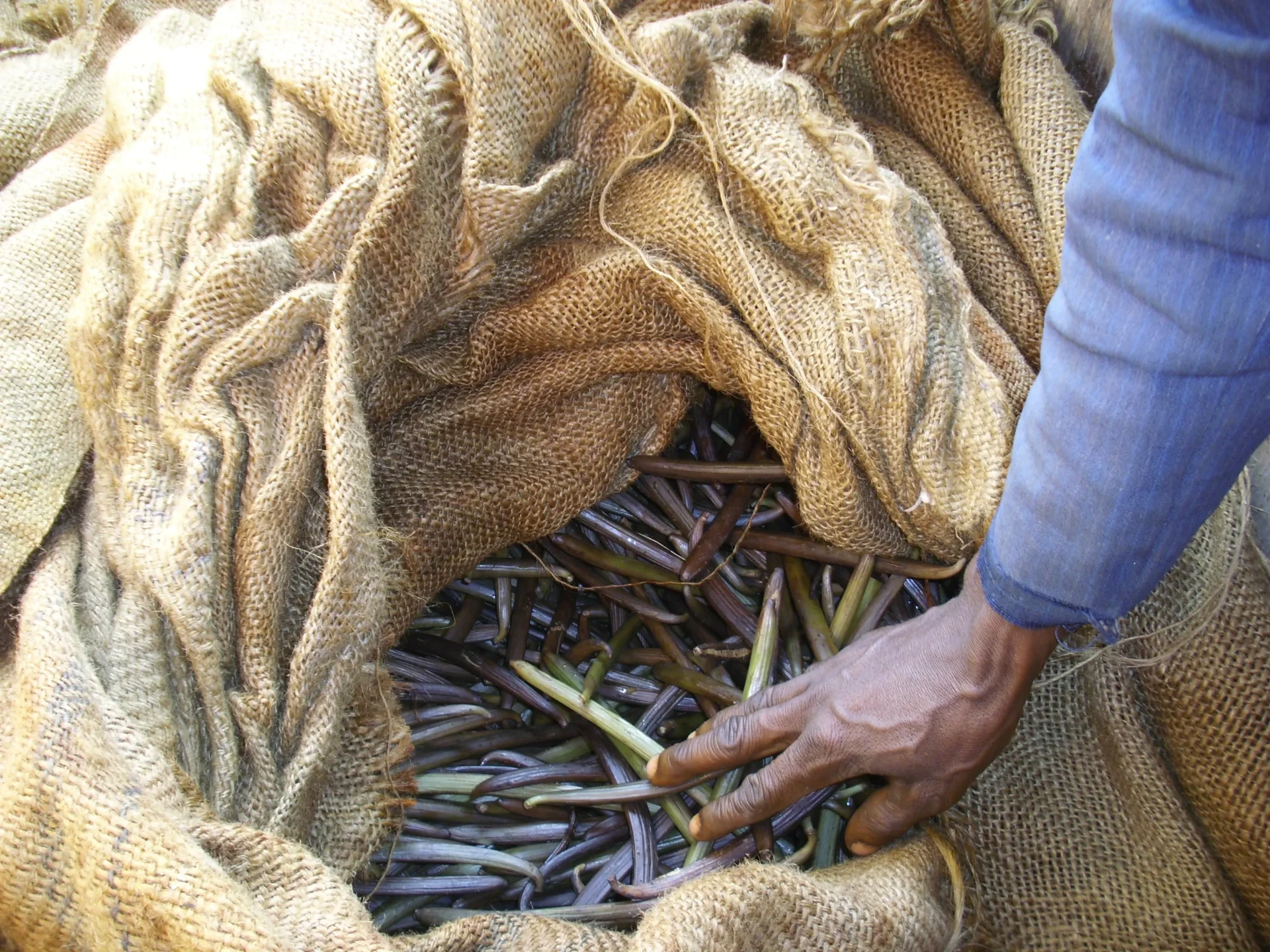
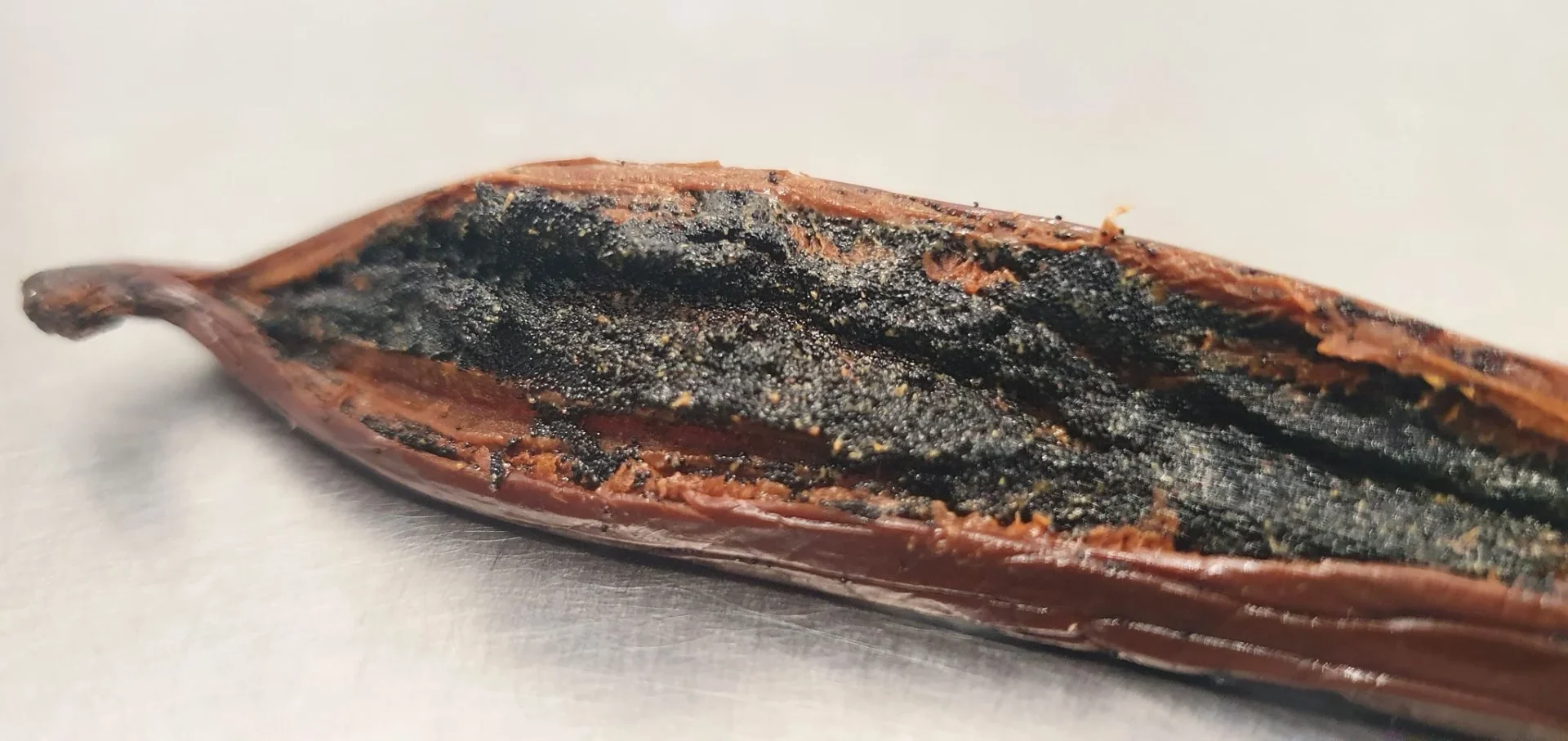
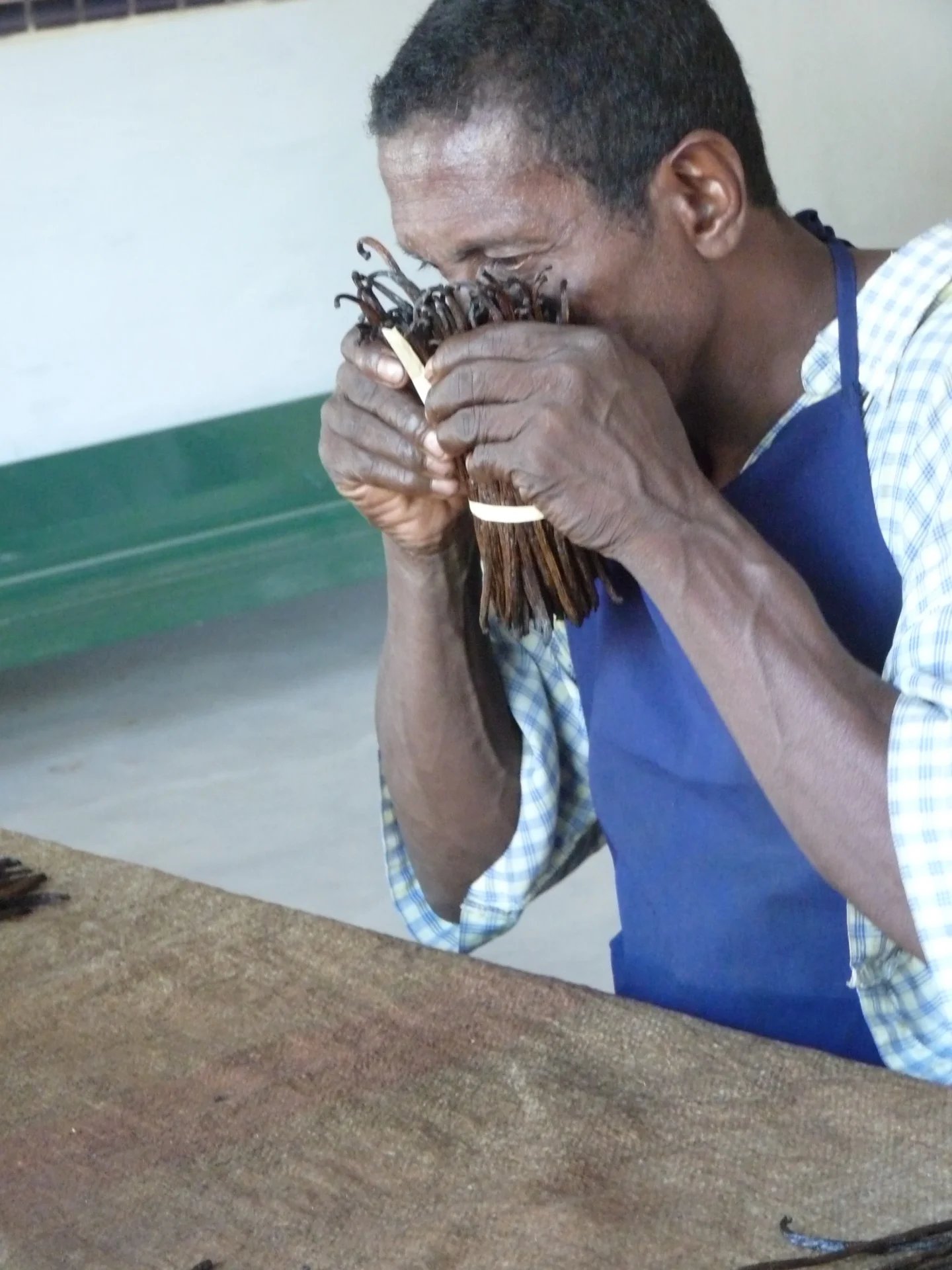
They are then stored in a wooden box protected with sacks and all the «scalded» pods are covered for 24-48 h; it's precisely at this point that the green pods begin their fermentation, changing smell and colour into what we know as the smell of vanilla and the black colour of the pod. Before that, when the pod is green, its smell if you open it is of cologne, of floral perfume; it smells nothing like vanilla. Only after that fermentation do we start to perceive this sweet, distinctive smell that we know here as the taste of vanilla.
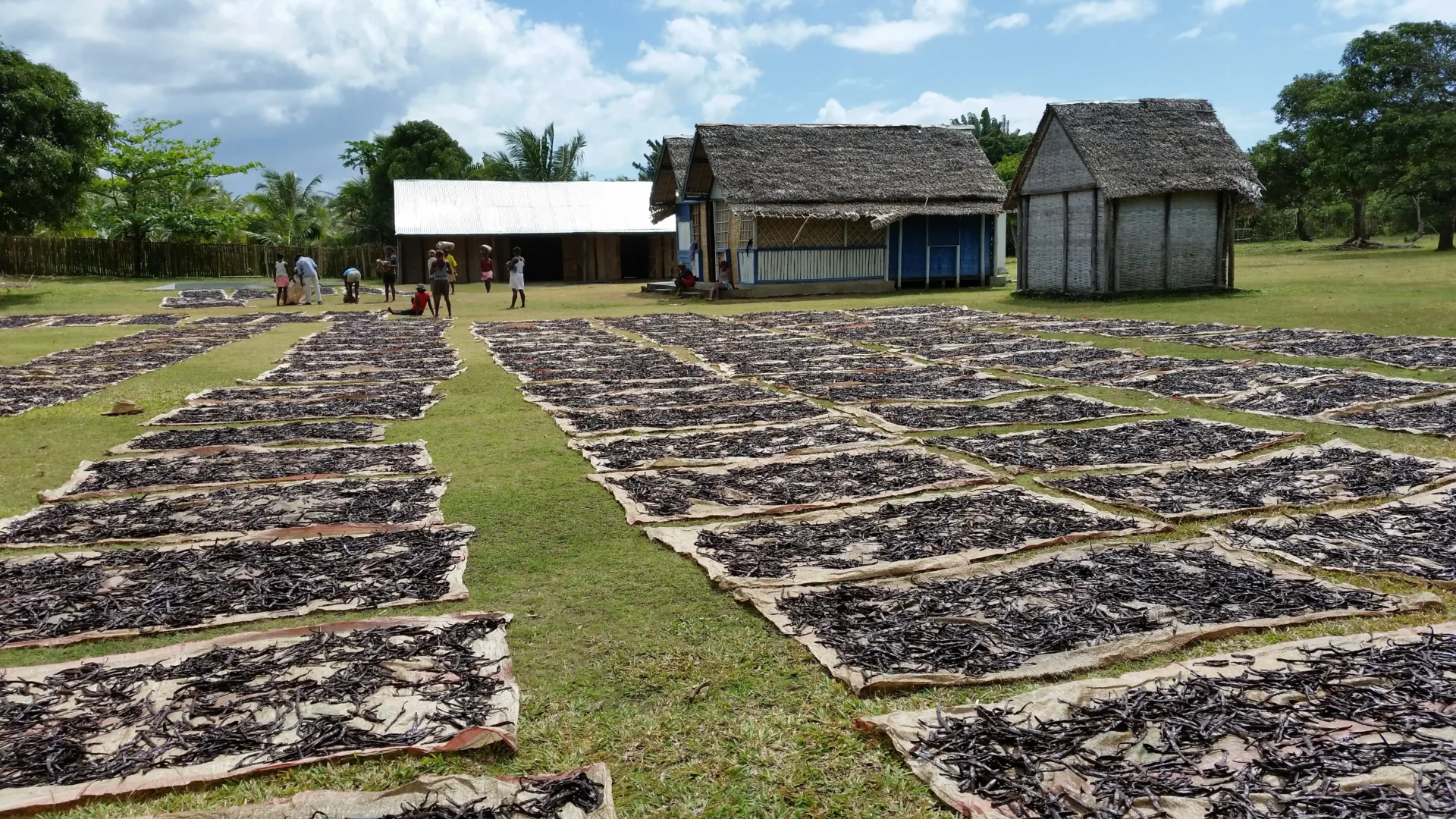
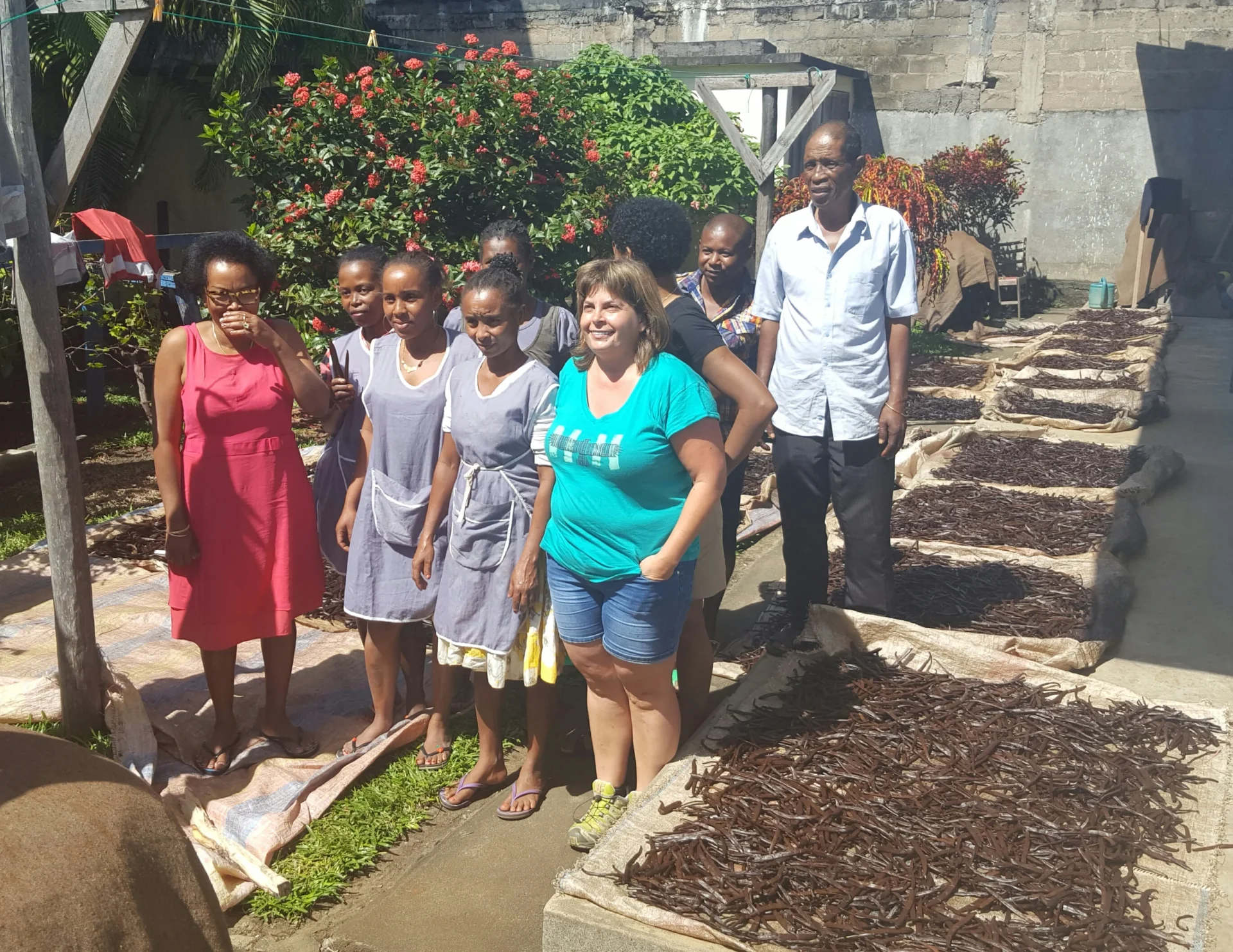
After that, our pods need many hours of sun and natural drying over large areas, with close attention to the rain, because we can't afford to lose a single pod. This stage runs between 3 and 5 months and coincides with winter (fortunately, even though it's a rainy season and winter, the climate in Madagascar is hot and has many hours of sunshine). On those drying days we're all watching constantly, seeing how they take their hours of sun and dry a little more each day. For convenience, and because of all this bringing in and out during drying, the pods are wrapped in sacks of 10, 15 and 20 kg.
Once our pods have less and less moisture, are blacker, smaller in volume and above all at their optimum moisture point, the most experienced people in the house decide whether they're ready to be stored in wooden boxes and taken to our central warehouse in Antalaha. There they go through their quality and final-moisture checks before finally being packed for export to Europe.
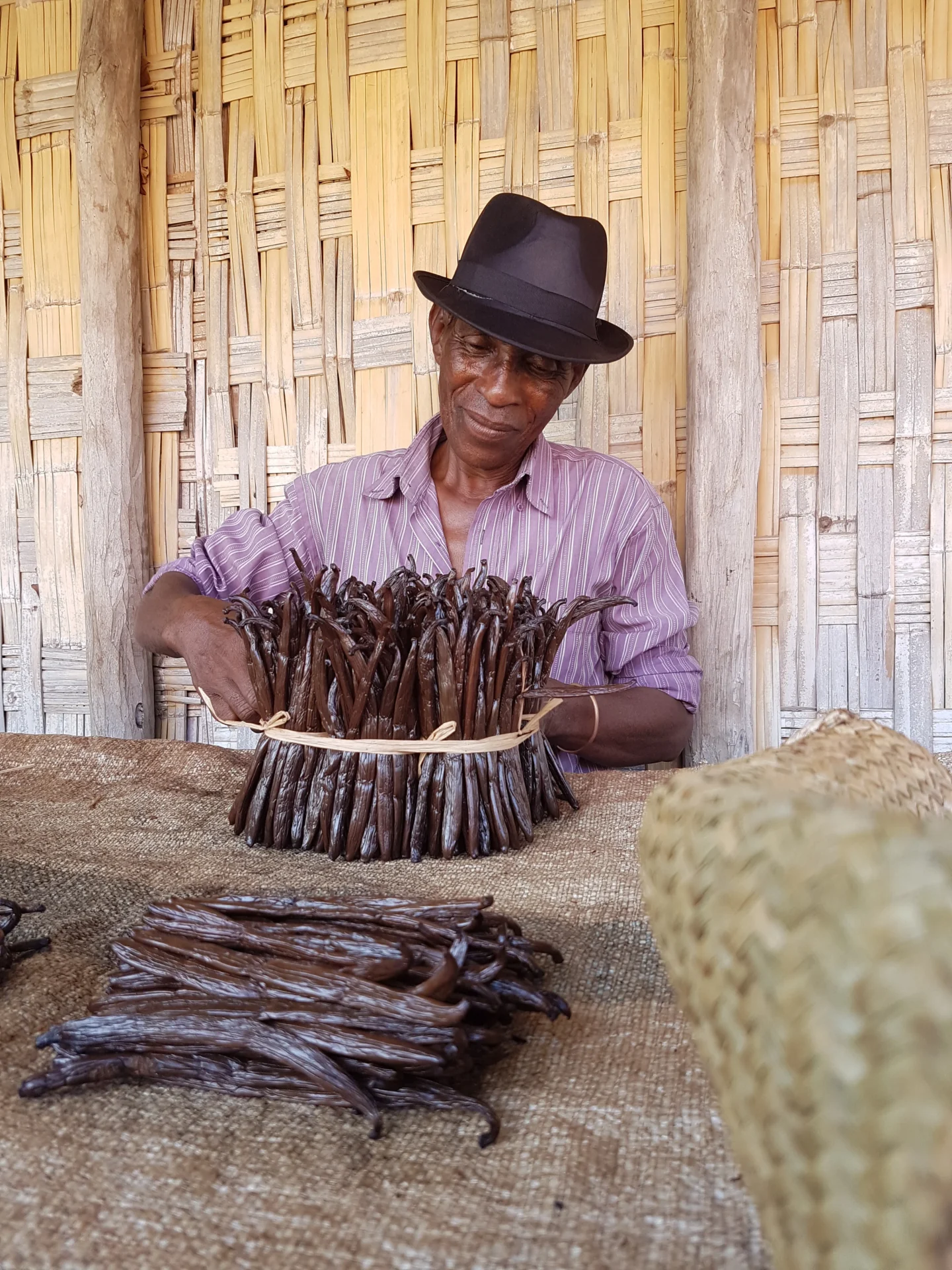
One thing is important to explain: for every 3-4 kg of green pods, after the drying process you get at most 1 kg of black pod — and obviously not all of those are pretty and perfect.
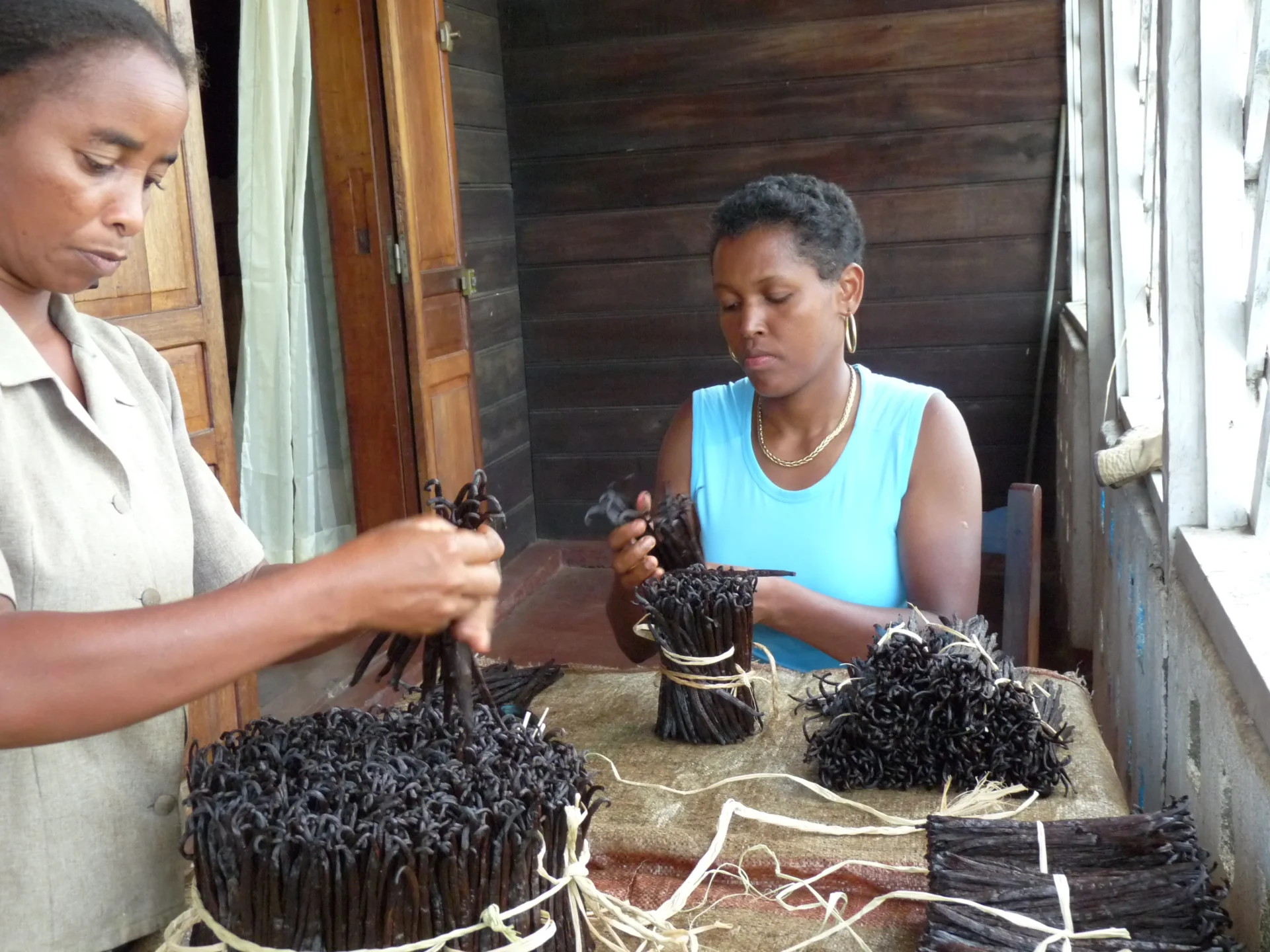
The average size of Madagascan pods runs from 12-13 cm up to 20-21 cm; there is no standard size, pods are like beans, some grow more and some less. Here people become obsessed with the idea that if a pod doesn't reach 20 cm it isn't good or flavoursome, but that is completely false: every pod gives us vanilla flavour, small or large; how intense the flavour is depends only on its moisture level, drier or damper, split or non split, according to the hours of sun it took — nothing to do with size.
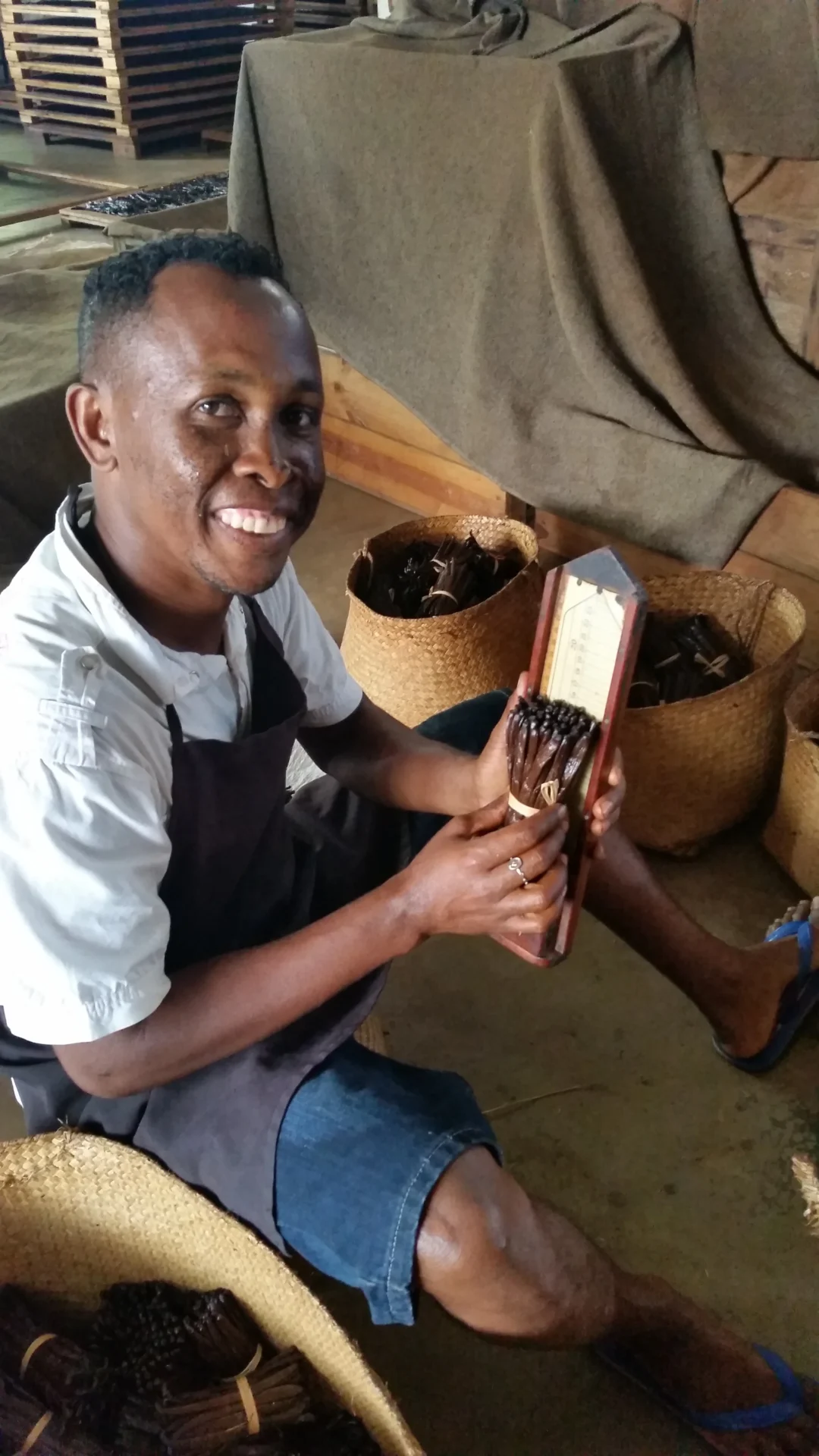
The harvest is annual; there are no unlimited runs because of its natural harvesting process. Only the type of pod can vary according to its drying hours and moisture — whole or split or in pieces — no other factor.
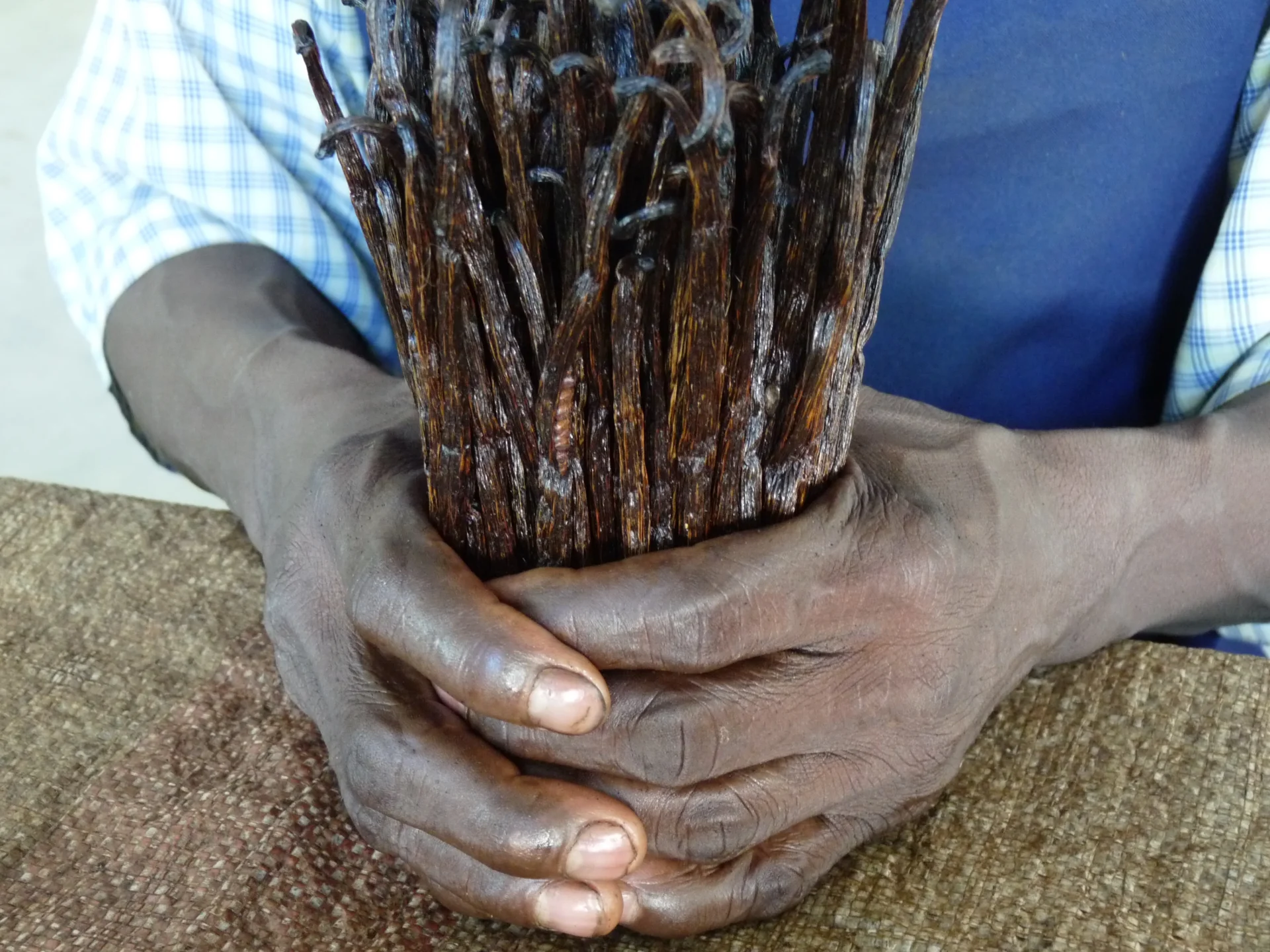
All that's left is to talk about how to use the pods for the best yield and flavour. The most usual way is to open the pods carefully from top to bottom with a knife and, with a small spoon, gently scrape out the seeds; that's what's used for flavour. But never forget the skin of the pods, it too gives a very important flavour and intensity. I suggest not wasting the skin: it can be infused up to 2 times if you wipe it with a little paper; sometimes I even wipe it again and, once dry, when it looks as if it's no longer good for anything, I grind it with sugar and get a spectacular natural vanilla sugar.
So we suggest using the whole pod; taking out only the seeds makes little sense when you can use everything. If the pods ever dry out because we haven't stored them properly, we'd do the same: grind the whole thing with sugar and it's perfectly usable; the flavour will be drier, but also very fragrant.
We took the chance to ask Sonia a few questions.
How did you get into all this?
I come from a company, family-run in its early days, where we sold different ingredients and exhibited at all the trade fairs.
In 2007, at Intersicop in Madrid, we were lucky enough that Lucia came to help us promote her vanilla at the fair. She stood there with 4 photos of her village and I fell completely in love with that place. I insisted that I had to go, that I'd pay for it all myself, but that I had to see it.
Lucia comes from a very poor family and told me they were poor and couldn't offer me any comfort. I told her comfort didn't matter to me, that I wanted to see it come what may. It took some convincing, but in the end she gave me the go-ahead, so I got myself a ticket and off on the adventure.
My first time in Africa, and in Madagascar at that, was hard: I was alone, in a very poor place, but the experience was overwhelming. Since then I've never let go of it; some years I even go twice for 3 or 4 weeks. I don't stay in hotels, I've always lived with them and by now I feel part of the family. To me they're more than a true friendship: they're my Malagasy family.
How did you finally decide to devote yourself to vanilla?
It's been 7 years since I left the company I was at. Because of that, 3 years ago Lucia and I decided to make our relationship official by setting up the company Madagascar Tastes, and so have the chance to work with her and with a product I love. What more could you ask for?
We know the beginnings of any business are hard. How is it going?
It's complicated, but thanks to my experience in the sector I've been able to work my way into the market little by little, and obviously I've made the most of being known in the professional world. Fortunately, some more than others have opened doors for me and given me the chance I was looking for. If you have a good product in your hands, the combination is a good one to start out and hold on.
What is it about vanilla that people love so much?
In my case it was the experience, getting to know a different culture, a humble way of living. Thanks to Lucia Ranja, who opened the doors of her house, her family and her world to me. I fell in love with that country and obviously with what vanilla means to them, as they made me part of their daily life from the plantation through to the curing. And here I am.
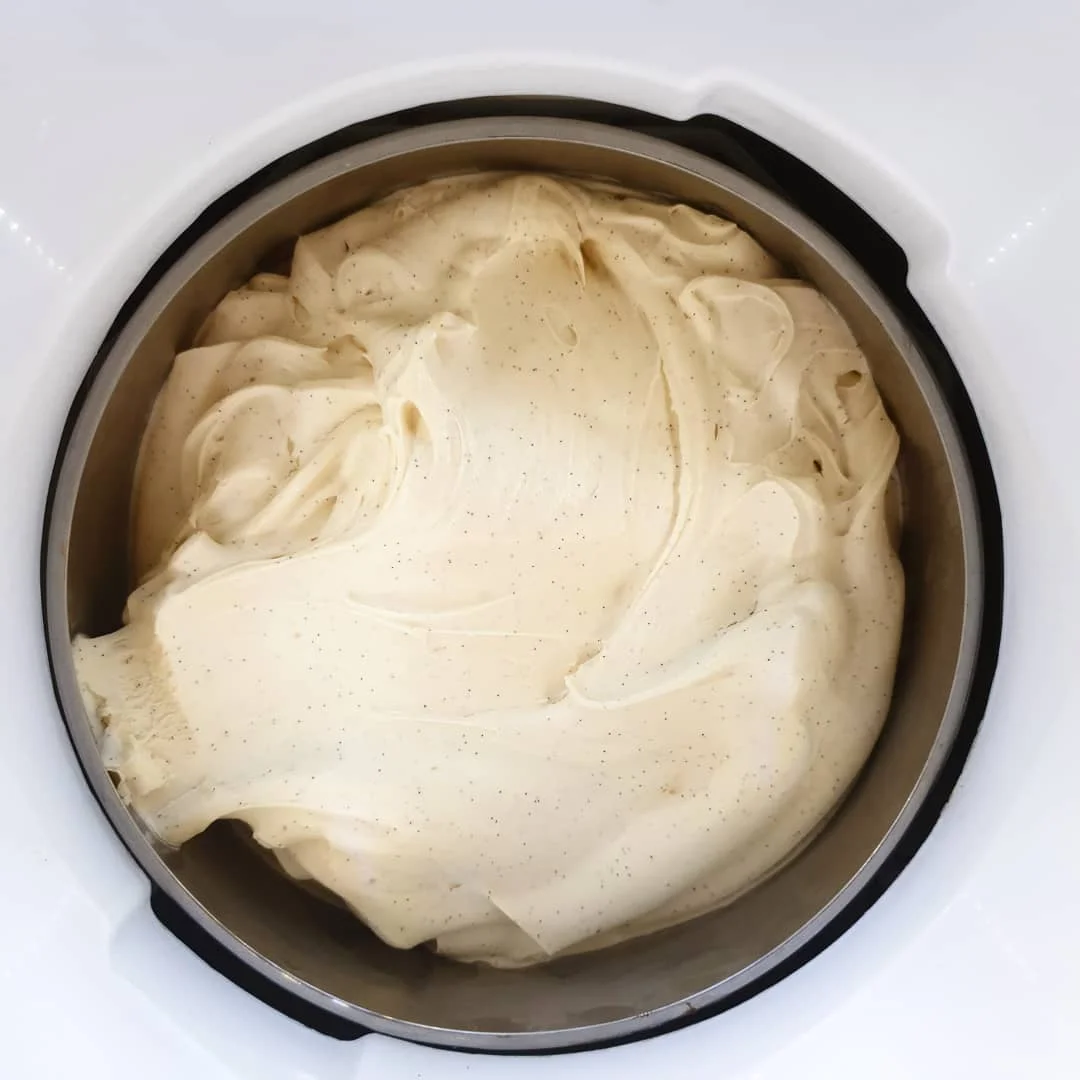
Vanilla has a gentle, sweet and at the same time exotic flavour. It's one of the flavours with the most history and one of the most constant in ice cream display cases. It's very versatile and goes wonderfully with fruit, chocolates, nuts — it goes well with everything, without getting in the way of the other flavours. Made well, it's a flavour that children and adults alike enjoy. Who doesn't like a good vanilla ice cream?
What's the main difference between your vanilla and the supermarket ones?
Mainly freshness: we're fortunate enough to sell out the whole production every year, so our vanilla is always from the previous year's harvest. For example, in this year 2021, the harvest we're selling is that of 2020, which is the current harvest.
What do you usually make with vanilla?
Above all ice creams, mousses, pastry creams, natural vanilla sugar, cakes, biscuits, panettone and so on. I even make my own homemade pacharán with vanilla, exquisite! Mojitos made with rum and vanilla are also a surprise. So you see it isn't only ice creams and cakes😉