

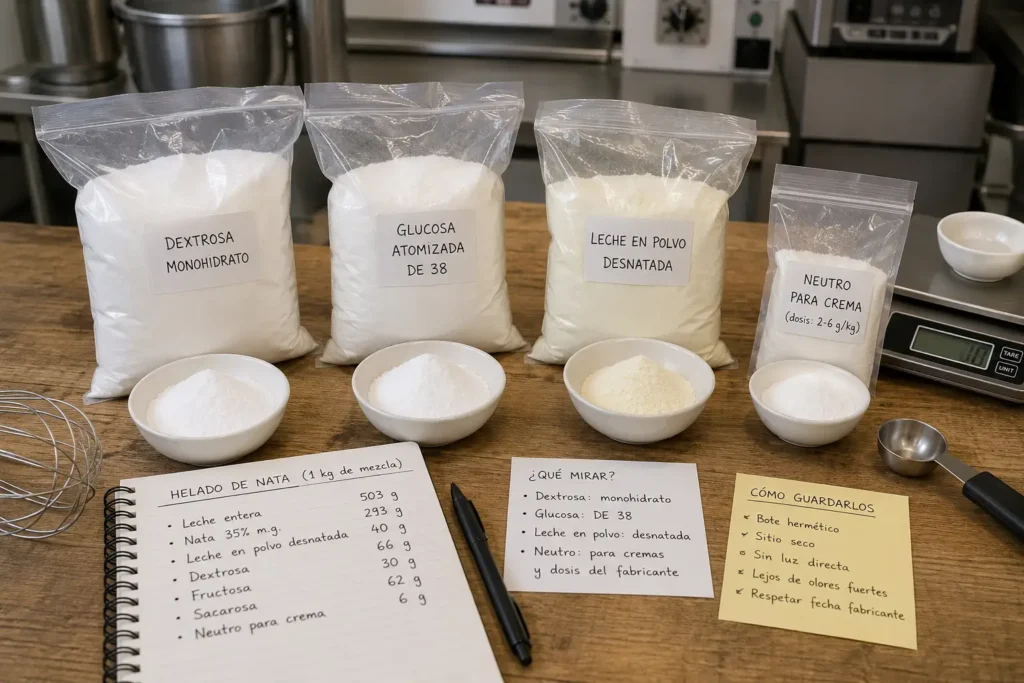
The ice cream season starts and back comes the question of every year: «right, and where do you buy this?» Because a properly formulated recipe calls for dextrose, spray-dried glucose, skimmed milk powder and stabiliser, and that isn't on the supermarket shelf. Here's what's worth knowing before you buy: what format they come in, how far each one goes and what to look for on the label.
Why you won't find them in the supermarket
None of these ingredients is exotic: what's unusual is the packaging. They're workshop products, meant for someone making a hundred litres a week, so their natural format is the big sack in a catering wholesaler. In the supermarket you have milk, cream and sugar, which you also need; the rest has to be found in specialist shops. And that's where the pilgrimage begins: one has the dextrose but not the stabiliser, another charges more for postage than for the product, and you end up with three separate orders to make one ice cream.
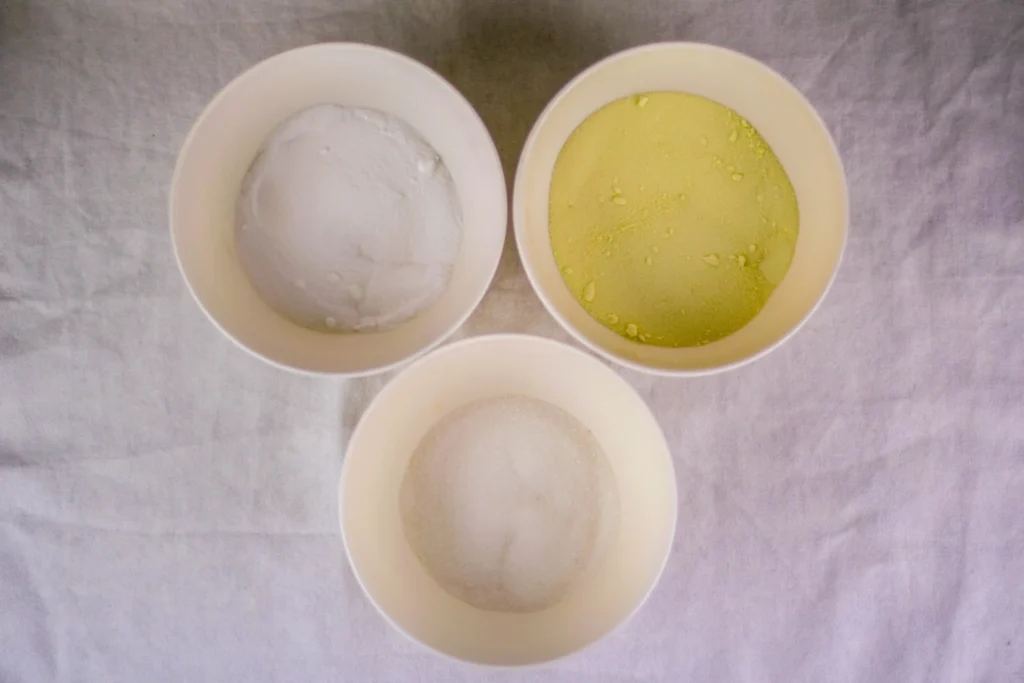
How much of each you get through
To give you a realistic idea of the outlay, here is the site's cream ice cream formula, for a kilo of mix:
- Whole milk, 503 g
- Cream 35% fat, 293 g
- Skimmed milk powder, 40 g
- Dextrose, 66 g
- Fructose, 30 g
- Sucrose, 62 g
- Stabiliser for custards, 6 g
Translated: of the «odd» ones, per kilo of ice cream you'll use about 66 g of dextrose, 40 g of skimmed milk powder and 6 g of stabiliser. Do the sums before you order. With 1 kg of dextrose you'll make around fifteen one-kilo batches; with 500 g of stabiliser you'll pass eighty. That's why there's no sense in buying the stabiliser in the same size as the sugar: one lasts you three seasons and the other runs out in a month.
What to look for on the label
- Dextrose. Look for dextrose monohydrate, the one used in ice cream. It's the sugar that lowers the freezing point most, so it's the one that stops the ice cream coming out like a rock.
- Spray-dried glucose. Check the DE (dextrose equivalent), usually written into the name itself. In ice cream the standard is 38 DE. The higher that number, the sweeter it is and the more it lowers the freezing point; the lower it is, the more body it gives and the less you notice it as sweetness.
- Milk powder. Skimmed, not whole. If you buy whole you're adding fat to the recipe without counting it, and all the balance you'd worked out goes out of the window.
- Stabiliser. Look at two things: whether it's stabiliser only or contains an emulsifier too, and what dose the manufacturer specifies, because they aren't all dosed the same. And bear in mind there's one for custards and another for sorbets: they aren't interchangeable.
How to store them so they last
Nothing complicated: airtight jar, dry place, out of direct light. Powdered sugars cake with damp — if yours sets solid it hasn't gone off, but weighing it accurately becomes torture — and milk powder picks up cupboard smells with astonishing ease, so don't leave it next to the spices. With stabiliser, respect the manufacturer's date: it's what holds the water in your ice cream, and reaching for one from three summers ago isn't wise.
And if you'd rather not fight with all this
We can send you the lot at home, without you having to search a thousand pages or piece together minimum orders from different places. First we ask you what you want to make, because starting with four custards isn't the same as getting into sorbets, and with that we tell you what you actually need and in what quantity.
Write to us on WhatsApp or at the address info@haztuhelado.com and we'll fill you in.
Before you buyAnd what is each ingredient for?What exactly each one does inside the ice cream, explained one by one.See the ingredients →And if you're also looking at machines, here's the comparison of compressor ice cream makers.
Have a good ice cream season!