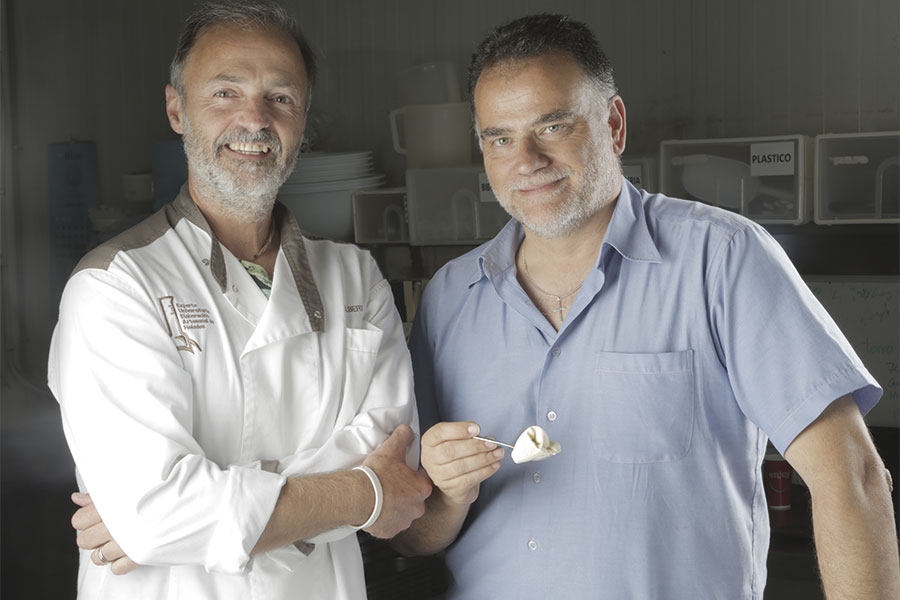
Two very well-known names in the ice cream world, Albert Soler and Lluís Ribas, have worked on the possibility of finding an ice cream specifically for diabetics.
It is one of the most serious studies carried out so far, because they were guided and advised by leading diabetes specialists.
In this article we go a little deeper into this subject, which affects a large part of the population.
Albert Soler and Lluís Ribas have produced one of the most serious studies on ice cream for diabetics, advised by diabetes specialists. The key is to lower the glycaemic index by turning to sugars other than sucrose, and that is where the difficulties begin: they don't all behave the same way in a formula. Here we explain what they were after and what conclusions they reached.
What the study was looking for
The aim of this study is to achieve an ice cream with a glycaemic index low enough to suit most diabetics. That means turning to sugars other than sucrose; however, these alternatives don't always give fully satisfactory results from either a sensory or a medical point of view.
We need to distinguish properly between a low-calorie ice cream — one where you simply cut the fat or the sugar — and a low-glycaemic-index ice cream.
What it is glycaemic index is
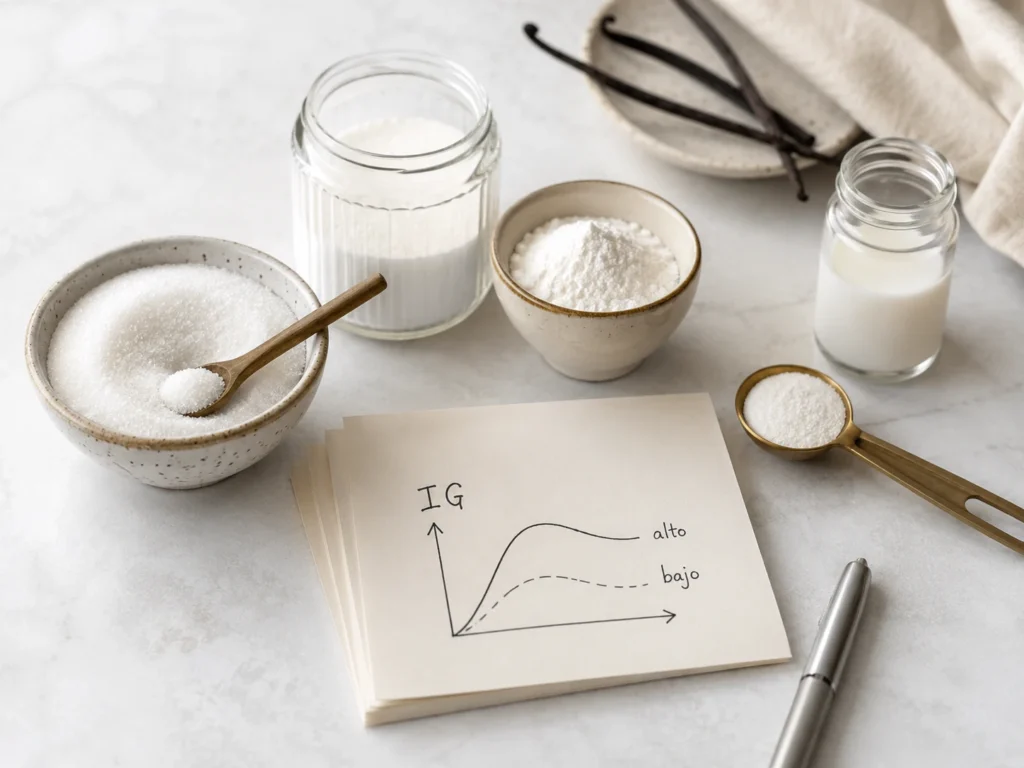
The glycaemic index (GI) is the figure that describes how quickly a food is absorbed, measured against the absorption rate of pure glucose. The lower the index, the more easily that food is absorbed.
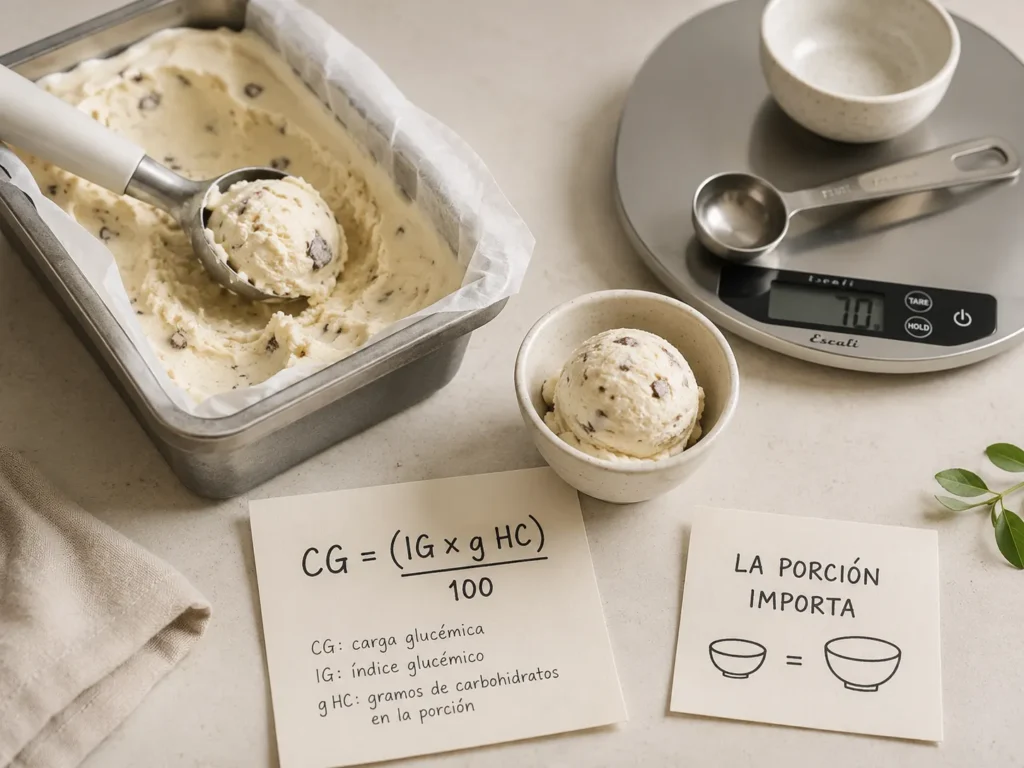
The aim for diabetics is to eat products with a low glycaemic index, since in their case a lack of insulin delays glucose absorption. What matters to them, however, is not the glycaemic index but the glycaemic load (GL): the glucose taken in not per food in general but per portion actually eaten.
Glycaemic load = (glycaemic index × g of carbohydrate in a portion eaten)/100
Each person's clinical situation is so varied that it is impossible to define an ice cream as «suitable for diabetics», which is why the authors of the article call these ice creams «diabetic-friendly».
What to replace the sugar with
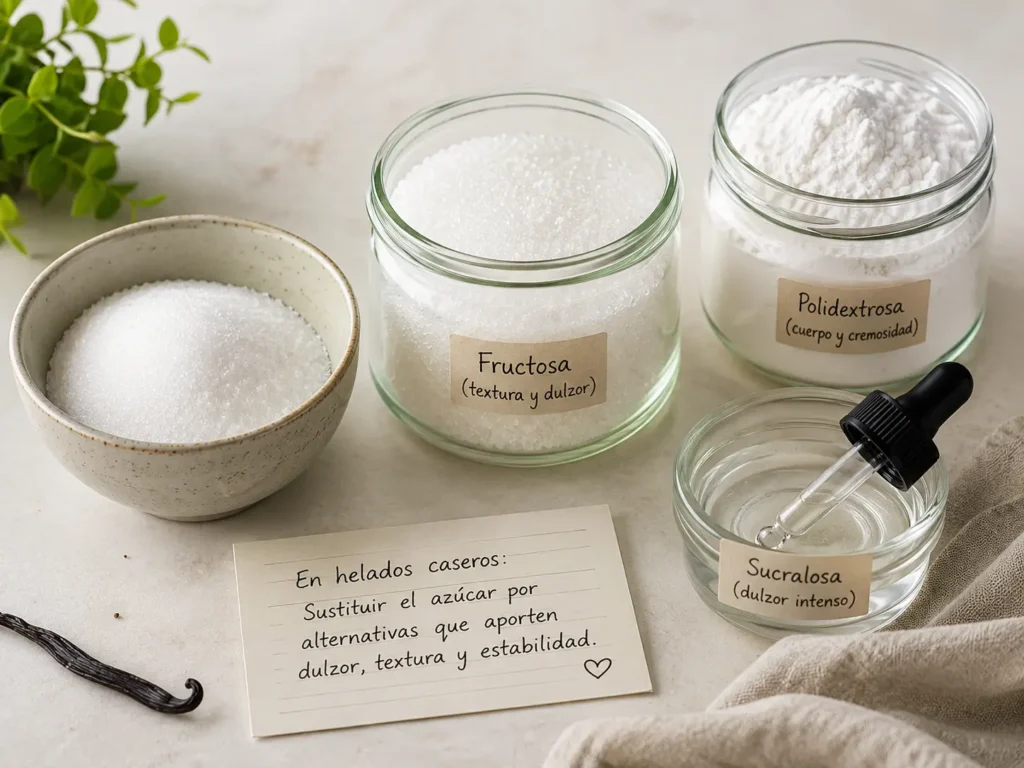
Many alternatives have been tried to replace conventional sugars, and the conclusion is that polyols are the best option, because they raise blood glucose far less. Fructose is also a very good substitute for sucrose, since it is absorbed very slowly. These alternatives should always be treated with care: in large amounts they cause side effects such as diarrhoea, wind, fat accumulation in the liver or cardiovascular problems.
For sweetening ice cream another way there are artificial or natural high-intensity sweeteners such as saccharin, aspartame, sucralose, stevia and others. They complement polyols well for sweetening, but here too large intakes call for caution because of their possible side effects.
IngredientsWhat is each ingredient and what is it for?The basics and the technical ones, explained one by one.See the ingredients →
The three recipes from the study
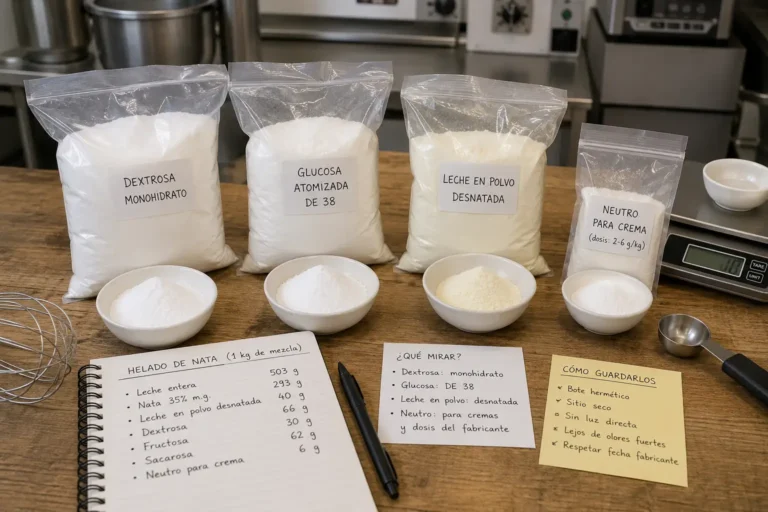
The authors give us three «diabetic-friendly» recipes, using the ingredients that in their view and according to their research are the most suitable for keeping the glycaemic load close to zero, and which are the most interesting because of how they are absorbed and how quickly they are cleared.
Source: Arte Heladero magazine